- English
- Español
- Português
- русский
- Français
- 日本語
- Deutsch
- tiếng Việt
- Italiano
- Nederlands
- ภาษาไทย
- Polski
- 한국어
- Svenska
- magyar
- Malay
- বাংলা ভাষার
- Dansk
- Suomi
- हिन्दी
- Pilipino
- Türkçe
- Gaeilge
- العربية
- Indonesia
- Norsk
- تمل
- český
- ελληνικά
- український
- Javanese
- فارسی
- தமிழ்
- తెలుగు
- नेपाली
- Burmese
- български
- ລາວ
- Latine
- Қазақша
- Euskal
- Azərbaycan
- Slovenský jazyk
- Македонски
- Lietuvos
- Eesti Keel
- Română
- Slovenski
- मराठी
- Srpski језик
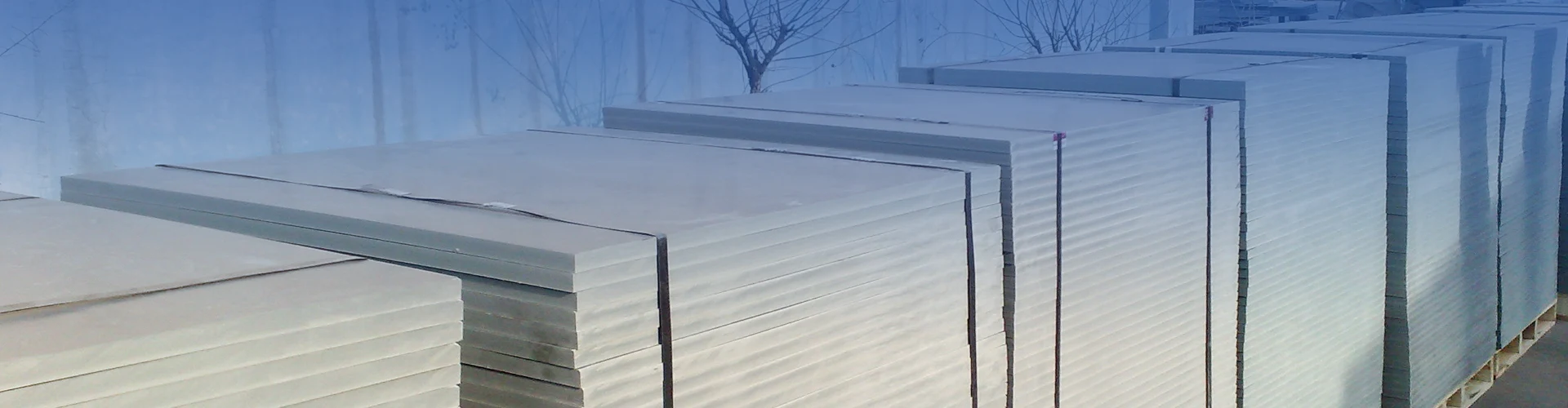
China Block Machine Manufacturer, Supplier, Factory
The Block Machine is the cornerstone of modern construction material production—a versatile, high-performance system that transforms raw aggregate and cement into precisely formed building units. Our Block Machine is engineered to deliver exceptional reliability, consistent output quality, and operational simplicity across a wide range of production scenarios. Whether serving small-scale contractors or large industrial facilities, this equipment provides the foundation for profitable and sustainable block manufacturing operations.
Equipment Selection Criteria: A Decision Framework
Choosing the right Block Machine requires a systematic evaluation of multiple operational and business factors. We have developed a decision matrix to guide your selection process:
| Factor | Low Requirement | Medium Requirement | High Requirement | Recommended Model |
| Daily Production Target | < 5,000 blocks | 5,000–15,000 blocks | > 15,000 blocks | Economy / Industrial / High-Speed |
| Product Variety | 1–2 types | 3–5 types | > 5 types | Industrial / Heavy-Duty |
| Available Labor Skill | Basic (manual operation) | Moderate (semi-auto) | Advanced (PLC proficient) | Economy / Industrial / High-Speed |
| Capital Budget | Under $50,000 | $50,000–$120,000 | Above $120,000 | Economy / Industrial / Premium Series |
| Material Type | Standard aggregate | Fly ash / slag blends | Recycled / specialty aggregates | Heavy-Duty / Custom |
| Expansion Timeline | No expansion planned | 1–3 years | Within 1 year | Modular (upgradeable) series |
Ergonomics & Operator Experience
While technical specifications often dominate discussions, the human factor—operator experience and safety—significantly impacts productivity and product quality. Our Block Machine incorporates thoughtful ergonomic design features:
• Control Panel Positioning: The 7-inch HMI touch screen is positioned at a 15° upward tilt, reducing operator neck strain during extended operation. Buttons and indicators are logically grouped by function and color-coded (green for start, yellow for pause, red for emergency).
• Maintenance Access: Hinged access panels and quick-release covers provide easy access to all service points—hydraulic valves, filter housings, and lubrication points—eliminating the need for operators to work in awkward positions or use special tools.
• Material Feed Safety: The hopper design includes a grille guard and low-level sensor that prevents manual entry into the feed zone. The operator never needs to handle material near moving parts.
• Noise Reduction: The vibration system includes isolation mounts that reduce operator-zone noise levels to approximately 78–82 dB(A), significantly below the industry average of 88–92 dB(A), reducing hearing protection requirements and improving communication.
These ergonomic considerations translate to higher operator satisfaction, reduced fatigue-related errors, and lower turnover rates—intangible benefits that nonetheless affect your production consistency.
Installation & Site Preparation Requirements
Proper installation is critical to achieving the Block Machine's specified performance. We provide detailed pre-installation guidance covering:
| Requirement | Specification | Responsibility |
| Floor Flatness | ±2mm over machine footprint | Customer |
| Foundation Depth | 400–600mm (model dependent) | Customer |
| Electrical Supply | 380V/415V ±10%, 50/60Hz | Customer |
| Transformer Capacity | 1.2× machine total power | Customer |
| Compressed Air | 0.6–0.8 MPa, 50 L/min (if pneumatic options) | Customer |
| Hydraulic Oil (first fill) | ISO VG 46, 280–550L | Customer (we provide specification) |
| Lifting Equipment | Overhead crane or forklift (capacity 2× machine weight) | Customer |
| Installation Supervisor | 1 engineer, 5–7 days on-site | Our responsibility |
We provide complete installation drawings and a pre-installation checklist to ensure your site is ready before the machine arrives, minimizing downtime and expediting commissioning.
Block Quality Control & Testing Protocols
A Block Machine's true value is measured by the quality of the products it produces. We support your quality assurance program with:
• Built-in Weight Monitoring: Optional load cells under the pallet position measure green block weight, providing immediate feedback on material compaction and mix consistency.
• Dimensional Verification Templates: We supply go/no-go gauges for checking critical dimensions (length, width, height, web thickness) of your primary product types.
• Sampling Schedule: Our technical documentation includes recommended sampling frequency for compressive strength testing, based on production volume and applicable standards (ASTM C140, BS EN 772, etc.).
• Adjustment Guides: A troubleshooting matrix correlates common product defects (surface cracks, low strength, dimensional deviation) with specific machine adjustments (pressure increase, frequency change, dwell time extension).
Quality control data from the machine's production log provides traceability for certification purposes, supporting compliance with building code requirements.
Comparative Advantage: Our Block Machine vs. Market Alternatives
The following comparison illustrates how our Block Machine addresses the common limitations found in other equipment options:
| Attribute | Our Block Machine | Generic Asian Import | Premium European Machine | Rebuilt Machine |
|---|---|---|---|---|
| Hydraulic System Repair Cost | Low (standard Rexroth parts) | High (proprietary/unavailable parts) | Very high (brand-specific) | Unpredictable |
| Emergency Parts Availability | Regional stock, 24–48 hours | 2–4 weeks | 3–7 days | Unavailable or variable |
| Documentation Language | English + local language options | Often only Chinese | English + European languages | Often incomplete |
| Operator Training Material | Video + print + on-site | Basic printed manual | Video + on-site (higher cost) | None |
| Technology Transfer | Comprehensive, hands-on | Minimal | Comprehensive | None |
| Resale Value (after 3 years) | 55%–60% of new | 25%–30% | 50%–55% | 15%–20% |
| Software Update Availability | Yes, via USB/email | No | Yes, via dealer (chargeable) | No |
| Ingress Protection Rating | IP54 (control), IP65 (sensors) | IP30–IP40 | IP54–IP65 | Varies, often unknown |
Operating Cost Structure & Benchmarking
Understanding the operating cost structure enables effective budgeting and pricing decisions. The following provides a detailed breakdown of operating costs for a typical 8-hour shift:
| Cost Item | Rate | Consumption per Shift | Cost per Shift ($) |
| Electricity (kWh) | $0.15/kWh | 190–220 | 28.50–33.00 |
| Hydraulic Oil Replacement (annualized) | $8/L | 0.5 L (top-up) | 4.00 |
| Lubrication (grease, oils) | — | — | 2.50 |
| Wear Parts (mold, bearings, seals) | — | — | 18.00–22.00 |
| Preventive Maintenance Labor | $25/hour | 0.5 hours | 12.50 |
| Operator Labor (2 operators) | $18/hour | 16 hours total | 288.00 |
| Total Operating Cost (per shift) | $353.50–$362.00 | ||
| Blocks Produced per Shift | 12,000–15,000 | ||
| Operating Cost per 1,000 Blocks | $23.50–$30.20 |
Frequently Asked Questions
Q1: What is the expected lifecycle of the Block Machine?
With proper maintenance, our Block Machine typically operates productively for 10–15 years. Major components (frame, main cylinder, vibration shafts) are designed for long-term durability, while wear items (seals, bearings, mold surfaces) are replaced on a scheduled basis.
Q2: Can the machine be relocated to a different site?
Yes. The modular construction and bolted frame connections facilitate disassembly, transport, and reinstallation. We offer relocation engineering services to provide installation guidance at the new location.
Q3: Does the machine have a built-in diagnostic system?
The intelligent PLC control system includes self-diagnostics that detect and display faults in hydraulics, electrical circuits, and sensors. The HMI screen displays fault codes with plain-language descriptions, enabling rapid troubleshooting.
Q4: What safety features are included?
The Block Machine incorporates multiple safety systems: emergency stop buttons at three locations, light curtain detection at the mold area, pressure relief valves on all hydraulic circuits, thermal overload protection on all motors, and dual-hand operation for manual control positions.
Q5: How does the machine perform with varying temperatures?
The machine is designed for operation from 0°C to 45°C. For cold climates, we offer a hydraulic oil pre-heater option that maintains oil viscosity for cold starts. For hot climates, the oil cooler ensures temperature remains within specification.
The Foundation for Production Success
The Block Machine is the central production asset in your manufacturing operation. Its performance directly impacts your ability to meet customer orders, control costs, and maintain quality standards. Our Block Machine is engineered to deliver:
• Production Reliability: High availability rates, minimal unscheduled downtime, and predictable maintenance.
• Quality Consistency: Precision control that ensures every block meets your specified dimensional and strength requirements.
• Operational Simplicity: Intuitive controls, comprehensive documentation, and accessible maintenance points.
• Value Retention: Strong resale value and long-term service life.
We encourage you to contact our technical sales team to discuss your production requirements in detail. We will prepare a comprehensive machine proposal that includes specifications, installation requirements, operating cost projection, and recommended spare parts package for your specific application.
Related Products


Hot Products

Cement Brick Machine Pallet
QGM/Zenith warmly welcome you to buy Cement Brick Machine Pallet from our factory. Our products are CE certified and currently have a large amount of factory inventory. We will provide you with good service and factory prices.
Unburned Brick Machine Pallet
You can rest assured to buy Unburned Brick Machine Pallet from QGM/Zenith. We look forward to cooperating with you, if you want to know more, you can consult us now, we will reply to you in time! The unburned brick machine pallet plays a vital role in the production process of the unburned brick machine, ensuring that the brick embryo will not be damaged during transportation and handling.
Fiberglass Brick Machine Pallet
QGM/Zenith as the professional manufacturer, we would like to provide you high quality Fiberglass Brick Machine Pallet. And we will offer you the after-sale service and timely delivery. It has the characteristics of light weight, corrosion resistance, high temperature resistance, moisture resistance, and corrosion resistance.
Recycled Material Brick Pallet
QGM/Zenith is one of the famous China Recycled Material Brick Pallet manufacturer and supplier. Our factory specializes in manufacturing of Recycled Material Brick Pallet.This pallet is suitable for brick machine pallets, mainly used for cement brick machine pallets, with high durability and load-bearing capacity.
Sustainable Building Brick Machine Pallets
Find a huge selection of Sustainable Building Brick Machine Pallets from China at QGM/Zenith. They are usually made of wood or plastic and have the characteristics of strong carrying capacity, ventilation and air permeability, and easy cleaning. Its main uses include protecting products, improving production efficiency and reducing labor costs.
Block Making Machinery Pallet
As one of professional high quality Block Making Machinery Pallet manufacturer, you can rest assured to buy Block Making Machinery Pallet from QGM/Zenith and we will offer you the best after-sale service and timely delivery. Block Making Machinery Pallet is usually made of steel and wood, with a rectangular shape, usually composed of four steel pipes and four wooden boards.
- Related Blog
- Reviews

Related Search
AAC block machineAutomatic Block machineAutomatic Block machine production lineAutomatic Block machineryBlock Machine AccessoriesBlock Machine ConcreteBlock Machine equipmentBlock Machine MoldBlock Machiner PalletBlock MachineryBlock Machinery MoldBlock Machinery PalletBlock MachinesBlock Machines Moldbrick block machineCement Block MachineCement Block Machine MoldCement Block Machinery MoldCement Block Machines Moldcement permeable block machine pvc palletConcrete Block MachineConcrete Block Machine equipmentConcrete Block MachineryConcrete Block MachinesCuber Block Machinefully automatic concrete block machinefully automatic concrete block machineryFully Automatic Interlocking Block MachineHollow Block MachineHollow Block Machine Pallethollow Block MachineryHollow Block Machinery Pallethollow Block MachinesHollow Construction Block MachineKerbstone Block MachinePallet-Free Block MachinePallet-Free Block MachineryPaver Block Machine