- English
- Español
- Português
- русский
- Français
- 日本語
- Deutsch
- tiếng Việt
- Italiano
- Nederlands
- ภาษาไทย
- Polski
- 한국어
- Svenska
- magyar
- Malay
- বাংলা ভাষার
- Dansk
- Suomi
- हिन्दी
- Pilipino
- Türkçe
- Gaeilge
- العربية
- Indonesia
- Norsk
- تمل
- český
- ελληνικά
- український
- Javanese
- فارسی
- தமிழ்
- తెలుగు
- नेपाली
- Burmese
- български
- ລາວ
- Latine
- Қазақша
- Euskal
- Azərbaycan
- Slovenský jazyk
- Македонски
- Lietuvos
- Eesti Keel
- Română
- Slovenski
- मराठी
- Srpski језик

How Block Machine Pallets Support Sustainable Construction Practices?
In the global push toward sustainable construction, every component of the building supply chain must be evaluated for its environmental impact. Block machine pallets, often overlooked, play a significant role in advancing green building practices. A Block Machine Pallet is the platform that supports concrete blocks during the forming, vibration, and curing processes. Its durability, material composition, and lifecycle directly affect waste generation, energy consumption, and resource efficiency in a block production plant. At Quangong Machinery Co., Ltd., our factory has engineered Block Machine Pallets that are not only highly durable but also designed with sustainability in mind—using recyclable materials, extending service life, and reducing the need for frequent replacements. This article explores the multiple ways in which high-quality pallets contribute to sustainable construction, from reducing raw material waste to lowering the carbon footprint of block production.
Traditional pallets, often made from single-layer wood or low-grade plastic, have a short lifespan and require frequent replacement, leading to significant material waste and disposal challenges. In contrast, modern multi-layer Block Machine Pallets, manufactured with engineered composites and advanced bonding technologies, can last 3 to 5 times longer, dramatically reducing the rate of pallet disposal. Moreover, these pallets can be reconditioned and recycled at the end of their life, diverting waste from landfills. Beyond waste reduction, the use of high-quality pallets improves block production efficiency, leading to lower energy consumption per block and fewer rejected products—both of which contribute to a more sustainable manufacturing process. In this comprehensive guide, we will detail the technical, economic, and environmental benefits of sustainable Block Machine Pallets, provide specifications and performance data, and share best practices for maximizing their sustainability potential.
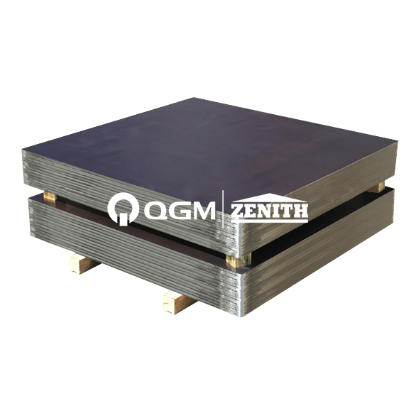
Table of Contents
- 1. How Do Durable Block Machine Pallets Reduce Material Waste?
- 2. How Does Pallet Reconditioning and Recycling Support the Circular Economy?
- 3. What Are the Key Specifications of Our Sustainable Block Machine Pallets?
- 4. How Can Energy-Efficient Production with Quality Pallets Lower Carbon Footprint?
- Frequently Asked Questions (FAQ)
- Conclusion and Sustainable Pallet Consultation
How Do Durable Block Machine Pallets Reduce Material Waste?
Material waste is a major environmental concern in concrete block production. It occurs at multiple stages: during block forming, from rejected products, and from the pallets themselves when they fail prematurely. A Block Machine Pallet that warps, cracks, or delaminates must be taken out of service, becoming waste that often ends up in a landfill. Conversely, a durable pallet—such as our multi-layer Block Machine Pallet—stays in service for a much longer period, significantly reducing the volume of waste generated from pallet disposal. Our factory has engineered pallets that withstand the high vibration, impact, and moisture cycles of block production, with a service life that is typically 3 to 5 times longer than standard wood or single-layer plastic pallets. This extended lifespan directly translates to fewer pallets purchased and disposed of over a given production period, conserving raw materials and reducing the environmental burden of manufacturing new pallets.
Specific waste-reduction benefits of durable Block Machine Pallets:
- Extended service life: Our multi-layer Block Machine Pallet is designed to last for 18 to 36 months under typical production conditions, compared to 6 to 12 months for standard wood pallets. Over a 10-year period, this means 2 to 3 pallet replacements instead of 8 to 10, reducing the total number of pallets required by 60-70 percent.
- Reduced block rejection: A warped or uneven pallet leads to blocks with inconsistent heights, which are rejected and become waste. Our pallets maintain flatness to within +/- 0.3 mm, ensuring that the blocks are uniform and reducing the rejection rate by up to 80 percent compared to using worn pallets.
- Lower material consumption for pallet production: By extending the interval between pallet replacements, producers reduce the demand for raw materials (wood, plastic, resins) used in pallet manufacturing. This conserves natural resources and reduces the energy and emissions associated with pallet production.
- Reduced packaging waste: Durable pallets can be reused many times, eliminating the need for disposable pallets or slip sheets. This is particularly important in closed-loop systems where pallets are returned to the block plant for reuse.
A case study from a block plant in Germany illustrates the waste-reduction potential. The plant was replacing 800 wooden pallets every year, each weighing 12 kg, resulting in 9.6 tons of wood waste annually. After switching to our multi-layer Block Machine Pallets, the replacement interval extended to 3 years, reducing the annual waste from pallet disposal to 3.2 tons—a 67 percent reduction. Additionally, the improved pallet flatness reduced block rejection by 5 percent, saving an additional 150 tons of concrete mix from being wasted. The plant manager reported that the overall waste reduction translated into significant cost savings and a tangible improvement in their environmental footprint, which they highlighted in their sustainability reporting.
Our factory at Quangong Machinery Co., Ltd. has developed a lifecycle analysis (LCA) tool that quantifies the environmental benefits of our Block Machine Pallets compared to standard options. The LCA accounts for raw material extraction, manufacturing, transportation, use, and end-of-life disposal. The results consistently show that our multi-layer pallets have a lower environmental impact across all categories, including carbon footprint, water consumption, and waste generation. By choosing durable Block Machine Pallets, producers can make a measurable contribution to waste reduction and resource conservation, aligning with the principles of sustainable construction.
How Does Pallet Reconditioning and Recycling Support the Circular Economy?
The circular economy aims to keep materials in use for as long as possible, extracting the maximum value from them before recovery and regeneration. Block Machine Pallets are ideal candidates for circular economy practices, as they can be reconditioned multiple times and eventually recycled. Our multi-layer Block Machine Pallet is designed with this principle in mind: the surface layer can be ground down and replaced with a new wear-resistant coating, extending the pallet's life by a further 12-18 months. When the pallet reaches the end of its usable life, the materials—engineered wood, composite resins, and aluminum—can be separated and recycled into new products. This approach keeps pallet materials out of landfills and reduces the need for virgin resources. Our factory at Quangong Machinery Co., Ltd. operates a full-service reconditioning and recycling program, making it easy for our customers to adopt circular economy practices.
Key circular economy features of our Block Machine Pallets:
- Reconditioning service: Our factory offers a professional reconditioning service where worn pallets are surface-ground, re-flattened, and re-coated with a new wear-resistant layer. This costs 40-50 percent of the price of a new pallet and restores the pallet to near-original performance. Reconditioning can be repeated 2-3 times over the pallet's lifetime, significantly extending its service life.
- Recyclable materials: Our Block Machine Pallets are manufactured using materials that are readily recyclable. The engineered wood core can be processed into particleboard or used as biomass for energy generation. The surface coatings are designed to be removed during the reconditioning process, ensuring that the core material remains pure for recycling.
- Closed-loop pallet exchange: We offer a pallet exchange program where customers return their worn pallets to us in exchange for reconditioned ones. This creates a closed-loop system where the pallets are continuously cycled back into service, reducing the need for new pallet production.
- Reduced reliance on virgin materials: By reconditioning and recycling pallets, producers reduce the demand for virgin wood, plastics, and resins. This conserves forests, reduces petrochemical use, and lowers the overall environmental impact of the block production process.
A practical example of circular economy in action comes from a large block producer in Australia. The producer had accumulated over 5,000 worn pallets that were destined for landfill. Instead, they partnered with our factory to recondition 3,500 of them, saving over 70 percent of the cost of new pallets. The remaining 1,500 pallets were recycled, with the wood core being processed into particleboard and the surface coatings being used as fuel in a cement kiln, replacing fossil fuels. The producer reduced their pallet-related waste by 85 percent and was recognized with a sustainability award from their local government. This case demonstrates that the circular economy is not just an abstract concept but a practical, cost-effective strategy that Block Machine Pallets can help realize.
Our factory also provides a certification program for reconditioned Block Machine Pallets, verifying that they meet the same flatness, surface hardness, and dimensional tolerances as new pallets. This gives our customers confidence that reconditioned pallets will perform as reliably as new ones. By integrating reconditioning and recycling into their pallet management strategy, producers can achieve significant environmental and economic benefits, supporting the transition to a more sustainable construction industry.
What Are the Key Specifications of Our Sustainable Block Machine Pallets?
Quangong Machinery Co., Ltd. manufactures a comprehensive range of sustainable Block Machine Pallets that combine durability with environmental responsibility. Our pallets are available in a variety of sizes, thicknesses, and materials to suit different block machines and production volumes. The table below summarizes the key specifications for our most popular Block Machine Pallet models, which are designed to minimize waste, maximize service life, and support circular economy practices. Our factory can also produce custom-sized pallets to meet specific project requirements.
| Pallet Model | Dimensions (L x W x H) mm | Core Material | Surface Layer | Reconditioning Cycles | Recyclable Content (%) | Expected Lifespan (Years) | Weight (kg) |
| QM-P800x600 | 800 x 600 x 18 | High-density fiberboard (HDF) | PU-coated wear layer | 3 | 85% | 4-6 | 8.5 |
| QM-P1000x800 | 1000 x 800 x 20 | Cross-laminated HDF | PU-coated + HDPE edge | 3 | 82% | 5-7 | 15.2 |
| QM-P1200x900 | 1200 x 900 x 22 | Fibreglass-reinforced composite | Epoxy-coated with UV inhibitor | 4 | 78% | 6-8 | 22.5 |
| QM-P1400x1000 | 1400 x 1000 x 25 | High-strength composite | Epoxy-coated + steel-framed edges | 4 | 75% | 7-10 | 32.0 |
| QM-P1500x1200 | 1500 x 1200 x 25 | High-strength composite | Epoxy-coated + full steel frame | 5 | 72% | 8-12 | 38.5 |
In addition to the standard models, our factory offers several optional features that enhance the sustainability of Block Machine Pallets. These include: a bio-based resin option for the surface coating, which reduces reliance on petrochemicals; a lightweight core material that reduces shipping fuel consumption; and a pallet tracking system that enables accurate lifecycle monitoring, helping producers optimize pallet use and maintenance.
Our quality control process includes a comprehensive sustainability audit for each pallet batch. We measure and report the carbon footprint per pallet, the percentage of recycled content, and the expected number of reconditioning cycles. This data is summarized in a sustainability certificate that accompanies each shipment. Our factory at QGM/Zenith is committed to reducing our own environmental footprint, and we use renewable energy in our manufacturing process and recycle 95 percent of our production waste. By choosing our sustainable Block Machine Pallets, you are not just investing in a durable product; you are partnering with a company that shares your commitment to environmental stewardship.
How Can Energy-Efficient Production with Quality Pallets Lower Carbon Footprint?
Block Machine Pallets indirectly influence the energy efficiency and carbon footprint of the entire block production process. A high-quality pallet, with its flat surface and consistent dimensions, allows the block machine to operate at optimal settings without the need for frequent recalibration or adjustments. This reduces machine cycling time, lowers hydraulic pressure variations, and minimizes energy waste. Moreover, a durable pallet reduces the frequency of production interruptions for pallet changeovers, which otherwise consume energy to restart the machine and bring it back to thermal equilibrium. At QGM/Zenith, our factory has quantified the energy savings associated with using high-quality Block Machine Pallets, and the results are significant. In a typical 500,000 block per year plant, the use of durable pallets can save up to 15,000 kWh of electricity annually, equivalent to a 7-ton reduction in CO2 emissions.
Key energy and carbon-saving mechanisms of our Block Machine Pallets:
- Reduced machine vibration energy loss: Our multi-layer Block Machine Pallets have excellent vibration damping properties, which means that less vibrational energy is lost to the pallet itself, and more is transferred to the concrete mix. This allows the machine to operate at lower vibration amplitudes, reducing the energy consumption of the vibrator motors.
- Fewer start-up cycles: Each time a pallet changeover occurs, the block machine must be stopped and restarted, consuming a surge of energy. By extending the interval between changeovers, durable pallets reduce the number of start-up cycles, saving electricity and reducing thermal stress on the machine's components.
- Lower hydraulic pressure requirements: A flat, dimensionally consistent Block Machine Pallet allows the hydraulic system to maintain a stable pressing force without the need for pressure compensation adjustments. This reduces the energy consumption of the hydraulic pump over the production run.
- Reduced product rejection: Rejected blocks represent a waste of the energy used to produce them—from mixing and forming to curing. By reducing the rejection rate, durable pallets ensure that the energy invested in each block is not wasted, effectively lowering the energy intensity per usable block.
A practical energy-saving example comes from a block plant in the United Kingdom. The plant was using standard pallets that required frequent replacement and caused a 3 percent rejection rate. After switching to our multi-layer Block Machine Pallets, the rejection rate dropped to 0.4 percent, and the plant manager calculated that the annual energy saving from reduced start-up cycles and lower vibration power was approximately 18,000 kWh. This translated to a carbon footprint reduction of nearly 9 tons of CO2 per year, based on the UK's average grid emission factor. The plant achieved these savings without any capital investment in new machinery, demonstrating that sustainable pallet selection is a low-cost, high-impact strategy for reducing environmental impact.
Our factory provides an energy efficiency calculator that estimates the potential energy and carbon savings from using our Block Machine Pallets compared to standard alternatives. This calculator is based on data from hundreds of installations and takes into account factors such as machine type, production volume, and local energy mix. By using this tool, producers can quantify the environmental benefits of switching to our sustainable pallets and incorporate these into their sustainability reporting. At Quangong Machinery Co., Ltd., we believe that every component of the block production process offers an opportunity to reduce environmental impact, and our Block Machine Pallets are designed to be a key part of that strategy.
Frequently Asked Questions (FAQ)
Question 1: What makes a block machine pallet "sustainable" compared to standard pallets?
Answer: A sustainable Block Machine Pallet is characterized by its long service life, the use of recycled or recyclable materials, and the ability to be reconditioned multiple times. Standard pallets, often made from single-layer wood or low-grade plastic, have a short lifespan and are typically disposed of after a single use or a few uses, generating significant waste. Our multi-layer Block Machine Pallets are designed with sustainability in mind: they last 3 to 5 times longer, can be reconditioned 3-5 times, and are made with materials that are recyclable at the end of their life. This reduces resource consumption and waste generation, supporting a more circular economy.
Question 2: Can block machine pallets be recycled at the end of their life?
Answer: Yes, our multi-layer Block Machine Pallets are designed to be recyclable. The engineered wood or composite core can be processed into particleboard or used as biomass fuel. The surface coatings are designed to be removed during the reconditioning process, ensuring that the core material remains pure for recycling. Our factory offers a pallet take-back program, where we accept end-of-life pallets and process them for recycling, helping our customers to close the loop and divert waste from landfills.
Question 3: How much energy can be saved by using high-quality block machine pallets?
Answer: The energy savings depend on the specific production conditions, but our data shows that using high-quality Block Machine Pallets can reduce energy consumption by 5-15 percent. This is achieved through reduced vibration losses, fewer machine start-ups, lower hydraulic pressure requirements, and a decreased product rejection rate. In a typical medium-sized block plant, this can translate to energy savings of 10,000 to 20,000 kWh per year, which also reduces carbon emissions. Our factory provides a free energy savings estimate for your specific operation.
Question 4: How does the reconditioning process work, and does it affect pallet performance?
Answer: Reconditioning involves grinding down the worn surface layer of the Block Machine Pallet, re-flattening the surface, and applying a new wear-resistant coating. The process also includes inspection of the core for damage and repair of any minor defects. Reconditioned pallets are tested to ensure they meet the same flatness, surface hardness, and dimensional tolerances as new pallets, so they perform identically. Most pallets can be reconditioned 3-5 times, extending their service life by several years. Our factory provides a reconditioning service and guarantees the performance of reconditioned pallets.
Question 5: What certifications does Quangong Machinery Co., Ltd. hold for its sustainable block machine pallets?
Answer: Our Block Machine Pallets are manufactured under ISO 9001:2015 (Quality Management) and ISO 14001:2015 (Environmental Management) standards. We also hold the FSC (Forest Stewardship Council) certification for our engineered wood core materials, ensuring that they come from sustainably managed forests. Our sustainability certifications are regularly audited by third-party organizations, and we provide a full sustainability report with every order, detailing the recycled content, carbon footprint, and end-of-life options for our pallets. This transparency allows our customers to confidently incorporate our pallets into their own sustainability programs.
Conclusion: Building a Greener Future with Sustainable Block Machine Pallets
Block machine pallets are a critical, yet often overlooked, component in the journey toward sustainable construction. Through their extended service life, reconditioning potential, and recyclability, high-quality Block Machine Pallets reduce material waste, support the circular economy, and lower the carbon footprint of block production. At Quangong Machinery Co., Ltd., our factory has engineered our Block Machine Pallets to be both durable and environmentally responsible, offering a range of sizes and materials to suit any production facility. Our commitment to sustainability extends beyond our products to our manufacturing processes, which are powered by renewable energy and designed to minimize waste.
Are you ready to make your block production more sustainable? Contact Quangong Machinery Co., Ltd. today for a comprehensive pallet sustainability consultation. Our team will analyze your production process and recommend the optimal Block Machine Pallet model to reduce waste, lower energy consumption, and support your environmental goals. We offer free sustainability assessments, competitive pricing, and a full reconditioning and recycling program. Request your free sustainability consultation now from Quangong Machinery Co., Ltd. and take the next step toward a greener, more efficient block production operation.