- English
- Español
- Português
- русский
- Français
- 日本語
- Deutsch
- tiếng Việt
- Italiano
- Nederlands
- ภาษาไทย
- Polski
- 한국어
- Svenska
- magyar
- Malay
- বাংলা ভাষার
- Dansk
- Suomi
- हिन्दी
- Pilipino
- Türkçe
- Gaeilge
- العربية
- Indonesia
- Norsk
- تمل
- český
- ελληνικά
- український
- Javanese
- فارسی
- தமிழ்
- తెలుగు
- नेपाली
- Burmese
- български
- ລາວ
- Latine
- Қазақша
- Euskal
- Azərbaycan
- Slovenský jazyk
- Македонски
- Lietuvos
- Eesti Keel
- Română
- Slovenski
- मराठी
- Srpski језик

Why Are Fiber Block Machine Pallets Replacing Traditional Wooden Options?
Across the concrete block industry, a quiet but profound shift is taking place. Listen carefully, and you can hear the thud of wooden pallets hitting the scrap heap, replaced by the crisp, consistent snap of high-performance fiber-reinforced composite pallets locking into production lines. For decades, the humble wooden pallet was the undisputed workhorse of the block plant. It was cheap, readily available, and, to be fair, it did the job. However, the job has changed. Modern block machines run faster, produce more complex shapes, and demand a level of precision that a piece of timber, with its knots, moisture content, and tendency to warp, simply cannot guarantee. The fiber block machine pallet is not just an alternative; it is a fundamental upgrade—a product of materials science engineered for the relentless cadence of automated production. At Quangong Machinery Co., Ltd., our factory has been at the forefront of this transition, and we have observed that the shift is happening at an accelerating pace across markets in Europe, North America, and Asia. This article will explain why this change is not a trend, but an inevitability.
To understand the full scale of this revolution, we need to look beyond the simple question of cost per unit. The economics of pallet use in a block plant are complex. A wooden pallet might have a lower upfront cost, but its true price is paid in downtime, rejected blocks, and constant maintenance. A fiber composite pallet, on the other hand, is an investment in consistency and uptime. It offers a flat, dimensionally stable surface that never warps or splinters, and it can be manufactured to tight tolerances that align perfectly with the machine's vibrating table. Furthermore, there is a growing sustainability narrative. As deforestation concerns become more prominent and the cost of timber rises, manufacturers are seeking alternatives. Our fiber pallets are not only made from sustainable and recyclable materials, but they also have a service life that is often four to five times longer than wooden ones, reducing the number of pallets that need to be manufactured and disposed of in the first place. This is a classic case of 'doing well by doing good,' and it is a compelling reason for the industry's shift.
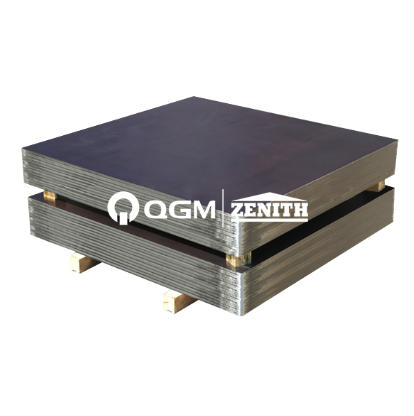
Table of Contents
- 1. Why Does Dimensional Stability Matter in a High-Speed Plant?
- 2. What Is the Real Cost of a Wooden Pallet in a Modern Factory?
- 3. How Does a Fiber Pallet Reduce Downtime and Improve Throughput?
- 4. What Are the Key Technical Specifications of Fiber Pallets?
- Frequently Asked Questions (FAQ)
- Conclusion and Pallet Upgrade Consultation
Why Does Dimensional Stability Matter in a High-Speed Plant?
Imagine walking into a busy block plant. The air is filled with the deep, rhythmic thump of a concrete block machine operating at full capacity. Pallets slide into place with a sound like a heavy door closing. It's a symphony of precision—until it's not. Listen carefully, and you might hear a discordant note: the screech of misalignment as a warped wooden pallet jams against the machine's guide rails. This is a scene familiar to every production manager, and it explains the industry's growing attraction to fiber-reinforced pallets. The central issue is the insidious nature of wood itself. Wood is a biological material, and it reacts to its environment. A wooden pallet will swell in a humid environment and shrink in a dry one. It will twist, cup, and warp. This is not a matter of ‘if’, but ‘when’.
A production manager from a plant in the Midwest once told us a story about a 'ghost defect.' For a full week, the plant was experiencing a 2% rejection rate from blocks that were consistently 0.5 mm too short. They blamed the machine, the mix, and even the operator. After days of troubleshooting, the problem was traced to a single pallet that had warped by a mere 0.75 mm across its length. That tiny deviation was enough to shift the entire block height during vibration. This illustrates the critical point: in high-speed, high-precision production, a pallet's primary job is not just to carry the block; it is to act as a precision tool. A fiber pallet, engineered from a composite of thermosetting resins and high-tenacity fibers, is a stable and inert platform. It is designed to maintain its geometry through changes in temperature and humidity, ensuring that the block you produce in January is the same as the one you produce in August.
This stability has a cascading effect on the entire production line. When pallets are consistently flat, the machine's vibration system operates more efficiently, resulting in better compaction, fewer voids, and stronger blocks. It also reduces wear on the machine's table and guide components. The demand for precise, repeatable pallet geometry is a fundamental driver of the shift away from wood, and it is a demand that our factory designed our fiber pallets to meet from the ground up.
What Is the Real Cost of a Wooden Pallet in a Modern Factory?
The true cost of a wooden pallet is far higher than its purchase price. It's a sneaky cost, one that hides in plain sight, disguised as 'just part of doing business.' Let's break it down. To understand the financial math, let's look at a direct comparison between a standard wooden pallet and a high-quality fiber pallet over a 5-year period. This analysis, based on our factory's data and industry averages, reveals the hidden cost of the 'cheap' option.
| Cost Factor | Traditional Wood Pallet | High-Performance Fiber Pallet |
| Purchase Price / Unit | $12.00 | $65.00 |
| Average Lifespan (Cycles) | 300 | 1,800 |
| Cost per Cycle | $0.04 | $0.036 |
| Expected Block Rejection Rate | 2.5% | 0.3% |
| Lost Production per pallet (due to jams) | 4 hours / year | < 0.5 hours / year |
This table is a simplification, but it reveals the strategic truth. The fiber pallet's purchase price is higher, but it wins on a 'per-use' basis and, critically, it wins on the hidden costs that can devastate a production budget. The most significant hidden cost is the 'cost of lost opportunity.' A single misaligned wooden pallet can cause a jam that stops the machine for several minutes. If a plant is producing 1,000 blocks per hour, even a 10-minute jam represents a loss of over 150 blocks. Multiply that by the frequency of such jams over a year, and the cost can exceed the entire pallet budget for the year. On the other hand, the flatness and precision of a fiber pallet ensures that jams from pallet-related causes are virtually eliminated.
Another factor is the labor and storage footprint associated with wooden pallets. A block plant might need to hold a large inventory of wooden pallets just to cope with the high rate of breakage and replacement. This requires substantial floor space and labor to manage, store, and prepare. Our fiber pallets, with their much longer lifespan, dramatically reduce the inventory and labor costs, freeing up factory floor space and staff for productive tasks. The economic argument for fiber pallets is, therefore, a strategic one. It is a decision to move from a high-maintenance, consumable material to a high-performance, engineered tool.
How Does a Fiber Pallet Reduce Downtime and Improve Throughput?
Consider the story of a family-owned block factory in the Netherlands. They had been in business for three generations and had always used wooden pallets. However, with the installation of a new, high-speed Zenith block machine, they started experiencing a problem. The speed of the new machine was causing their wooden pallets to fail at an alarming rate. They were cracking, splintering, and the constant wear was creating a layer of wood dust on the factory floor, which found its way into the concrete mix, causing surface defects. The factory manager spent a significant portion of his day simply replacing broken pallets and sweeping the floor. He decided to run a trial with a batch of our high-fiber pallets.
The result was a revelation. The most immediate improvement was in the stability of the production line. With the consistent geometry of the fiber pallets, the machine's sensors reported fewer misalignments, and the rejection rate for height and flatness dropped dramatically. The operator could now run the machine at its full, designed speed without fear of jams. The floor was cleaner, and the overall maintenance burden was reduced. The factory manager calculated that the switch to fiber pallets had increased his net production by nearly 6% in the first year alone—simply by eliminating downtime and rejects associated with pallet handling.
The specific construction of our fiber pallets is key to this performance. They are manufactured from a composite of high-strength glass fibers and thermosetting resins, compressed under high pressure and temperature to create a material that is incredibly strong and stiff. Unlike wood, this material does not absorb moisture. This means no warping, no rotting, and no dimensional changes. Furthermore, the surface is designed with a textured, anti-slip pattern that helps hold the wet block in place during vibration, improving the consistency of the block's shape and density. To provide a technical reference, here are the critical specifications for our fiber block machine pallets.
| Property | Specification | Test Method |
| Flexural Strength (MPa) | > 150 | ASTM D790 |
| Modulus of Elasticity (GPa) | > 25 | ASTM D790 |
| Water Absorption (%) | < 0.15 | ASTM D570 |
| Impact Resistance (Izod, J/m) | > 600 | ASTM D256 |
| Operating Temperature Range | -30°C to +80°C | Internal Test |
What Are the Key Technical Specifications of Fiber Pallets?
The quietest advocate for the fiber pallet is often the forklift driver. Spend a shift driving a forklift in a block plant, and you will quickly understand why. Wooden pallets are not a uniform product. They are heavy, often splintered, and can have nails that protrude and damage the forklift tires or the concrete floor. They are difficult to handle precisely, which can lead to operator frustration and accidents. In contrast, a fiber pallet is manufactured to exact, predictable dimensions, with perfectly straight edges and consistent weight. They are easier to see around, easier to stack, and they don't leave a trail of debris on the factory floor. It is a far smoother operation.
To give a more practical, operational perspective, imagine you are a forklift operator. Your daily routine involves moving hundreds of pallets. With wood pallets, you have to account for their variability. Some are warped and rock slightly, making them hard to stack. Others have broken boards that can catch on the forks, requiring you to adjust your approach. This slows you down and creates a risk. With a fiber pallet, the routine is simple and consistent. They slide onto the forks with a smooth, predictable motion. They stack easily because they are perfectly flat and square. They are lighter, which means you can accelerate and decelerate more efficiently, and you reduce fuel consumption.
Our fiber pallets also have a standardized weight of approximately 12-15 kg, depending on the size, compared to 18-22 kg for a similarly sized wooden pallet. This weight reduction is significant over the course of a shift, as it reduces the physical strain on the forklift and the operator, leading to improved safety and productivity. The consistency of the fiber pallet also simplifies the automated stacking and wrapping systems used in many modern plants, as they can be programmed to handle a uniform product, reducing the risk of sensor errors. The operator's perspective is one of simplicity and reliability, which is often overlooked but is a crucial part of why fiber pallets are winning over the workforce.
Frequently Asked Questions (FAQ)
Question 1: Can fiber pallets be recycled at the end of their life?
Answer: Yes, our fiber pallets are fully recyclable. The composite material can be processed through specialized recycling streams that separate the glass fibers and resin. The resulting materials can be used as feedstock for new composite products or as a cementitious filler in concrete production. We also offer a take-back program where we accept end-of-life pallets for recycling, ensuring they do not end up in landfills. This supports the circular economy and reduces the environmental footprint of your operations.
Question 2: How do fiber pallets perform in wet environments?
Answer: Fiber pallets excel in wet environments. Unlike wood, which absorbs moisture and swells, our fiber pallets are highly water-resistant. The water absorption rate is typically below 0.15%, meaning they will not warp, rot, or degrade due to humidity or direct contact with wet concrete. This makes them ideal for the wash-down areas and damp conditions commonly found in block plants.
Question 3: What is the expected lifespan of a fiber pallet compared to wood?
Answer: The lifespan of our fiber pallet is significantly longer than that of a wooden pallet, often by a factor of four to five times. While a wooden pallet might last for 300-400 cycles under heavy use, a high-performance fiber pallet can easily exceed 1,500 to 2,000 cycles. This dramatically reduces the frequency of pallet replacement and the associated operational costs.
Question 4: Are fiber pallets safe for high-temperature applications?
Answer: Yes. Our fiber pallets are designed to handle a wide temperature range, from -30°C to +80°C. This makes them suitable for steam curing processes and for use in hot climates without risk of deformation or loss of structural integrity.
Question 5: Can I get custom dimensions for fiber block machine pallets?
Answer: Absolutely. We understand that every block plant and machine setup is unique. Our factory has the capability to produce custom-sized fiber pallets to match the exact dimensions and specification of your block machine. We work closely with our customers to ensure the perfect fit, maximizing performance and efficiency.
Conclusion: The Future is Engineered, Not Cut from a Tree
The shift from wooden pallets to fiber-reinforced composite pallets in the concrete block industry is a clear signal of a maturing sector. It represents a move away from relying on a variable, natural material to embracing the precision of engineered products. The decision to upgrade to fiber pallets is a strategic one, based on improved dimensional stability, lower total cost of ownership, enhanced safety, and a reduced environmental footprint. It is a decision that supports higher production speeds, better quality blocks, and a more sustainable future.
Are you ready to eliminate the hidden costs of wooden pallets and upgrade to a more reliable, efficient solution? Contact us today for a comprehensive pallet analysis. Our team of engineers will evaluate your production line and recommend the optimal fiber pallet solution. We offer free sample pallets for testing, comprehensive performance data, and expert installation support. Request your free consultation now from QGM and take the first step towards a more efficient and reliable production process.