- English
- Español
- Português
- русский
- Français
- 日本語
- Deutsch
- tiếng Việt
- Italiano
- Nederlands
- ภาษาไทย
- Polski
- 한국어
- Svenska
- magyar
- Malay
- বাংলা ভাষার
- Dansk
- Suomi
- हिन्दी
- Pilipino
- Türkçe
- Gaeilge
- العربية
- Indonesia
- Norsk
- تمل
- český
- ελληνικά
- український
- Javanese
- فارسی
- தமிழ்
- తెలుగు
- नेपाली
- Burmese
- български
- ລາວ
- Latine
- Қазақша
- Euskal
- Azərbaycan
- Slovenský jazyk
- Македонски
- Lietuvos
- Eesti Keel
- Română
- Slovenski
- मराठी
- Srpski језик
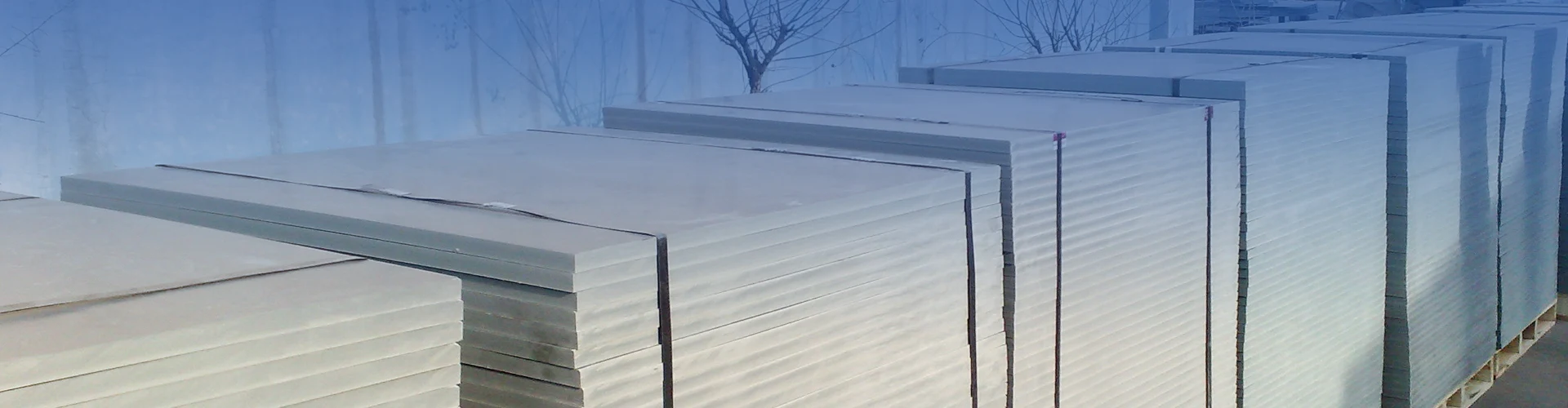
Block Machine Concrete
The Block Machine Concrete is designed for one purpose: to deliver consistent, high-quality concrete blocks with minimal production variance. Unlike systems that prioritize speed over stability or features over fundamentals, this machine focuses on what matters most – the reliable conversion of raw materials into finished products that meet specification, every time. It is engineered for producers who understand that quality is not an option but a requirement for long-term business success.
The machine's design philosophy is grounded in practical production experience. Every component – from the frame structure to the control system – has been evaluated for its contribution to overall reliability. The result is a forming system that operates predictably under a wide range of conditions, requiring less operator attention and fewer adjustments than typical alternatives. This predictability translates to better production planning, reduced material waste, and improved customer satisfaction.
Pallet System
The quality of the finished Block Machine Concrete is determined at the interface between the forming energy and the concrete mix – and that interface is the pallet. Our steel pallet system is manufactured with attention to every detail that affects forming performance:
• Foundation of Precision: CNC aerated bidirectional linear cutting establishes exact length, width, and diagonal dimensions. This is not a cosmetic feature but a fundamental requirement for product consistency – any deviation in pallet geometry translates directly to variation in block dimensions.
• Edge Quality as a Performance Factor: Robotic smoothing and polishing, followed by steel-brushing and pressing, produces edges that resist wear and maintain their shape under repeated use. This reduces the risk of edge damage that could compromise product quality or create handling hazards.
• Stress Relocation Engineering: The systematic elimination of residual tensile stresses in both horizontal and vertical orientations prevents the development of warping or distortion over time. This engineering step addresses a common failure mode in standard pallets – the gradual loss of flatness that leads to product defects.
• Flatness as a Deliverable: The two-stage correction process and 100% automated inspection ensure that every pallet meets the flatness specification before it enters your production cycle. This eliminates the variability that arises from accepting pallets that are "close enough" to standard.
Application-Specific Options
The appropriate pallet thickness is determined by the interaction between product weight, mix characteristics, and production intensity. For curb stone applications with a 600kg per pallet load capacity, we offer the following options:
| Steel Pallet (L×W) | Product | Load Condition | Raw Material | Thickness (mm) |
| 1400 × 1000 mm | Curb Stone | Up to 600kg | KS SS400 / DIN St 44.2 | 15 / 16 / 18 |
| 1400 × 1000 mm | Curb Stone | Up to 600kg | KS SS490 / DIN St 50.2 / DIN St 52.3 | 15 / 16 / 18 |
Comparative Performance – Understanding the Differences
The choice of pallet material has implications that extend across the entire production operation. The following comparison provides a structured view of the performance differences:
| Parameter | Steel Pallet Performance |
| Durability | Sustains high-cycle operation without degradation – service life measured in years, not months |
| Waste | Fully recoverable at end of life – contributes to circular economy objectives |
| End-of-life value | Scrap metal provides documented financial recovery value |
| Environmental impact | No chemicals, no coatings, no emissions – inert through entire lifecycle |
| Product strength | Excellent > Wood / Plastic – support rigidity maximizes compaction density |
| Mold block strength | Excellent > Wood / Plastic – maintains dimensional accuracy under load |
| Finished product appearance | Superior surface quality > Wood / Plastic – precision surface reduces finishing needs |
| Elastic modulus | 200 GPa (rigid support) > Wood / Plastic – consistent deflection characteristics |
| Vibration transmission rate | High (enhances compaction efficiency) > Wood / Plastic – direct energy transfer |
Market Comparison – A Practical Assessment
When evaluating concrete block forming equipment, a practical assessment of the alternatives reveals significant differences in both initial capability and long-term performance. The following comparison is based on actual field experience and customer feedback:
| Assessment Area | Block Machine Concrete | Alternative Automatic Systems | Entry-Level Equipment |
| Pallet Dimensional Consistency | High – CNC controlled, ±0.5 mm | Moderate – ±2.0-3.0 mm | Low – ±3.0-5.0 mm |
| Stress Relieving Process | Standard – both axes | Rarely performed | Never performed |
| Quality Verification | 100% automated inspection | Sampling-based | Visual check only |
| Material Grade Selection | Multiple grades available | Limited – 1-2 grades | Single grade only |
| Edge Processing | Robotic + secondary treatment | Robotic only | Manual finishing |
| Service Life Expectancy | 3-5 years | 1.5-2.5 years | 8-14 months |
| Process Control | Feedback-controlled vibration | Basic parameter setting | Manual adjustment |
| Quality Outcome (Rejection Rate) | < 1.5% | 3-5% | 6-10% |
| End-of-Life Recovery | 20-30% cost recovery | 5-10% (mixed steel) | 0-5% (low-grade material) |
| Maintenance Frequency | Extended intervals | Regular intervals | Frequent interventions |
Application Versatility – Adapting to Production Needs
The Block Machine Concrete is designed to accommodate the range of products typically required in concrete manufacturing. Its versatility is not a secondary feature but an integral aspect of the design:
• Product Range: While optimized for curb stone production, the machine can be configured for paving stones, retaining wall units, hollow blocks, and specialty concrete products. The forming parameters can be adjusted to suit the specific requirements of each product type.
• Mix Flexibility: The machine accommodates a range of mix designs from dry to semi-dry formulations. The efficient vibration transmission through the steel pallet system ensures that compaction remains effective across different material consistencies.
• Production Scalability: The machine's robust construction makes it suitable for both single-shift operations and continuous multi-shift production. This scalability ensures that the machine remains useful as your business grows and production requirements evolve.
• Changeover Efficiency: When transitioning between product types, the machine's control system allows for rapid parameter adjustments. The standardized pallet design also simplifies changeovers by eliminating the need for special tooling or adjustments.
Frequently Asked Questions
Q1: What makes this machine different from other concrete block forming equipment?
A: The key difference is the integrated approach to quality – from the precision pallet system with stress relief and 100% inspection to the closed-loop vibration control that maintains consistent forming conditions regardless of external variables. This results in lower rejection rates, longer component life, and more predictable production outcomes.
Q2: How does the machine handle variations in raw material quality?
A: The Block Machine Concrete is designed to perform consistently across typical material variations. The vibration parameters can be adjusted to compensate for differences in aggregate size, moisture content, or cement content. For significant changes in raw materials, our engineering team can provide guidance on parameter optimization.
Q3: What is the expected production capacity?
A: Production capacity depends on product type, cycle time, and operating hours. For typical curb stone production, the machine can achieve 300-500 cycles per shift depending on configuration and operator efficiency. Our application engineers can provide a specific capacity estimate based on your product specifications and production requirements.
Q4: What is included in the purchase package?
A: The purchase package includes the machine with standard configuration, a set of steel pallets, installation and commissioning support, on-site operator training, and documentation including operation, maintenance, and troubleshooting guides. Additional pallets, spare parts, and extended warranties are available as optional items.
Related Products

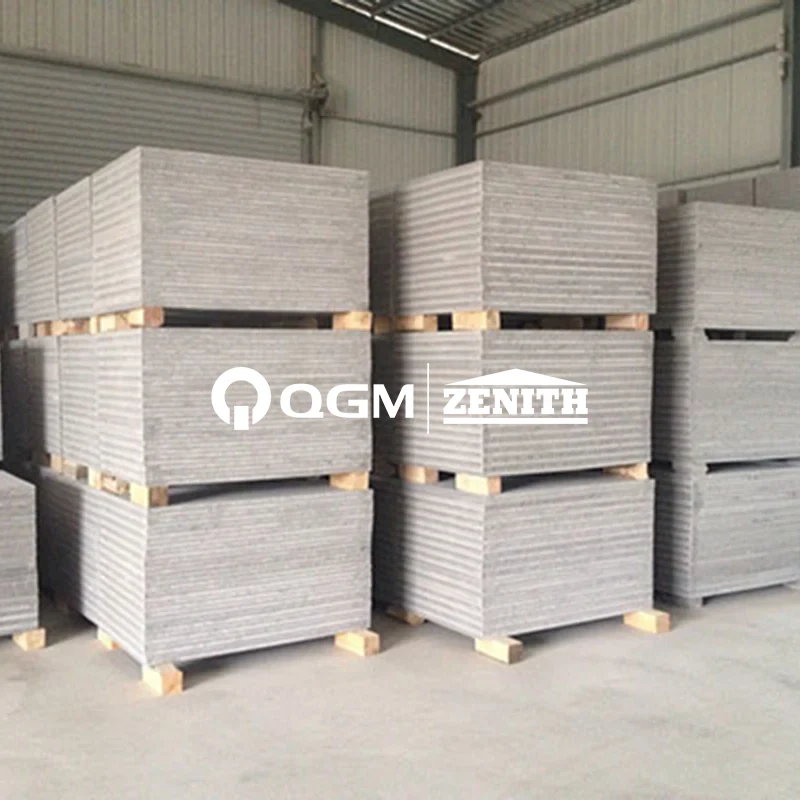


Hot Products

Brick Making Machine Pallet
QGM/Zenith is a professional Brick Making Machine Pallet manufacturer and supplier in China, you can rest assured to buy Brick Making Machine Pallet from our factory and we will offer you the best after-sale service and timely delivery.It is mainly used to store and transport bricks, tiles and other building materials during the brick making process.
Fiberglass Brick Machine Pallet
QGM/Zenith as the professional manufacturer, we would like to provide you high quality Fiberglass Brick Machine Pallet. And we will offer you the after-sale service and timely delivery. It has the characteristics of light weight, corrosion resistance, high temperature resistance, moisture resistance, and corrosion resistance.
Concrete Paver Board
One of the Chinese companies offering Concrete Paver Board for buy is QGM/Zenith. For you, we can offer better pricing and competent service. Should you be intrigued by Concrete Paver Board, kindly get in touch with us. We adhere to the standard of conscience-driven, committed service at the cost of quality assurance.OneWe adhere to the standard of conscience-priced, devoted service, so you can feel secure.
Block Making Machinery Pallet
As one of professional high quality Block Making Machinery Pallet manufacturer, you can rest assured to buy Block Making Machinery Pallet from QGM/Zenith and we will offer you the best after-sale service and timely delivery. Block Making Machinery Pallet is usually made of steel and wood, with a rectangular shape, usually composed of four steel pipes and four wooden boards.
Quick-Change Block Machine Pallet
QGM/Zenith invites you to visit our factory to purchase the high-quality Quick-Change Block Machine Pallet. We are looking forward to working with you. The main materials of the block machine pallet include steel and wood. Steel provides structural support, while wood increases the load-bearing capacity and stability.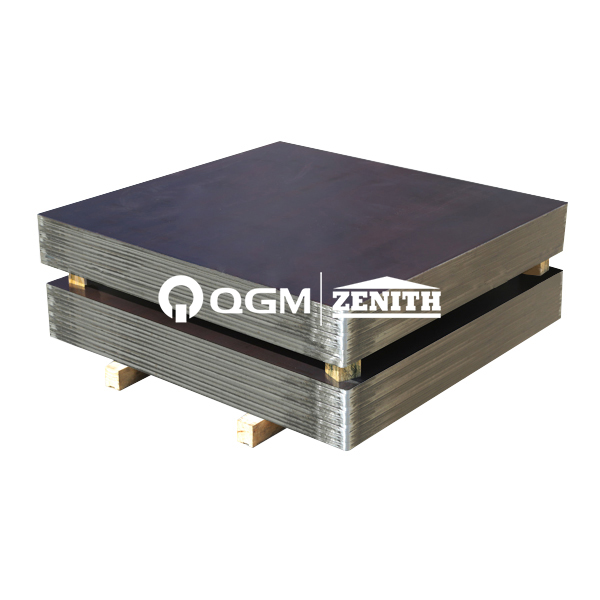
Solid Steel Pallet
As one of professional manufacturer in China, QGM/Zenith would like to provide you Solid Steel Pallet. And we will offer you the best after-sale service and timely delivery. Through CNC machine tools, aerated bidirectional balance (CNC aerated) straight-line cutting method, accurate length, width, and diagonal dimensions.
- Related Blog
- Reviews