- English
- Español
- Português
- русский
- Français
- 日本語
- Deutsch
- tiếng Việt
- Italiano
- Nederlands
- ภาษาไทย
- Polski
- 한국어
- Svenska
- magyar
- Malay
- বাংলা ভাষার
- Dansk
- Suomi
- हिन्दी
- Pilipino
- Türkçe
- Gaeilge
- العربية
- Indonesia
- Norsk
- تمل
- český
- ελληνικά
- український
- Javanese
- فارسی
- தமிழ்
- తెలుగు
- नेपाली
- Burmese
- български
- ລາວ
- Latine
- Қазақша
- Euskal
- Azərbaycan
- Slovenský jazyk
- Македонски
- Lietuvos
- Eesti Keel
- Română
- Slovenski
- मराठी
- Srpski језик
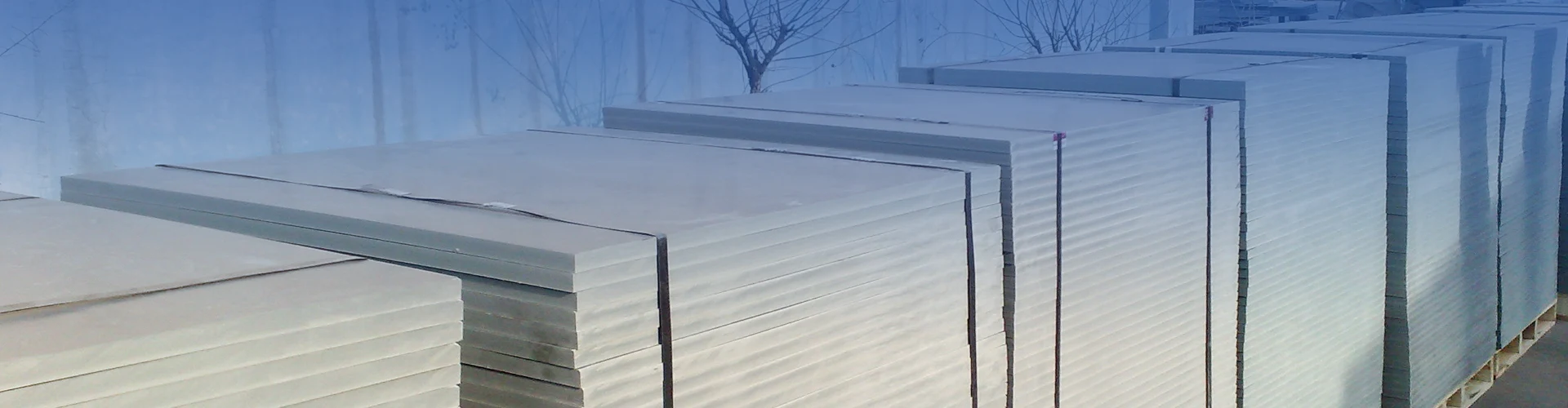
Cement Block Machine
The Cement Block Machine is a specialized forming system engineered specifically for the unique rheological characteristics of cementitious materials. Where conventional block machines treat cement as just another aggregate binder, our equipment recognizes that cement hydration chemistry demands precise control over compaction timing, pressure dwell, and material distribution. This purpose-built approach transforms cement block production from a variable process into a predictable manufacturing operation, delivering consistent product quality across shifts, seasons, and material variations.
The Cement-Specific Compaction Cycle
Cement hydration begins the moment water contacts the cement particles—and compaction timing directly influences the final strength of the finished block. Our Cement Block Machine incorporates a hydration-aware pressing sequence that coordinates compaction with the early stages of cement paste formation:
• Accelerated feed cycle: Material is transported from mixer to mold in under 8 seconds, minimizing hydration progression before compaction begins. This rapid transfer ensures that pressing occurs when cement particles are most responsive to mechanical consolidation.
• Extended dwell at peak pressure: Unlike general-purpose machines that release pressure immediately after reaching target, our system maintains peak pressure for 2.5–4.0 seconds, allowing cement paste to flow into micro-voids and establish initial particle-to-particle bonds under compression.
• Controlled pressure release: The machine reduces pressure gradually rather than abruptly, preventing the formation of micro-cracks that can occur when cement paste is suddenly unloaded.
This hydration-aware approach typically improves 7-day compressive strength by 18%–25% compared to standard compaction cycles, enabling the use of lower cement content while maintaining product specifications.
The Cost of Inconsistent Block Weight
The economic impact of block weight variation is rarely measured—yet it directly affects both material consumption and customer acceptance. Our Cement Block Machine addresses this through precision volumetric feeding with real-time weight verification:
| Block Weight Variation | Material Cost Impact (per 1,000 blocks) | Annual Impact (500,000 blocks) |
| Less than ±1% | Minimal (baseline) | — |
| ±2%–3% (typical industry) | +$12–$18 | +$6,000–$9,000 |
| ±4%–6% (manual feeding) | +$25–$40 | +$12,500–$20,000 |
Our machine's feed system uses twin-shaft forced feeding technology that ensures consistent material density at the mold entrance. This approach reduces weight variation to within ±1.5%—significantly better than the industry average of ±3%–4%—delivering measurable material savings without requiring changes to the mix design.
Material Compatibility: Cement Block Formulations
The Cement Block Machine is designed to process a wide range of cement-based formulations, from high-strength structural mixes to lightweight insulating formulations:
• Standard cement blocks (5%–12% cement content): The machine's hydraulic system delivers consistent compaction at 25MPa, achieving compressive strengths of 25–30MPa with standard aggregate blends.
• Fly-ash blended blocks (up to 40% fly ash): The machine's variable dwell capability extends compaction time to accommodate the slower setting characteristics of pozzolanic blends.
• Lightweight aggregate blocks (pumice, expanded clay): The vibration system adjusts amplitude to prevent aggregate fracture while achieving full compaction.
• Waste-derived aggregates (recycled concrete, slag): The high-pressure hydraulic system provides the additional compaction force needed to achieve target density with less deformable aggregates.
This formulation flexibility enables manufacturers to adapt to local material availability, respond to price fluctuations, and qualify for green building certification programs.
Machine Specifications & Output Capacity
The Cement Block Machine is available in multiple configurations to match production volume requirements:
| Model | Mold Size (mm) | Cycle Time | Solid Blocks/Shift | Hollow Blocks/Shift |
| CB-4 | 680 × 850 | 18–22s | 28,000–32,000 | 8,000–10,000 |
| CB-6 | 850 × 1,100 | 14–18s | 38,000–45,000 | 12,000–15,000 |
| CB-8 | 950 × 1,100 | 12–16s | 48,000–58,000 | 16,000–20,000 |
| CB-10 | 1,100 × 1,400 | 10–14s | 60,000–72,000 | 20,000–26,000 |
The machine's hydraulic system operates at 25–28MPa system pressure, with total motor power ranging from 45kW to 95kW depending on the model.
Control Systems
The Cement Block Machine integrates three levels of control sophistication to match operational requirements:
Level 1 — Manual Control: Basic push-button interface with timers. Suitable for small-scale operations with limited product variety. Production parameters are set via dials and switches.
Level 2 — Semi-Automatic PLC: Touch-screen interface with recipe storage for up to 20 product types. Operator selects product from menu; machine executes pre-programmed cycle. Includes production counter and basic diagnostics.
Level 3 — Full-Intelligent PLC: Industrial-grade Siemens S7-1200 controller with 7-inch color HMI. Features include:
• Real-time pressure monitoring with graphical trend display for quality assurance.
• Production logging with USB export for material tracking and certification documentation.
• Multi-language interface supporting English, Spanish, French, Arabic, and Chinese.
The intelligent control system typically improves production consistency by 15%–20% while reducing operator training requirements to 2–3 days.
Cement Block Machine Comparison
The following comparison evaluates our Cement Block Machine against three common alternatives:
| Parameter | Our Cement Block Machine | Multi-Purpose Block Machine | Manual Cement Block Press | Premium Hydraulic System |
|---|---|---|---|---|
| Hydraulic Pressure (MPa) | 25–28 | 15–22 | 8–12 | 28–35 |
| Pressure Dwell Control | Programmable, 0.5–6.0s | Fixed, 1.5s | Manual | Programmable |
| Weight Variation (%) | ±1.5% | ±3%–4% | ±5%–8% | ±1.0% |
| 7-Day Compressive Strength (same mix) | 18–22 MPa | 14–17 MPa | 8–12 MPa | 20–24 MPa |
| Cement Savings Potential | 8%–12% | 3%–5% | N/A | 10%–15% |
| Multi-Product Capability | Yes — bricks, blocks, pavers | Yes | Limited | Yes |
| Initial Investment (USD) | $75,000–$150,000 | $60,000–$120,000 | $20,000–$40,000 | $250,000–$480,000 |
| 5-Year Total Cost of Ownership | $180,000–$245,000 | $195,000–$265,000 | $260,000–$330,000 | $460,000–$690,000 |
Differentiator: Our Cement Block Machine delivers premium compaction performance at a mid-range investment, with superior cement efficiency and weight consistency that directly improve profitability while maintaining production versatility.
Operational Considerations
Successful Cement Block Machine operation requires attention to specific site and operational factors:
• Foundation preparation: A reinforced concrete foundation with 400mm minimum thickness is recommended. Foundation mass should equal 1.5× the machine weight (8–22 tons depending on model).
• Power supply: Standard industrial three-phase power (380V/50Hz, 415V/50Hz, or 440V/60Hz available). Transformer capacity should be 1.2× the machine's total power rating.
• Material handling: Adequate space for aggregate storage, cement silo access, and finished product stacking is required for efficient operation.
• Pallet specification: The machine accepts standard pallet dimensions (850×680mm, 850×1100mm, 950×1100mm, 1100×1400mm) with flatness tolerance of ±1.0mm.
We provide complete foundation drawings and pre-installation checklists to ensure your site is ready before the machine arrives, minimizing downtime and expediting commissioning.
Frequently Asked Questions
Q1: What is the difference between a Cement Block Machine and a standard block machine?
A Cement Block Machine is specifically optimized for cement-based formulations. Key differentiators include programmable pressure dwell capability for hydration timing, precision feeding systems that reduce weight variation, and higher hydraulic pressure capability for dense cement block compaction.
Q2: Can the machine produce both solid and hollow cement blocks?
Yes. By changing molds, the machine produces solid blocks, hollow blocks, cellular blocks, and paving products. The hydraulic and vibration parameters adjust automatically to ensure optimal compaction for each product type.
Q3: How much cement can the machine save compared to standard production?
Our Cement Block Machine typically achieves 8%–12% cement savings through superior compaction efficiency. For a 50,000-block-per-shift operation, this translates to annual savings of 400–600 tons of cement.
Q4: What is the expected product compressive strength range?
The machine produces cement blocks with compressive strengths ranging from 15MPa to 30MPa, depending on mix design, cement content, and aggregate type. Higher strengths are achievable with optimized formulations and extended curing.
Q5: Does the machine require special maintenance for cement production?
Cement production requires standard preventive maintenance as specified in the machine manual. We recommend more frequent cleaning of mold surfaces and hydraulic system oil analysis to detect moisture contamination from cement dust. A detailed maintenance schedule is provided with the equipment.
Q6: What is the typical payback period for a Cement Block Machine?
Based on cement savings alone, the machine typically achieves payback within 18–24 months. When combined with increased production capacity and reduced labor requirements, the payback period often shortens to 12–18 months.
Related Products


Hot Products

Brick Making Machine Pallet
QGM/Zenith is a professional Brick Making Machine Pallet manufacturer and supplier in China, you can rest assured to buy Brick Making Machine Pallet from our factory and we will offer you the best after-sale service and timely delivery.It is mainly used to store and transport bricks, tiles and other building materials during the brick making process.
Heavy-Duty Brick Machine Pallet
QGM/Zenith is a professional China Heavy-Duty Brick Machine Pallet manufacturer and supplier, if you are looking for the Heavy-Duty Brick Machine Pallet, It plays an important role in building logistics and has strong load-bearing capacity and wear resistance.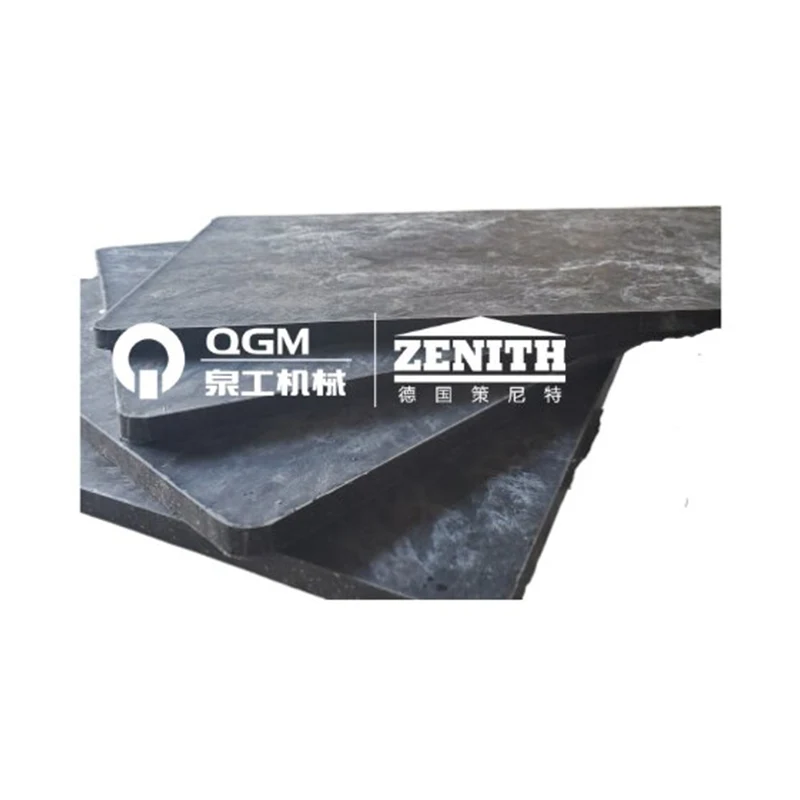
Paver Block Making Machine Pallet
High quality Paver Block Making Machine Pallet is offered by China manufacturer QGM/Zenith. Buy Paver Block Making Machine Pallet which is of high quality directly. It is usually located at the front of the manufacturing machine and is responsible for receiving, temporarily storing and evenly laying the materials on the road surface.
Plastic Brick Pallet
You can rest assured to buy Plastic Brick Pallet from us. We look forward to cooperating with you, if you want to know more, you can consult us now, we will reply to you in time! The main function of Plastic Brick Pallet is to provide a stable and flat platform for the transportation, storage and stacking of various items.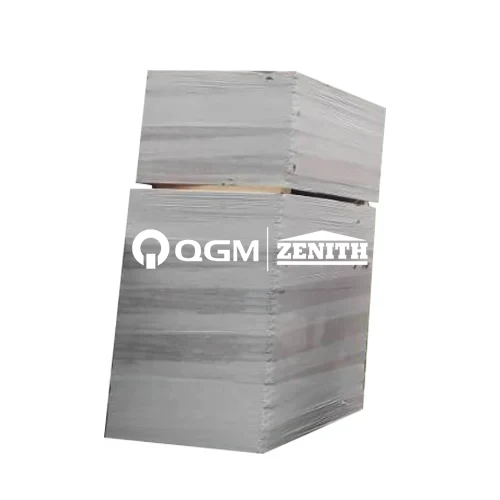
High Strength Concrete Brick Pallet
QGM/Zenith is one of China manufacturer & supplier who mainly produces High Strength Concrete Brick Pallet with many years of experience. Hope to build business relationship with you. It is usually composed of a steel frame and a reinforced steel plate. It has a high load-bearing capacity and good mechanical properties, and can effectively protect bricks from damage during transportation.
High-Capacity Block Machine Pallet
You are welcomed to come to our factory to buy the latest selling, low price, and high-quality High-Capacity Block Machine Pallet, QGM/Zenith looks forward to cooperating with you. It is made of high-quality thermoplastic polypropylene (PP) and can withstand high-density concrete materials and vibrations. It is also corrosion-resistant and durable, and can provide efficient production.
- Related Blog
- Reviews