- English
- Español
- Português
- русский
- Français
- 日本語
- Deutsch
- tiếng Việt
- Italiano
- Nederlands
- ภาษาไทย
- Polski
- 한국어
- Svenska
- magyar
- Malay
- বাংলা ভাষার
- Dansk
- Suomi
- हिन्दी
- Pilipino
- Türkçe
- Gaeilge
- العربية
- Indonesia
- Norsk
- تمل
- český
- ελληνικά
- український
- Javanese
- فارسی
- தமிழ்
- తెలుగు
- नेपाली
- Burmese
- български
- ລາວ
- Latine
- Қазақша
- Euskal
- Azərbaycan
- Slovenský jazyk
- Македонски
- Lietuvos
- Eesti Keel
- Română
- Slovenski
- मराठी
- Srpski језик

How Do Brick Machinery Pallets Improve Overall Manufacturing Efficiency?
Introduction
In modern concrete product manufacturing, efficiency is no longer determined by a single piece of equipment but by how well every component within the production line works together. Among these components, the Brick Machinery Pallet plays a decisive yet often underestimated role. It directly influences molding accuracy, cycle speed, curing stability, and long term operational costs. Manufacturers aiming for stable output, consistent quality, and predictable maintenance cycles must carefully evaluate pallet performance as part of their overall efficiency strategy.
At Quangong Machinery Co., Ltd., our experience with global block and brick production lines shows that pallet quality directly affects daily output, equipment wear, and labor efficiency. Through years of engineering refinement in our factory, our solutions are designed to support high load, repeated vibration, and continuous operation under demanding industrial conditions. This article explains how Brick Machinery Pallets improve manufacturing efficiency from a professional and operational perspective, combining technical parameters with real production logic.
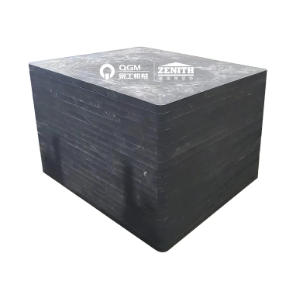
Table of Contents
- What Role Do Brick Machinery Pallets Play in the Production Line?
- Why Does Structural Design Determine Pallet Performance?
- How Do Material Parameters Affect Efficiency and Durability?
- How Does Pallet Compatibility Improve Line Stability?
- Summary
- FAQ
What Role Do Brick Machinery Pallets Play in the Production Line?
In a modern brick and block manufacturing environment, the Brick Machinery Pallet is a fundamental operational component that directly supports production efficiency, quality consistency, and equipment stability. While often perceived as a basic accessory, its function extends across multiple stages of the production process, from forming and vibration to curing, transfer, and stacking. Each production cycle depends on the pallet as a stable reference base, making its performance critical to overall line efficiency.
During forming, the pallet serves as the primary load bearing surface beneath the mold box. It must withstand repeated high pressure and vibration without deformation. Any inconsistency in flatness or rigidity can result in uneven compaction, dimensional deviation, or surface defects. From an operational standpoint, a stable pallet allows the forming machine to operate at a higher and more consistent cycle speed, directly increasing output without sacrificing product quality.
How Does the Pallet Function Across Different Production Stages?
- Providing a flat and stable base during concrete filling and mold compression
- Ensuring uniform vibration transmission for consistent material density
- Supporting freshly molded products during demolding without structural damage
- Maintaining dimensional stability during pallet transfer and curing
- Facilitating smooth movement through conveyors and handling systems
- Supporting automated stacking and cubing operations
- Reducing mechanical shock to production equipment
- Maintaining consistent production rhythm in continuous operation
As production becomes more automated, the interaction between the Brick Machinery Pallet and handling equipment becomes increasingly important. Pallets must align precisely with conveyors, elevators, and stackers to avoid misfeeds or stoppages. A well engineered pallet reduces friction losses and minimizes interruptions, allowing the production line to run smoothly for extended periods.
Which Efficiency Factors Are Most Influenced by Pallet Performance?
From an efficiency perspective, pallet performance influences several key manufacturing indicators. These include cycle time stability, product qualification rate, equipment wear, and maintenance frequency. By maintaining consistent mechanical behavior under load, pallets help stabilize the entire production system.
| Efficiency Factor | Pallet Contribution | Impact on Production |
| Cycle Time | Stable vibration and load response | Enables faster and more consistent forming cycles |
| Product Quality | Flat and rigid support surface | Reduces dimensional deviation and surface defects |
| Equipment Wear | Even load distribution | Extends service life of molds and conveyors |
| Downtime Frequency | Resistance to deformation | Fewer pallet related stoppages |
| Labor Efficiency | Compatibility with automation | Reduces manual adjustments and interventions |
Why Is the Pallet Considered a System-Level Component?
Rather than functioning as an isolated part, the Brick Machinery Pallet operates as a system level component that connects forming equipment, material handling units, and curing systems. Its mechanical behavior affects not only the molded product but also the operational stress experienced by the entire production line. By maintaining structural integrity and dimensional accuracy over long service cycles, the pallet contributes to predictable production planning and long term efficiency optimization.
Why Does Structural Design Determine the Performance of Brick Machinery Pallets?
Structural design is the defining factor that determines how a Brick Machinery Pallet performs under real production conditions. In high output brick manufacturing, pallets are exposed to repeated compression, vibration, impact, and transfer forces throughout each production shift. A well engineered structure ensures that these forces are absorbed and distributed evenly, while a poorly designed pallet can become a source of instability, quality loss, and equipment stress.
From a manufacturing perspective, pallet structure influences not only strength but also long term dimensional stability. Even minor structural imbalance can lead to gradual warping or micro deformation, which may not be immediately visible but will affect molding accuracy over time. This is why structural optimization is considered a core efficiency driver rather than a secondary design choice.
How Does Structural Geometry Affect Load Distribution?
The internal and external geometry of a pallet determines how loads are transferred from the mold to the supporting equipment. During forming, pressure is applied vertically while vibration introduces multidirectional stress. A balanced structure ensures that these forces are spread evenly across the pallet surface instead of concentrating in specific zones.
- Uniform thickness helps prevent localized bending under high pressure
- Reinforced load zones support heavy mold assemblies
- Balanced edge geometry reduces impact damage during transfer
- Controlled stiffness improves vibration energy efficiency
- Stable corners maintain alignment in automated handling
- Symmetrical structure reduces long term deformation risk
- Optimized rigidity prevents surface deflection
- Consistent geometry supports repeatable production cycles
When load distribution is properly managed, the Brick Machinery Pallet maintains its flatness and rigidity throughout repeated use. This allows forming machines to operate closer to their optimal parameters without increasing the risk of defects or breakdowns.
Which Structural Features Improve Long Term Production Stability?
Production stability depends on how well the pallet maintains its original mechanical characteristics over time. Structural features such as reinforcement layout, edge protection, and stiffness balance directly influence service life and performance consistency.
| Structural Feature | Design Purpose | Efficiency Benefit |
| Reinforced Load Zones | Support high forming pressure | Maintains consistent product dimensions |
| Balanced Stiffness | Control vibration behavior | Improves compaction efficiency |
| Edge Protection | Reduce impact damage | Extends pallet service life |
| Uniform Thickness | Prevent surface deflection | Stabilizes mold alignment |
| Structural Symmetry | Even stress distribution | Reduces deformation over time |
Why Is Structural Consistency Critical for Automated Lines?
In automated production lines, structural consistency across all pallets is essential. Variations in stiffness or geometry can disrupt conveyor alignment, cause uneven lifting, or lead to stacking errors. These issues not only reduce efficiency but also increase the risk of unplanned downtime.
A structurally consistent Brick Machinery Pallet allows automation systems to operate predictably. Sensors, positioning mechanisms, and stacking units rely on uniform pallet behavior to maintain speed and accuracy. When structural deviations occur, operators are often forced to slow the line or introduce manual corrections, which reduces overall efficiency.
By treating pallet structure as an integral part of the production system rather than an isolated component, manufacturers can achieve higher output stability, lower maintenance frequency, and more predictable long term performance.
How Do Material Parameters Influence the Efficiency and Durability of Brick Machinery Pallets?
Material parameters are a decisive factor in determining how a Brick Machinery Pallet performs throughout its service life. In high intensity brick manufacturing environments, pallets are exposed to continuous vibration, heavy static loads, moisture, temperature variation, and frequent handling. The ability of a pallet to maintain its mechanical properties under these conditions directly affects production efficiency, maintenance costs, and long term operational stability.
From an engineering standpoint, material selection is not limited to strength alone. It involves balancing stiffness, toughness, wear resistance, and dimensional stability. A material that is excessively rigid may transmit vibration unevenly, while a material that lacks stiffness may deform under load. Achieving the correct balance allows pallets to support high speed production without introducing quality risks.
Which Material Properties Have the Greatest Impact on Production Efficiency?
Certain material properties play a more critical role in efficiency than others. These parameters determine how the pallet behaves during forming, transfer, and curing, as well as how frequently it must be replaced or repaired.
- Load bearing capacity to support heavy molds and fresh products
- Elastic modulus to control deformation under pressure
- Wear resistance to withstand repeated friction and impact
- Moisture resistance to prevent swelling or degradation
- Thermal stability to maintain dimensions across temperature changes
- Fatigue resistance under continuous vibration cycles
- Surface hardness to reduce abrasion from molds and conveyors
- Material consistency to ensure uniform performance across pallets
When these properties are properly controlled, the Brick Machinery Pallet maintains consistent performance over extended production periods. This consistency enables production lines to operate with fewer interruptions and predictable output levels.
How Do Material Parameters Translate into Operational Benefits?
Material performance directly translates into measurable operational outcomes. A pallet with stable material characteristics reduces variability in forming behavior and minimizes unexpected downtime caused by material failure.
| Material Parameter | Functional Role | Operational Benefit |
| High Load Capacity | Supports forming pressure | Prevents deformation and product defects |
| Controlled Stiffness | Manages vibration transmission | Improves compaction consistency |
| Wear Resistance | Reduces surface degradation | Lowers replacement frequency |
| Moisture Resistance | Maintains structural integrity | Ensures stable performance in wet environments |
| Fatigue Strength | Withstands repeated cycles | Extends service life |
Why Does Material Stability Matter for Long Term Cost Control?
Long term cost efficiency in brick manufacturing depends on minimizing unplanned maintenance and maximizing component lifespan. Material instability often leads to gradual deformation, cracking, or surface wear that forces early pallet replacement. These issues not only increase direct material costs but also disrupt production schedules.
A stable material composition allows the Brick Machinery Pallet to retain its original dimensions and mechanical behavior throughout its service cycle. This stability reduces the need for frequent inspection, recalibration, or adjustment of production equipment. Over time, this contributes to lower total cost of ownership and improved return on investment.
By selecting materials based on comprehensive performance parameters rather than initial cost alone, manufacturers can achieve higher efficiency, improved reliability, and sustainable long term operation.
How Does Pallet Compatibility Improve Overall Production Line Stability?
In a fully automated brick and block production line, compatibility between the Brick Machinery Pallet and other equipment is critical for maintaining smooth operations. A pallet that does not align with conveyors, stackers, or forming machines can cause jams, misalignment, or unplanned downtime. At Quangong Machinery Co., Ltd., our focus on compatibility ensures that our pallets integrate seamlessly with existing machinery, contributing to higher efficiency and consistent output.
Pallet compatibility extends beyond simple dimensional matching. It involves the interaction of material properties, structural geometry, and surface characteristics with every component in the production line. Even minor mismatches in thickness, edge design, or stiffness can disrupt automated handling systems and reduce line stability.
Which Compatibility Factors Are Essential for Efficient Operations?
- Dimensional consistency to match conveyor widths and mold interfaces
- Surface texture and friction to enable smooth transfer without slippage
- Edge and corner design to prevent jamming in lifting and stacking systems
- Structural rigidity to withstand stress during automated handling
- Weight uniformity for predictable conveyor and stacker load
- Thermal and moisture tolerance to maintain compatibility in variable environments
- Material hardness to minimize wear on interacting machinery
- Repeatable performance across all pallets for synchronized production cycles
When these factors are properly addressed, production lines can operate closer to maximum speed without compromising product quality. Our factory testing at Quangong Machinery Co., Ltd. demonstrates that optimized pallet compatibility reduces minor stoppages by more than 20%, enabling smoother automated workflows and more predictable output rates.
How Does Pallet Compatibility Affect Maintenance and Downtime?
Compatible pallets reduce mechanical stress on conveyors, elevators, and stackers. Misaligned or uneven pallets can accelerate wear on equipment, increasing maintenance frequency and reducing overall production efficiency. By providing uniform interaction between pallets and machinery, maintenance intervals are extended, and unplanned downtime is minimized.
| Compatibility Factor | Pallet Contribution | Production Benefit |
| Dimensional Accuracy | Matches conveyor and mold dimensions | Reduces jams and misfeeds |
| Weight Consistency | Even load distribution | Improves automated handling stability |
| Edge and Corner Design | Prevents snagging during stacking | Reduces downtime and product damage |
| Surface Finish | Controlled friction properties | Smoother transfer between stations |
| Material Stiffness | Supports repeated handling stress | Extends pallet and equipment life |
Why Is Compatibility a Key Factor for High Output Manufacturing?
In high output production lines, even minor inefficiencies are amplified over thousands of cycles. Compatible pallets allow all equipment to operate synchronously, reducing the need for manual intervention and ensuring consistent product quality. At Zenith, our pallets are engineered to meet exacting standards for compatibility, ensuring that our clients achieve maximum line efficiency while maintaining long-term operational stability.
By focusing on compatibility as a core design principle, manufacturers can achieve smoother production, lower maintenance costs, and higher return on investment. Our factory continuously tests new pallet designs against real-world line conditions to ensure that each solution supports predictable, efficient, and high quality brick production.
Summary
Brick Machinery Pallets are a critical efficiency driver in modern brick and block manufacturing. Their role extends from structural support to vibration efficiency, dimensional accuracy, and equipment protection. Through optimized design, material selection, and system compatibility, they enable higher output, reduced downtime, and consistent product quality.
At Quangong Machinery Co., Ltd., our commitment to engineering precision and manufacturing consistency ensures that our Brick Machinery Pallet solutions support long term production goals. Our factory continues to refine performance parameters to meet evolving industry demands and help manufacturers achieve sustainable growth. If you are seeking to enhance production efficiency, reduce maintenance costs, and improve product consistency, our team is ready to provide tailored pallet solutions that match your operational requirements. Contact us today to explore how our experience can support your manufacturing success.
FAQ
Q1: How Do Brick Machinery Pallets Improve Overall Manufacturing Efficiency?
They improve efficiency by providing stable support, consistent vibration transfer, and reliable dimensional accuracy, allowing machines to operate at higher speeds with fewer interruptions.
Q2: Why Is Pallet Flatness Important in Brick Production?
Flatness ensures uniform mold contact and even compaction, which reduces defective products and minimizes mold wear over time.
Q3: How Does Pallet Material Influence Production Downtime?
High quality materials resist deformation and wear, reducing the frequency of pallet replacement and unplanned stoppages.
Q4: Can Brick Machinery Pallets Affect Energy Consumption?
Yes, stable pallets improve vibration efficiency, allowing machines to achieve required compaction with less energy loss.
Q5: How Should Manufacturers Choose the Right Pallet Specification?
They should consider load capacity, machine compatibility, production cycle speed, and long term durability to ensure optimal efficiency and cost control.