- English
- Español
- Português
- русский
- Français
- 日本語
- Deutsch
- tiếng Việt
- Italiano
- Nederlands
- ภาษาไทย
- Polski
- 한국어
- Svenska
- magyar
- Malay
- বাংলা ভাষার
- Dansk
- Suomi
- हिन्दी
- Pilipino
- Türkçe
- Gaeilge
- العربية
- Indonesia
- Norsk
- تمل
- český
- ελληνικά
- український
- Javanese
- فارسی
- தமிழ்
- తెలుగు
- नेपाली
- Burmese
- български
- ລາວ
- Latine
- Қазақша
- Euskal
- Azərbaycan
- Slovenský jazyk
- Македонски
- Lietuvos
- Eesti Keel
- Română
- Slovenski
- मराठी
- Srpski језик
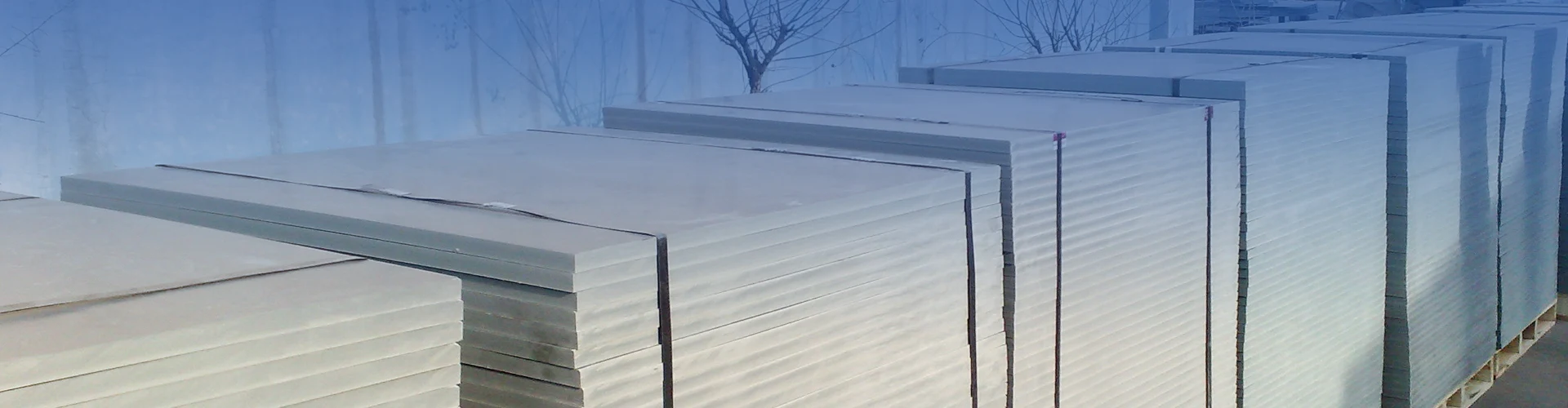
Pallet-Free Block Machine
Redefining the fundamental logic of concrete block production, the Pallet-Free Block Machine eliminates the traditional dependency on steel or wooden pallets. Through an integrated mold base forming technology combined with a closed-loop servo-hydraulic control system, raw materials are transformed directly into high-density finished products within the forming chamber. This is not merely an equipment upgrade—it is a complete paradigm shift that removes pallets from your cost structure, quality equation, and production flow.
Total Cost of Ownership (TCO) Reconstruction
In conventional production, pallets are treated as consumables. Even the highest-grade steel pallets gradually develop residual stress and deformation under continuous high-frequency vibration, leading to product dimensional deviation. Our Pallet-Free Block Machine eliminates this cost category entirely through its pallet-free forming cavity design.
| Cost Dimension | Traditional Pallet Solution | Pallet-Free Solution | Annual Savings (Based on 200,000 Standard Bricks/Day) |
| Initial Pallet Purchase | ~$120,000 (3,000 steel pallets) | Zero | — |
| Annual Pallet Replacement Rate | 15%–20% (deformation/rust) | Zero | ~$24,000/year |
| Pallet Cleaning Labor | 2 workers per shift for residue removal | Zero | ~$18,000/year |
| Flatness Calibration | Quarterly external calibration required | Zero | ~$6,000/year |
| Mold Wear from Eccentric Loading | Uneven pallet surfaces shorten mold life by 30% | Uniform load distribution extends mold life | ~$12,000/year |
| Product Rejection Rate | 2%–3% due to pallet warping | ≤0.5% | ~$35,000/year (material savings) |
Zero-Error Transfer Principle for Product Quality
The final precision of a concrete block equals the product of: Mold Accuracy × Pallet Flatness × Vibration Uniformity. A deviation in any single link propagates to the finished product as geometric distortion or micro-cracks.
The Pallet-Free Block Machine employs an in-situ curing forming technology path:
• Direct Mold-Base Compaction: Material is injected into a precision mold cavity where the bottom die itself serves as the pressure-bearing surface during high-frequency vibration compaction.
• Rigid Reference Plane: Throughout the forming process, the bottom support surface remains on a machine-grade reference plane with flatness tolerance ≤ 0.03mm/m—unaffected by pallet wear or thermal deformation.
• Progressive Multi-Stage Demolding: The ejection sequence is precisely controlled to avoid the hidden cracks commonly caused by the combined weight transfer of "pallet + block" in conventional systems.
This design consistently maintains product dimensional tolerances within ±0.5mm (compared to ±1.5mm for traditional pallet systems). Surface finish quality achieves a plaster-free grade, ready for direct use as decorative masonry. For interlocking blocks or hollow bricks requiring precise fit, this accuracy reduces on-site mortar consumption by approximately 8%–12%.
Production Rhythm & Spatial Efficiency Breakthrough
Traditional production lines consume substantial floor space and cycle time for pallet circulation:
• Empty pallet staging → pallet feeder → block machine → pallet discharge → curing yard: entire circulation path exceeds 30 meters.
• Pallet return requires a dedicated conveyor system with buffer zones to prevent jamming.
The Pallet-Free Block Machine simplifies this workflow at the system level:
Vertically Integrated Layout: Forming, demolding, and curing rack loading occur along the same vertical axis. Equipment footprint is only 12m × 8m—approximately 40% less floor space compared to conventional pallet-based lines.
Continuous Wave Production: No waiting for pallet recirculation. Single cycle time is reduced from 18–22 seconds to 12–15 seconds, increasing theoretical throughput by approximately 25%.
Direct Curing Rack Interface: Finished blocks are transferred directly from the mold to curing racks via robotic handling, eliminating the intermediate "pallet to curing board" transfer step and reducing handling-related damage.
Equipment Durability & Extreme Condition Adaptability
By eliminating pallets, the machine itself must withstand higher impact and abrasion forces. Our engineering team has specifically reinforced the following critical modules for this technical pathway:
• Mold Cavity Material Upgrade: Fabricated from Cr12MoV alloy tool steel, vacuum-hardened to HRC 58–62, offering 3.2× the wear resistance of conventional mold steel (e.g., 45# steel). Under normal operation, the cavity guarantees 15,000+ cycles without measurable wear.
• Rigid Damping Base: To compensate for the absence of pallet vibration damping, the equipment base is equipped with six independent air-spring isolators, reducing high-frequency vibration fatigue on structural components by 60%, while minimizing interference with adjacent precision instruments (e.g., batching scales, weighbridges).
• Automatic In-Cavity Cleaning System: After each demolding cycle, the cavity interior is purged with 0.6MPa compressed air combined with a Teflon-coated scraper to remove residual material. This system operates without interrupting the production cycle, preventing cumulative build-up that could affect dimensional accuracy.
Competitive Advantages — Direct Comparison with Industry Alternatives
The following benchmark comparison illustrates how the Pallet-Free Block Machine outperforms conventional pallet-dependent systems and other competing "low-pallet" approaches across critical operational metrics:
| Performance Metric | Pallet-Free Block Machine | Steel Pallet System | Wood/Plastic Pallet System | Competitor "Low-Pallet" Designs |
|---|---|---|---|---|
| Pallet Dependency | Zero — completely eliminated | Essential — 100% dependent | Essential — 100% dependent | Reduced but still requires 1–2 support pallets per cycle |
| Product Dimensional Tolerance | ±0.5 mm (machine-grade reference plane) | ±1.5 mm (pallet deformation accumulates) | ±2.0–3.0 mm (material creep & moisture absorption) | ±1.2 mm (still subject to support plate wear) |
| Floor Space Requirement (per line) | 96 m² (12m × 8m vertical integration) | ~160 m² (includes pallet circulation path) | ~170 m² | ~135 m² |
| Cycle Time (standard hollow block) | 12–15 seconds | 18–22 seconds (pallet feeding/discharge overhead) | 20–25 seconds | 16–18 seconds |
| Annual Pallet Consumable Cost | $0 | $24,000–$40,000 (replacement + cleaning labor) | $18,000–$30,000 (replacement + sealing treatment) | $8,000–$12,000 (reduced but not eliminated) |
| Mold Service Life (cycles) | 15,000+ (uniform load, Cr12MoV alloy) | 8,000–10,000 (eccentric wear from pallet unevenness) | 6,000–8,000 (abrasive contamination from wood/plastic debris) | 10,000–12,000 |
| Vibration Transmission Efficiency | 98% (direct mold-to-machine interface) | 85–90% (loss through pallet contact interface) | 70–80% (absorption by pallet material) | 90–93% |
| Changeover Time (between product types) | 25–35 minutes (mold swap only) | 45–60 minutes (mold + pallet height adjustment) | 50–65 minutes | 35–45 minutes |
| Maintenance Complexity | Moderate (focus on mold cavity & hydraulic system) | High (pallet conveyor, feeder, straightening equipment, descaling) | High (sanding, sealing, frequent replacement) | Moderate |
Application Scenarios & Selection Guide
| Factory Characteristic | Pallet-Free Suitability |
| Limited factory floor space; unable to install long pallet conveyor lines | ★★★★★ Highly Recommended |
| Standardized product dimensions; narrow product portfolio | ★★★★★ Optimal Choice |
| High humidity region where steel pallets corrode rapidly | ★★★★★ Problem Solved Completely |
| Currently experiencing high rejection rates; quality-driven upgrade desired | ★★★★★ Quality Leap Opportunity |
| Frequent product specification changes (>3 types per day) | ★★★☆☆ Requires mold change evaluation |
| Large existing pallet inventory; short-term replacement not preferred | ★★☆☆☆ Phased transition recommended |
Frequently Asked Questions
Q1: Without pallets, how are products supported during the curing phase?
Demolded blocks already possess 30%–40% of their design strength, sufficient for self-support during curing rack stacking. Our dedicated curing racks are equipped with specially designed spacers to ensure uniform pressure distribution across layers.
Q2: Is mold replacement more expensive than pallet replacement if damage occurs?
While the mold is a core component, its lifespan and replacement cost have been fully optimized. We offer mold leasing/refurbishment services. The total annual mold maintenance cost is approximately 60% of the combined "mold + pallet" expense in conventional systems.
Q3: How long does a product changeover take?
Standard mold changeover time is 25–35 minutes (including automatic positioning and precision verification). For high-volume, limited-variety production, this downtime is entirely acceptable.
Q4: Is the pallet-free concept technologically mature?
This technical pathway has been applied in Europe for over 8 years. Our design incorporates localized optimizations in hydraulic response speed and cavity sealing, with 40+ units successfully operating in domestic and international installations. The longest-running machine has exceeded 5 years of continuous operation.
Q5: What happens if power or air supply fails mid-cycle?
The system is equipped with a manual emergency pressure-release circuit and mechanical ejection device, allowing safe removal of material from the cavity even under zero-power conditions—preventing solidification clogging.
Q6: How does the automatic cleaning system perform with sticky or wet mixes?
The Teflon-coated scraper combined with high-pressure air purge effectively handles moisture content up to 18%. For extreme formulations (e.g., high-cement, high-fly-ash mixes), we offer an optional water-mist pre-cleaning cycle that activates between batches without interrupting production flow.
Related Products



Hot Products

Brick Manufacturing Machine Pallet
QGM/Zenith is a professional leader China Brick Manufacturing Machine Pallet manufacturer with high quality and reasonable price. Welcome to contact us.Pallets are mainly used to place and fix bricks, ensuring the stability and neat arrangement of bricks during the production process.
High-Capacity Block Machine Board
QGM/Zenith is High-Capacity Block Machine Board manufacturer and supplier in China, we can provide professional service.The advantage of High-Capacity Block Machine Board is that it can significantly reduce the production cost of bricks, solve the problem of traditional pallets being easily damaged, and at the same time improve production efficiency and product quality.
Multipurpose Block Machine Board
Welcome to buy Multipurpose Block Machine Board from our factory at any time. We will provide you with factory discount prices for our products. QGM/Zenith is Multipurpose Block Machine Board manufacturer and supplier in China. Multipurpose Block Machine Board is an auxiliary equipment used to hold up brick embryos during the production process of brick machines, and is widely used in concrete block production lines.
Cement Block Molding Machine Pallet
The producers of QGM/Zenith in China offer high-quality products, you are welcome to purchase straight high-quality Cement Block Molding Machine Pallet at a good price. It is mainly used to carry and fix cement blocks to ensure their stability and accuracy during the forming process.
Block Making Machinery Pallet
As one of professional high quality Block Making Machinery Pallet manufacturer, you can rest assured to buy Block Making Machinery Pallet from QGM/Zenith and we will offer you the best after-sale service and timely delivery. Block Making Machinery Pallet is usually made of steel and wood, with a rectangular shape, usually composed of four steel pipes and four wooden boards.
Quick-Change Block Machine Pallet
QGM/Zenith invites you to visit our factory to purchase the high-quality Quick-Change Block Machine Pallet. We are looking forward to working with you. The main materials of the block machine pallet include steel and wood. Steel provides structural support, while wood increases the load-bearing capacity and stability.
- Related Blog
- Reviews