- English
- Español
- Português
- русский
- Français
- 日本語
- Deutsch
- tiếng Việt
- Italiano
- Nederlands
- ภาษาไทย
- Polski
- 한국어
- Svenska
- magyar
- Malay
- বাংলা ভাষার
- Dansk
- Suomi
- हिन्दी
- Pilipino
- Türkçe
- Gaeilge
- العربية
- Indonesia
- Norsk
- تمل
- český
- ελληνικά
- український
- Javanese
- فارسی
- தமிழ்
- తెలుగు
- नेपाली
- Burmese
- български
- ລາວ
- Latine
- Қазақша
- Euskal
- Azərbaycan
- Slovenský jazyk
- Македонски
- Lietuvos
- Eesti Keel
- Română
- Slovenski
- मराठी
- Srpski језик
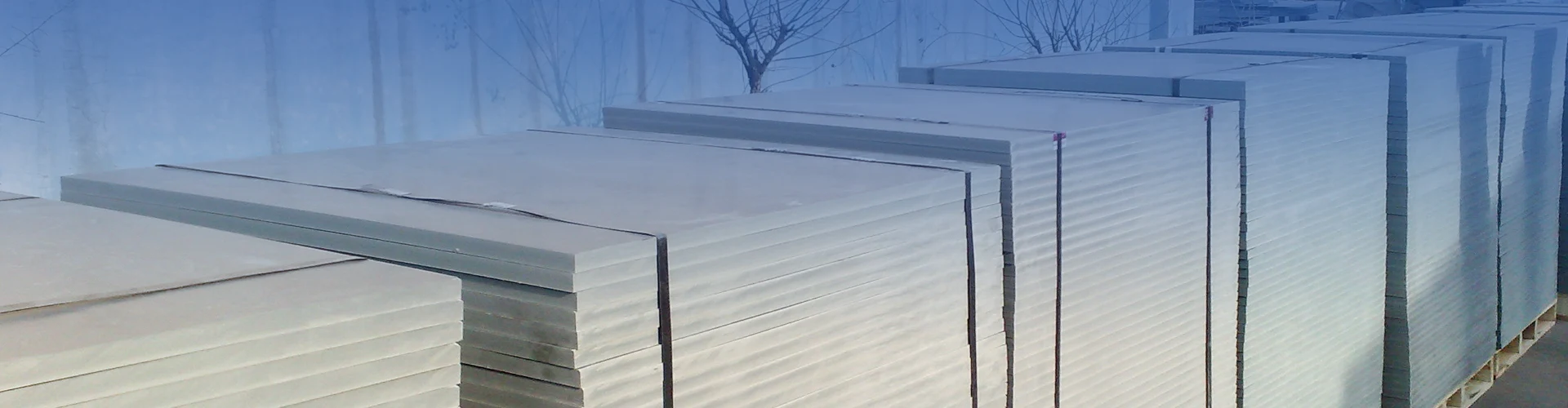
Block Making Machine
At the heart of every construction materials enterprise lies the Block Making Machine—the equipment that determines not only production capacity but also product quality, material efficiency, and long-term operational profitability. Our block making machine represents a synthesis of engineering excellence, practical durability, and production intelligence, designed to deliver reliable performance across the full spectrum of concrete product manufacturing.
The Science of Material Consolidation
The fundamental challenge in block making is achieving uniform material consolidation without over-compaction or under-compaction. Our Block Making Machine addresses this through a dual-energy compaction system that precisely coordinates hydraulic pressure with mechanical vibration:
• Hydraulic pressure component: Applies sustained compressive force to eliminate macro-voids and achieve bulk density targets.
• Vibration component: Generates high-frequency mechanical oscillations that enable particle rearrangement and micro-void elimination.
• Pressure-vibration superposition: The most effective compaction occurs when vibration is applied simultaneously with pressure, allowing particles to settle into their densest configuration while maintaining inter-particle friction.
Our machines achieve an optimal pressure-to-vibration ratio of approximately 4:1 (40% pressure energy, 10% vibration energy) based on extensive testing with various aggregate-cement formulations. This ratio consistently produces blocks with compressive strengths 12%–18% higher than those produced by pressure-only or vibration-only systems.
Operational Economics: A Data-Driven Perspective
Understanding the true cost of block production requires analyzing multiple interdependent factors. The following table breaks down the typical cost structure per 1,000 standard blocks and illustrates how our Block Making Machine optimizes each component:
| Cost Component | Our Machine Performance | Industry Average | Savings per 1,000 Blocks |
| Cement Consumption (kg) | 65–72 | 78–85 | 13 kg (≈$2.60) |
| Aggregate Waste (%) | 1.2–1.8 | 3.0–4.5 | ≈$1.20 |
| Electricity (kWh) | 18–22 | 24–30 | 6 kWh (≈$0.90) |
| Labor (operator-minutes) | 4.5 | 6.0 | 1.5 min (≈$0.25) |
| Wear Parts (molds, bearings) | ≈$0.004 | ≈$0.007 | ≈$0.003 |
| Reject/Scrap Rate (%) | 0.8–1.2 | 2.5–3.5 | 1.8% (≈$2.70) |
| Total Cost per 1,000 Blocks | ≈$115–$130 | ≈$145–$165 | ≈$30–$35 savings |
Machine Construction & Component Lifecycle
Every Block Making Machine is subject to cyclic fatigue, abrasive wear, and environmental stress. Our machines are constructed with conservatively designed components that operate well below their theoretical limits:
• Hydraulic cylinder: Chrome-plated piston rod, PTFE guide rings, and dual wiper seals provide service life exceeding 20,000 operating hours before seal replacement.
• Vibrator assembly: Eccentric weights dynamically balanced, with SKF explorer-class bearings rated for 15,000 hours at maximum operating speed.
• Mold carriage: Hard-chromed guide rails and bronze-backed wear strips provide 10,000+ cycles between adjustment.
• Electrical system: Contactors and relays rated for 1 million operations, with generous safety margins on all wiring.
Configuration Options: Matching Machine to Application
Block Making Machines are not one-size-fits-all. We offer four primary configuration categories, each optimized for specific production environments:
| Configuration | Key Characteristics | Ideal For | Output Range (Blocks/Shift) |
| Economy Series | Manual or semi-auto control, basic hydraulic system, single vibration motor | Start-ups, seasonal production, developing markets | 4,000–8,000 |
| Industrial Series | PLC control, dual-vibration motors, regenerative hydraulics, quick mold change | Established factories, continuous production, varied product lines | 10,000–18,000 |
| Heavy-Duty Series | Reinforced frame, high-pressure hydraulics, forced-feed material system | High-cement mixes, recycled aggregate, high-strength product requirements | 12,000–22,000 |
| High-Speed Series | Servo-hydraulic actuation, high-frequency vibration (70Hz), fully automated pallet handling | High-volume tier-1 suppliers, just-in-time delivery operations | 18,000–32,000 |
Each configuration shares the same core mechanical architecture but differs in component sizing, control sophistication, and automation integration—enabling you to select the precise capability level that matches your current requirements while providing a clear upgrade pathway.
Maintenance & Operational Support Ecosystem
A Block Making Machine is only as valuable as the support infrastructure that surrounds it. We provide a comprehensive support ecosystem:
• Initial Installation & Commissioning: Our field service engineers oversee installation, hydraulic oil filling, electrical connection, and test production. We guarantee operational readiness within 10 working days of delivery.
• Technical Documentation: A complete package includes: operator's manual, maintenance schedule, parts catalog with exploded-view diagrams, hydraulic schematic, and electrical wiring diagram.
• Remote Diagnostics: The advanced control system supports remote access for troubleshooting, reducing the need for costly site visits.
• Spare Parts Management: We provide a recommended spares holding list based on your production volume. Critical components are stocked in regional warehouses for overnight delivery in most areas.
• Performance Reviews: We offer optional quarterly performance reviews that analyze your machine's operational data to identify optimization opportunities and predict maintenance requirements.
Frequently Asked Questions
Q1: How does the machine handle variations in aggregate moisture content?
Our Block Making Machine does not directly measure moisture, but its closed-loop hydraulic control compensates for variations by adjusting pressing force based on real-time pressure feedback. Dryer mixes require slightly higher pressure; wetter mixes require lower pressure. For optimal results, we recommend installing a moisture sensor in the mixing stage to provide consistent feed material.
Q2: Can the machine produce blocks with recycled construction waste?
Yes, with appropriate aggregate processing. Crushed recycled concrete and masonry can be used as aggregate if particle size is controlled (≤10mm). The machine's hydraulic system provides the additional compaction force (≈15%–20% higher) needed to overcome the lower deformability of recycled aggregates. We recommend trial mixing before full production.
Q3: What is the typical payback period for this machine?
Based on the cost structure presented in Section II and typical market conditions, the machine typically achieves full payback within 18–24 months of operation. Factors affecting payback include: daily production volume, local material and labor costs, and product selling price.
Q4: Does the machine require specialized foundation work?
Standard industrial flooring with 250mm reinforced concrete and vibration isolation mounts is sufficient for most installations. Machines in the Heavy-Duty and High-Speed series require a dedicated foundation block of mass 1.5× the machine weight. We provide foundation drawings for each model.
Q5: How does the machine perform in high-temperature environments?
The hydraulic system includes an oil cooler that maintains oil temperature below 55°C in ambient conditions up to 45°C. For hotter climates (45°C–50°C), we offer an upgrade to a larger oil cooler and increased hydraulic reservoir capacity.
Engineering a Sustainable Production Asset
A Block Making Machine is more than a capital purchase—it is a production asset that directly influences your competitive position in the construction materials market. Our machines are engineered to deliver:
• Material Efficiency: Precision compaction that minimizes cement consumption and waste.
• Operational Reliability: Robust construction and conservative component sizing that maximize uptime.
• Production Flexibility: Quick mold changeover and broad product compatibility.
• Cost Predictability: Transparent maintenance requirements and accessible spare parts.
Related Products


Hot Products

Bamboo Brick Machine Pallet
QGM/Zenith as a professional high quality Bamboo Brick Machine Pallet manufacturer, you can rest assured to buy Bamboo Brick Machine Pallet from our factory and we will offer you the after-sale service and timely delivery. Bamboo brick machine pallets are mainly used in the production process of various brick machines, especially in the use of unfired brick machines and clay brick machines.
Recycled Material Brick Board
QGM/Zenith is a professional Recycled Material Brick Boardmanufacturer and supplier in China. Recycled Material Brick Board is an auxiliary equipment used to hold up the brick embryo in the production process of the brick machine. If you interested in products, please contact with us. We follow the quality of rest assured that the price of conscience, dedicated service.
Concrete Paving Block Machine Pallet
QGM/Zenith is one of Concrete Paving Block Machine Pallet manufacturer and supplier in China. We can provide professional service and better price for you. If you interested in Concrete Paving Block Machine Pallet, please contact with us. We follow the quality of rest assured that the price of conscience, dedicated service.
Block Machinery Pallet
High quality Block Machinery Pallet is offered by China manufacturer QGM/Zenith. It is usually made of steel and wood. It has a rectangular shape and consists of four steel pipes and four wooden boards. It has a stable structure and strong carrying capacity.
Block Making Machinery Pallet
As one of professional high quality Block Making Machinery Pallet manufacturer, you can rest assured to buy Block Making Machinery Pallet from QGM/Zenith and we will offer you the best after-sale service and timely delivery. Block Making Machinery Pallet is usually made of steel and wood, with a rectangular shape, usually composed of four steel pipes and four wooden boards.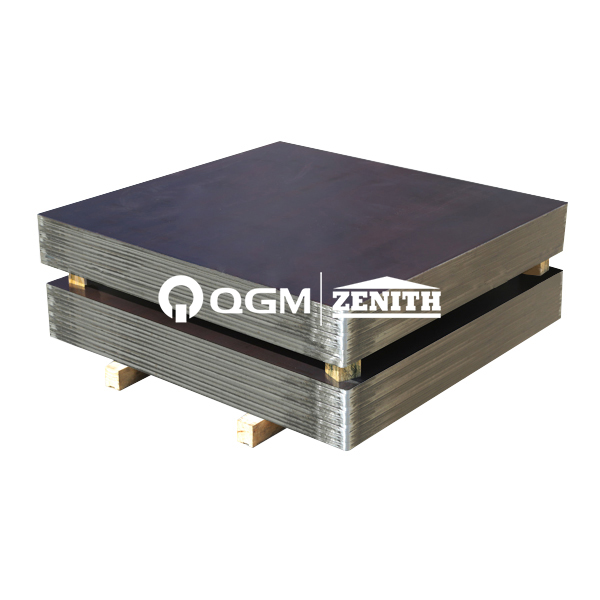
Solid Steel Pallet
As one of professional manufacturer in China, QGM/Zenith would like to provide you Solid Steel Pallet. And we will offer you the best after-sale service and timely delivery. Through CNC machine tools, aerated bidirectional balance (CNC aerated) straight-line cutting method, accurate length, width, and diagonal dimensions.
- Related Blog
- Reviews

Related Search
AAC block making machineAutomatic block making machineAutomatic Block Making MachineryAutomatic Cement Block Making MachineAutomatic Concrete Block Making MachineAutomatic Concrete Block Making MachineryBlock Making Machine equipmentBlock Making Machine MoldBlock Making Machine PalletBlock Making MachineryBlock Making Machinery Moldblock making machinesBlock Making Machines MoldCement Block Making MachineCement Block Making Machine MoldCement Block Making Machinery MoldCement Block Making Machines MoldConcrete Block Making MachineConcrete Block Making MachineryFully automatic block making machineFully automatic block making machineryFully Automatic Cement Block Making MachineFully automatic concrete block making machineFully automatic concrete block making machineryfully automatic interlocking block making machine pvc palletHollow Block Making MachineHollow Block Making Machineryhollow block making machinesHydraulic Concrete Block Making MachineHydraulic Concrete Block Making Machineryhydraulic interlocking block making machine pvc palletIndustrial Concrete Block Making MachineInterlock Hollow Block Making MachinePaver Block Making Machine PalletSemi Automatic Block Making MachineServo Block Making Machine