- English
- Español
- Português
- русский
- Français
- 日本語
- Deutsch
- tiếng Việt
- Italiano
- Nederlands
- ภาษาไทย
- Polski
- 한국어
- Svenska
- magyar
- Malay
- বাংলা ভাষার
- Dansk
- Suomi
- हिन्दी
- Pilipino
- Türkçe
- Gaeilge
- العربية
- Indonesia
- Norsk
- تمل
- český
- ελληνικά
- український
- Javanese
- فارسی
- தமிழ்
- తెలుగు
- नेपाली
- Burmese
- български
- ລາວ
- Latine
- Қазақша
- Euskal
- Azərbaycan
- Slovenský jazyk
- Македонски
- Lietuvos
- Eesti Keel
- Română
- Slovenski
- मराठी
- Srpski језик
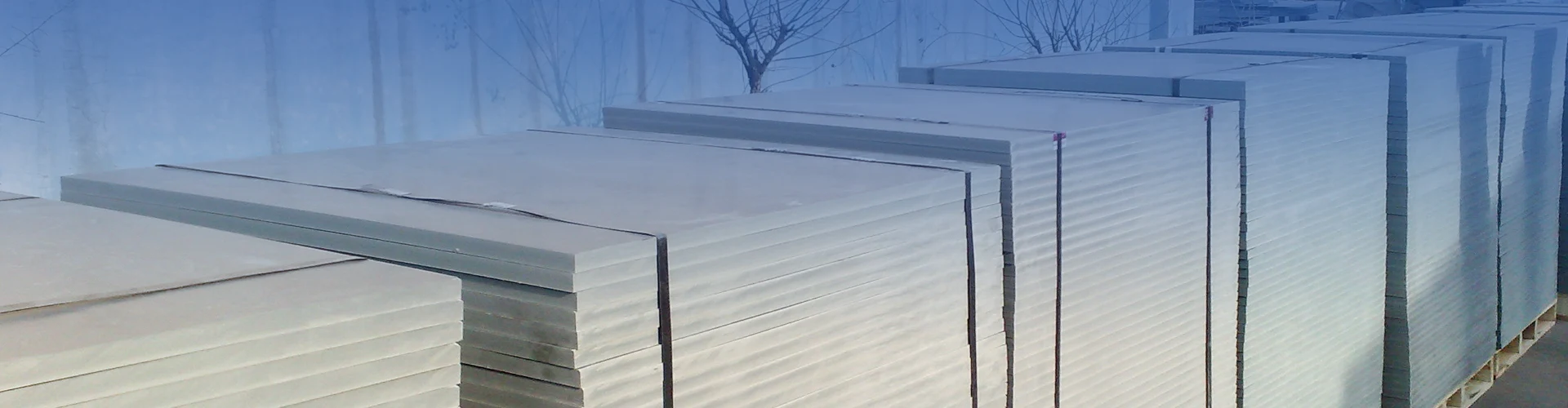
Automatic Concrete Block Making Machine
In the highly competitive construction materials market, the difference between profit and loss often comes down to equipment intelligence and operational efficiency. Our Automatic Concrete Block Making Machine represents a fundamental shift from traditional heavy machinery to a smart, data-driven production core. It doesn't just mold blocks; it orchestrates the entire material flow, vibration compaction, and curing logistics to deliver the highest possible output per square meter of factory floor space.
The Science of Compaction & Vibration
Unlike conventional machines that rely solely on weight, our system utilizes a dual-frequency vibration technology. By independently controlling the eccentric shaft speed of both the upper punch and the lower table, the machine generates a "vibration wave resonance" effect. This ensures that material particles rearrange themselves in the most compact state, eliminating air voids without requiring excessive hydraulic pressure, which in turn protects the mold and reduces wear by up to 40%.
• Precision Hydraulic Overload Protection: The system is equipped with a proportional relief valve that reacts within 0.02 seconds to sudden load changes. If a foreign object enters the mold, the machine instantly reduces pressure to prevent catastrophic damage, a feature often overlooked but critical for long-term reliability.
• Intelligent PLC Parameter Storage: Operators can save up to 200 different production recipes. When switching between hollow bricks, solid blocks, or pavers, the machine automatically adjusts vibration frequency, pressing time, and material feed, eliminating the guesswork that leads to substandard products.
The Economics of Automation
Investing in a fully automatic system is often viewed as a capital expenditure. However, we have developed a Return on Investment (ROI) model based on actual client data that illustrates how this Automatic Concrete Block Making Machine transforms into a profit driver within 18 months:
| Economic Factor | Semi-Auto System (Baseline) | Our Full-Auto System | Net Benefit per Shift |
| Raw Material Waste (Cement/Fly Ash) | ~7% spillage & inaccurate batching | <1.5% precision dosing | Saves ~$200/day |
| Pallet Replacement Cost | High damage due to misalignment | Soft-landing technology extends pallet life by 50% | Saves ~$4,000/quarter |
| Labor Cost (8-hour shift) | 6 workers (loading, pressing, stacking) | 2 workers (control room supervision) | Saves ~$120/shift |
| Energy Consumption | Motors running idle 30% of the time | Variable frequency drive adjusts power to real-time load | Saves ~$150/week |
The Bottom Line: By recapturing raw material waste and reducing workforce dependency, this machine typically pays for itself in 1.2 to 1.5 years, significantly faster than standard industry averages.
Beyond Production: Solving the "Logistics Bottleneck"
Most production line inefficiencies occur not during the pressing process, but during the transfer of wet blocks from the machine to the curing yard. This is where our integrated racking and shuttle system provides a strategic advantage:
• Zero-Impact Demolding Technology: Instead of abrupt ejection which can cause hairline cracks in green blocks, the machine uses a controlled pneumatic release that gradually reduces pressure. This has proven to reduce early-stage breakage (during 0-6 hours of curing) by 90%.
• Synchronized Pallet Conveyor: The automatic conveyor feeds clean pallets exactly when needed and removes stacked blocks without waiting for the main press. This synchronized motion ensures the machine operates at a continuous cycle, rather than intermittent start-stop, increasing daily output by eliminating idle gaps between cycles.
• Real-Time Production Monitoring: The machine connects to a cloud-based dashboard, allowing factory managers to monitor production efficiency, downtime reasons, and component wear via mobile phone, enabling predictive maintenance rather than reactive repairs.
Recommended Model Selection: Matching Capacity to Demand
Selecting the Automatic Concrete Block Making Machine is critical to avoid underutilization or bottlenecking. The following guide helps you align machine capacity with your specific business volume:
| Machine Model | Vibration Table (mm) | Typical Block Size | Cycle Time | Ideal Daily Output (8h) |
| QT4-15 | 680 × 850 | 400×200×200 Hollow | 15-20 sec | 8,000 – 10,000 pcs |
| QT6-15 | 850 × 1100 | 400×200×200 Hollow | 12-18 sec | 13,000 – 16,000 pcs |
| QT8-15 | 950 × 1100 | 400×200×200 Hollow | 10-14 sec | 18,000 – 22,000 pcs |
| QT10-15 | 1100 × 1400 | 400×200×200 Hollow | 8-12 sec | 24,000 – 32,000 pcs |
FAQ: Addressing the High-Stakes Questions
Q1: How does the machine maintain accuracy when the aggregate particle size changes (e.g., from 5mm to 10mm)?
A: The system uses an Active Amplitude Compensation algorithm. Sensors in the mold box detect material resistance and automatically adjust the vibration amplitude and duration to ensure the larger aggregates are equally compacted, preventing "honeycombing" defects.
Q2: The power grid in my region is unstable. Will this affect operations?
A: We address this with a Double-Voltage Protection Module. In the event of a voltage drop, the machine automatically switches to a buffer power mode to complete the current cycle safely. We also offer optional generator integration packages for continuous rural production.
Q3: Can the machine utilize recycled construction waste (crushed concrete) as aggregate?
A: Absolutely. The Automatic Concrete Block Making Machine is designed with a high-torque, low-RPM hydraulic feed system that handles up to 30% recycled aggregate content without clogging. This is a key advantage for green certification compliance (e.g., LEED).
Q4: What is the typical mold changeover time?
A: Using our quick-change locking mechanism, a full mold swap can be completed by two technicians in under 15 minutes. This is significantly faster than the industry standard of 30-45 minutes, allowing you to produce small-batch custom orders profitably.
Q5: How effective is the dust suppression system?
A: We incorporate a negative pressure dust extraction port directly at the material drop zone, connected to a cyclone separator. This captures over 95% of suspended particulates, ensuring compliance with OSHA / local environmental standards without requiring a large baghouse filter.
Strategic Summary for Decision Makers
Investing in our Automatic Concrete Block Making Machine is not about buying equipment; it is about solving three core business constraints: material cost volatility, skilled labor scarcity, and production scalability. With our system, you secure:
• Price Stability: By minimizing cement waste and maximizing aggregate utilization, you insulate your business from raw material price hikes.
• Workforce Flexibility: Reduce reliance on specialized technicians; the machine empowers general employees to become competent operators through the intuitive touch-screen interface.
• Scalable Architecture: The control system is prepared for future upgrades, allowing you to integrate a robot palletizer or automatic curing kiln seamlessly when your business volume warrants expansion.
Related Products



Hot Products

Energy-Efficient Brick Machine Pallet
QGM/Zenith is Energy-Efficient Brick Machine Pallet manufacturer and supplier in China. We can provide professional service and better price for you. Energy-Efficient Brick machine Pallet refers to the auxiliary equipment used to hold up the brick embryo during the production process of the brick machine.If you interested in products, please contact with us. We follow the quality of rest assured that the price of conscience, dedicated service.
Heavy-Duty Brick Machine Pallet
QGM/Zenith is a professional China Heavy-Duty Brick Machine Pallet manufacturer and supplier, if you are looking for the Heavy-Duty Brick Machine Pallet, It plays an important role in building logistics and has strong load-bearing capacity and wear resistance.
Brick Manufacturing Machine Pallet
QGM/Zenith is a professional leader China Brick Manufacturing Machine Pallet manufacturer with high quality and reasonable price. Welcome to contact us.Pallets are mainly used to place and fix bricks, ensuring the stability and neat arrangement of bricks during the production process.
Soil Block Machine Board
QGM/Zenith is one of the famous China Soil Block Machine Board manufacturer and supplier. Our factory specializes in manufacturing of Soil Block Machine Board. Its main function is to support and protect the mold to ensure the quality and efficiency of brick forming.
Clay Brick Machine Board
You can rest assured to buy Clay Brick Machine Board from QGM/Zenith factory and we will offer you the after-sale service and timely delivery.Its main function is to hold up the brick embryo during the brick making process to ensure the smooth progress of brick making.
Block Machinery Pallet
High quality Block Machinery Pallet is offered by China manufacturer QGM/Zenith. It is usually made of steel and wood. It has a rectangular shape and consists of four steel pipes and four wooden boards. It has a stable structure and strong carrying capacity.
- Related Blog
- Reviews