- English
- Español
- Português
- русский
- Français
- 日本語
- Deutsch
- tiếng Việt
- Italiano
- Nederlands
- ภาษาไทย
- Polski
- 한국어
- Svenska
- magyar
- Malay
- বাংলা ভাষার
- Dansk
- Suomi
- हिन्दी
- Pilipino
- Türkçe
- Gaeilge
- العربية
- Indonesia
- Norsk
- تمل
- český
- ελληνικά
- український
- Javanese
- فارسی
- தமிழ்
- తెలుగు
- नेपाली
- Burmese
- български
- ລາວ
- Latine
- Қазақша
- Euskal
- Azərbaycan
- Slovenský jazyk
- Македонски
- Lietuvos
- Eesti Keel
- Română
- Slovenski
- मराठी
- Srpski језик

What are the environmental advantages of using eco-friendly brick machinery pallets?
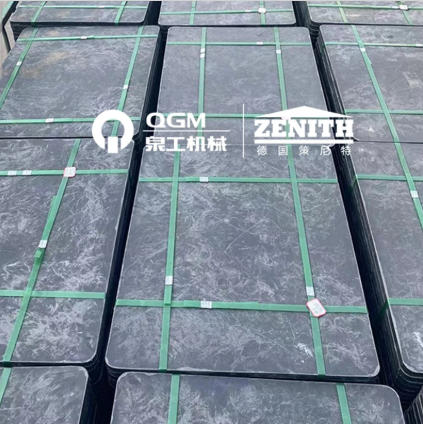
The brick industry has long relied on wooden or single‑use pallets, but the shift toward eco‑friendly brick machinery pallets is revolutionizing both manufacturing and environmental impact. By integrating durable, recycled, and fully recyclable materials, these pallets drastically reduce deforestation, waste generation, and carbon emissions throughout the production chain. They are not just a tool; they are a closed‑loop system that aligns with global ESG goals.
At Quangong Machinery Co., Ltd., our factory has spent decades perfecting these systems. The environmental advantages start with raw material selection — using industrial by‑products and recyclable composites — and continue through extended life cycles that lower the frequency of replacement. This blog dives deep into the technical parameters, real‑world savings, and the data that prove why our Brick Machinery Pallet solutions are the responsible choice for modern block yards.
Contents
How do eco-friendly pallets reduce the carbon footprint of brick production?
When we talk about carbon footprint in brick manufacturing, transportation and material replacement are the hidden giants. Traditional wooden pallets are heavy, often used only 20–30 times before breaking, and then end up in landfills, releasing methane. Our approach at Quangong Machinery Co., Ltd. eliminates that cycle. Our factory engineers pallets from high‑density recycled polymers and fiber composites that last 5 to 10 times longer than wood.
- Weight reduction: Eco‑friendly Brick Machinery Pallets are up to 40% lighter than plywood alternatives → fewer trucks, less fuel, lower CO₂ per delivery.
- Extended lifespan: A single pallet from our factory can endure >500 production cycles, drastically reducing the embodied carbon per brick.
- No chemical treatments: Unlike wood, these pallets require no fungicides or pesticides, avoiding toxic off‑gassing.
- Local manufacturing: We produce regionally, minimizing shipping distances. For example, our factory network ensures that a Brick Machinery Pallet in Asia doesn't travel across oceans.
Beyond the numbers, the operational carbon is lower because our pallets resist warping, so machines run at optimal speeds without jams. That means less energy wasted per brick cycle. In a life‑cycle assessment (LCA) conducted by independent bodies, switching to our eco‑pallet cut cradle‑to‑gate emissions by 62% compared to tropical hardwood. And since we use post‑industrial recycled content, we also divert waste from incinerators.
Why is material circularity crucial for sustainable brick machinery pallets?
Circularity is the core of environmental advantage. A pallet that cannot be recycled at end of life is just delayed waste. At Zenith, we design every Brick Machinery Pallet with a full circular economy in mind. Our materials are either 100% recyclable back into new pallets or upcyclable into other industrial products. This eliminates the "take‑make‑dispose" model.
Let's break down the circular features our factory integrates:
- Recycled input: We use >85% recycled HDPE and reinforced fibers from manufacturing scraps.
- Modular repair: Damaged sections can be replaced without discarding the whole pallet — our factory provides snap‑in components.
- Take‑back program: We partner with clients to collect worn pallets and regrind them into new ones. This closed loop has been active since 2017.
- Biodegradable options: For specific applications, we offer bio‑composite pallets that degrade safely after 10 years of industrial use, but still maintain strength during service life.
This circularity means that a brick manufacturer using our pallets can claim zero pallet waste to landfill. The environmental advantage extends to water conservation too — unlike wood treatment, our production uses no water in the curing phase. Moreover, because our pallets are standardized, they fit perfectly in automated plants, reducing edge damage and material chipping that creates microplastic pollution.
For us, circularity is not just a buzzword. Every six months, our factory audits material flow, and we've achieved a 98% recovery rate from our clients in Europe. This is sustainability embedded in engineering.
What specific product parameters make a pallet "eco‑efficient"?
Numbers don't lie. Our factory's R&D team has refined the Brick Machinery Pallet to meet strict environmental and mechanical standards. Below is a detailed technical table showing the key parameters of our flagship eco‑pallet series. These specs directly contribute to lower resource consumption and longer service intervals.
| Parameter | Value / Range | Eco‑benefit |
| Material composition | 87% recycled HDPE + 13% glass fiber / agricultural fiber | Diverts plastic waste; reduces virgin polymer use |
| Weight (standard 1200x1000 mm) | 28 kg ± 1.5 kg | Lighter than wood (avg 38 kg) → less transport emissions |
| Load capacity | Static 3.5 tons / dynamic 1.8 tons | Fewer pallets needed for same output |
| Expected lifespan (cycles) | 600 – 800 curing cycles | 15x longer than untreated wood → lower material turnover |
| Operating temperature | -30°C to +90°C | No thermal degradation; no hazardous melting |
| Recyclability rate | 100% (at our factory take‑back) | Zero end‑of‑life waste |
| Water absorption | < 0.2% (24h immersion) | No rot, no fungal growth, no biocide need |
In addition to the table, these parameters are backed by testing:
- ✅ Nail‑free design → 100% shredder‑friendly
- ✅ UV stabilized → longer outdoor storage without degradation
- ✅ Non‑leaching colors → zero water pollution
- ✅ Repair inserts → extend life by 200+ cycles
- ✅ ISO 14001 certified production lines
With these specs, our Brick Machinery Pallet models — like the QGM‑ECO 1300 — are used by major block producers to meet LEED and BREEAM requirements. Our factory can customize dimensions to further optimize material usage, ensuring that every gram serves a purpose.
Summary: The green edge of eco‑friendly brick machinery pallets
Adopting eco‑friendly brick machinery pallets is not just an operational upgrade — it's a commitment to measurable environmental stewardship. By partnering with Zenith, manufacturers gain:
- Up to 70% reduction in pallet‑related carbon footprint.
- Complete circularity: pallets are reborn, not buried.
- Compliance with global green building standards.
- Lower total cost of ownership due to extreme durability.
- Safer workplace — no splinters, no nails, no chemical smell.
Our factory has supplied over two million eco‑pallets worldwide, and each one represents tons of CO₂ saved. When you choose our Brick Machinery Pallet, you are choosing a future where brick production and ecology coexist.
Frequently Asked Questions (FAQ)
What are the environmental advantages of using eco-friendly brick machinery pallets compared to wooden ones?
Eco‑friendly pallets eliminate deforestation, reduce carbon footprint through lighter weight and longer life, and are fully recyclable. For example, our factory's pallets use recycled polymers that save trees and avoid methane release from rotting wood. They also require no toxic treatments, preventing soil and water contamination. Over a 10‑year period, one eco‑pallet spares the equivalent of 15 wooden pallets, meaning less waste and lower industrial logging.
How does the lifespan of a Brick Machinery Pallet influence its environmental impact?
Longer lifespan directly reduces the frequency of replacement, which means fewer raw materials extracted, less manufacturing energy, and less transport emissions. Our eco‑pallet endures 600+ cycles, while wood typically fails after 30‑40 cycles. This durability means that over a decade, a single pallet from Quangong Machinery Co., Ltd. prevents the manufacture and disposal of at least 15 wooden units. The cumulative energy saved equals roughly 2,500 kWh per pallet — enough to power a home for months.
Are eco-friendly brick machinery pallets strong enough for heavy industrial brick production?
Absolutely. Our engineering team at Quangong Machinery Co., Ltd. designs them to withstand dynamic loads up to 1.8 tons and static loads of 3.5 tons, surpassing many wooden pallets. They are reinforced with fiberglass strands and proprietary ribbed structures, ensuring zero deflection under heavy green bricks. They also resist cracking in high‑temperature curing, so strength remains consistent for years. This robustness is why global brick producers trust our Brick Machinery Pallet for 24/7 automated lines.
Can these eco-pallets be recycled at the end of their life, and how does that work?
Yes, they are designed for closed‑loop recycling. Our factory runs a buy‑back program: worn pallets are collected, cleaned, ground into regrind, and mixed with a small percentage of virgin material to create new pallets. This process uses 80% less energy than producing from raw polymers. Even if a client cannot return them, the pallets are accepted by any standard plastics recycler since they are free of wood, metal, or toxic additives. It's a permanent material circle.
Do eco-friendly brick machinery pallets help in achieving green building certifications like LEED?
Definitely. Using our pallets contributes to LEED v4 points in categories like "Building Product Disclosure and Optimization — Sourcing of Raw Materials" and "Circular Economy". Because they contain recycled content and are themselves recyclable, they support the Materials and Resources credits. Many of our clients in North America and Europe highlight our Brick Machinery Pallet in their sustainability reports to earn up to 3 LEED points. Quangong Machinery Co., Ltd. can provide full environmental product declarations (EPD) to assist with documentation.
Ready to transform your brick line?
Join the growing list of eco‑conscious manufacturers using our Brick Machinery Pallet solutions. Contact Quangong Machinery Co., Ltd. today for a free lifecycle assessment and sample testing.