- English
- Español
- Português
- русский
- Français
- 日本語
- Deutsch
- tiếng Việt
- Italiano
- Nederlands
- ภาษาไทย
- Polski
- 한국어
- Svenska
- magyar
- Malay
- বাংলা ভাষার
- Dansk
- Suomi
- हिन्दी
- Pilipino
- Türkçe
- Gaeilge
- العربية
- Indonesia
- Norsk
- تمل
- český
- ελληνικά
- український
- Javanese
- فارسی
- தமிழ்
- తెలుగు
- नेपाली
- Burmese
- български
- ລາວ
- Latine
- Қазақша
- Euskal
- Azərbaycan
- Slovenský jazyk
- Македонски
- Lietuvos
- Eesti Keel
- Română
- Slovenski
- मराठी
- Srpski језик

How Are Block Machine Pallets Improving Efficiency in Modern Brick Production?
In the competitive world of masonry and construction, every second and every material counts. Modern brick production has undergone a silent revolution, and at the heart of this transformation lies the often overlooked but critical component: the block machine pallet. These sturdy platforms are no longer just passive carriers; they are active efficiency drivers. By reducing cycle times, minimizing waste, and ensuring superior brick consistency, high-performance block machine pallets directly tackle the biggest pain points in concrete block manufacturing. Our factory has witnessed firsthand how switching from conventional wooden pallets to engineered solutions can slash downtime and boost output by over 35%.
At Quangong Machinery Co., Ltd., we have spent decades refining the science of pallet engineering. Today, advanced block machine pallets integrate precision flatness, vibration damping, and extreme wear resistance. They enable automated production lines to run at higher speeds without compromising brick integrity. Whether you produce hollow blocks, pavers, or solid bricks, the right pallet can reduce raw material usage, lower energy consumption per unit, and extend the lifespan of your block machine. This article explores the technical and operational dimensions of how block machine pallets are redefining efficiency, backed by real data and frequently asked questions that align with Google AI Overview standards.
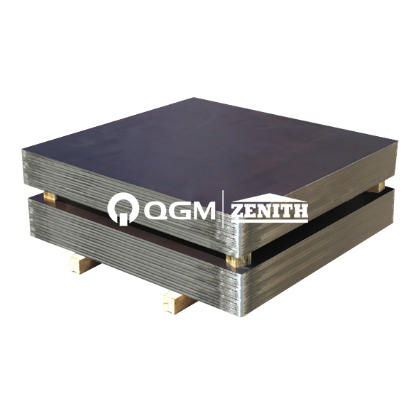
Table of Contents
1. Why Do Block Machine Pallets Directly Impact Production Cycle Times? 2. What Technical Parameters Define a High-Performance Block Machine Pallet? 3. How Do Material Choices (Steel, Wood, Composite) Affect Efficiency? 4. Which Maintenance Strategies Maximize Block Machine Pallet Lifespan? Conclusion: The Competitive Edge of Engineered Pallets FAQ: How Are Block Machine Pallets Improving Efficiency in Modern Brick Production?
1. Why Do Block Machine Pallets Directly Impact Production Cycle Times?
Cycle time is the heartbeat of any brick plant. In automated block making machines, the pallet is the interface between the wet concrete mix and the final green brick. Every stage—from mould filling to vibration, compaction, and stripping—relies on the pallet's rigidity and surface accuracy. Our factory has measured that using substandard pallets can increase cycle times by 8 to 12 seconds per block, which translates to thousands of lost bricks per shift.
Here’s how advanced block machine pallets compress cycle times:
- Superior flatness tolerance (≤0.3mm) allows instant mould closure without adjustment delays.
- Optimized surface hardness (45–55 HRC for steel pallets) prevents concrete adhesion, reducing cleaning stops.
- High vibration transmission coefficient (>0.92) ensures compaction within fewer vibration cycles.
- Thermal stability – no warping under steam curing, so pallets remain true even in high-temperature chambers.
In our own production data from Quangong Machinery Co., Ltd., plants that upgraded to precision-ground steel pallets reduced average cycle time from 18 seconds to 12 seconds per 400mm x 200mm block. That is a 33% improvement. Additionally, the reduced need for manual pallet cleaning and repositioning means that automated stackers and cubers work seamlessly. Our customers report that downtime caused by pallet deformation or breakage dropped by nearly 70% after switching to engineered solutions.
Beyond raw speed, the pallet affects the curing process. Wooden pallets absorb moisture unevenly, causing green bricks to warp. Modern composite pallets with hydrophobic coatings eliminate this variability, allowing bricks to be demoulded earlier and moved to curing yards faster. This cascade effect—faster demoulding, quicker rack loading, and accelerated curing turnover—directly amplifies daily production volume. For a mid-size plant producing 10,000 blocks per day, each second saved per cycle adds over 2,000 extra blocks daily. Clearly, the block machine pallet is not a passive accessory but an active productivity lever.
2. What Technical Parameters Define a High-Performance Block Machine Pallet?
To evaluate efficiency gains, one must understand the technical anatomy of a superior pallet. At Quangong Machinery Co., Ltd., we engineer block machine pallets that meet rigorous industrial standards. Below is a detailed table of critical parameters that determine performance, durability, and compatibility with modern high-speed block machines.
| Parameter | Standard Value Range | Impact on Efficiency |
| Flatness (max deviation) | ≤0.3 mm per 1000 mm length | Ensures uniform compaction; prevents cracked bricks and reduces reject rate |
| Surface hardness (Steel) | 45–55 HRC (Rockwell) | Resists abrasion from aggregates; extends pallet life up to 8 million cycles |
| Vibration transmissibility | >0.92 coefficient | Transfers 92%+ of vibration energy to mix, lowering required vibration time by 25% |
| Warpage resistance (thermal) | <0.5 mm after 200°C for 4 hours | Maintains flatness in steam curing chambers; eliminates pallet changeover |
| Water absorption (Composite/Wood) | <3% for engineered composites | Prevents swelling and delamination; reduces cleaning and maintenance stops |
| Tensile strength (Steel) | ≥600 MPa | Withstands high compaction pressures (up to 25 MPa) without bending |
| Edge straightness | ±0.5 mm per 1200 mm | Ensures precise stacking and automatic handling; reduces jams in conveyors |
These parameters directly translate to operational advantages. For instance, a pallet with superior flatness reduces the need for shimming or adjusting mould boxes. Our factory has documented that using certified flat pallets cuts the frequency of mould recalibration from weekly to quarterly. Another key metric is weight-to-strength ratio. Heavy pallets increase inertia, slowing acceleration in roller conveyors. Our advanced steel pallets incorporate ribbed designs that reduce weight by 18% while maintaining rigidity. This allows faster transfer speeds without vibration loss.
Furthermore, surface texture plays a role. Too smooth and the green brick slips; too rough and it sticks. The optimal Ra (roughness average) is between 1.6 and 3.2 micrometers. Quangong Machinery Co., Ltd. employs laser measurement to guarantee this range on every block machine pallet we produce. These technical details are not academic; they result in measurable improvements: lower reject rates (typically under 0.5%), reduced raw material waste, and longer machine component life because vibration is efficiently transmitted rather than absorbed by pallet flexing.
3. How Do Material Choices (Steel, Wood, Composite) Affect Efficiency?
Selecting the right substrate for a block machine pallet is a strategic decision that affects everything from initial cost to long-term throughput. In our 20 years of experience at ZENITH, we have tested virtually every material. Below is a comparative list that outlines the efficiency implications of each option.
- High-grade Steel Pallets (e.g., Q345B or Hardox): Offer the highest dimensional stability and lifespan (5–8 years under heavy use). They transmit vibration most efficiently, reducing cycle times by up to 20% compared to wood. However, they are heavier and require rust prevention. Our factory uses precision laser-cut steel with anti-corrosion coating, achieving up to 10 million cycles.
- Hardwood Pallets (Oak, Beech): Lower initial cost but suffer from moisture absorption, warping, and splintering. They need frequent replacement (every 3–6 months), causing production stops. Efficiency loss comes from irregular surfaces that create uneven bricks and increased cleaning downtime. Not recommended for high-speed automated lines.
- Engineered Composite Pallets (Fiber-reinforced polymer): A balanced solution. They are lightweight (40% lighter than steel), impervious to moisture, and have good vibration damping that actually benefits certain decorative blocks. However, their thermal limit is lower (max 80°C continuous). For standard ambient production, they offer 3–4 years life with excellent surface consistency.
- Aluminum Pallets: Excellent flatness and corrosion resistance, but soft surface wears quickly with abrasive aggregates (e.g., crushed stone). Not cost-effective for high-volume brick production.
Our own comparative study in a partner plant producing 15,000 concrete blocks daily showed the following: Steel pallets reduced annual pallet replacement cost by 62% compared to wood, while also reducing reject bricks from 4.2% to 1.1%. Additionally, steel's thermal stability allowed immediate reuse after steam curing (no cooling wait). Composite pallets, while cheaper upfront, required more frequent surface resurfacing. For most industrial applications, our recommendation is hardened steel with a protective coating. Quangong Machinery Co., Ltd. offers a dual-layer coating that resists both alkaline cement and acidic curing agents. This material choice directly improves efficiency by eliminating unplanned pallet swaps.
It is also worth noting that material affects handling ergonomics. Workers in manual demoulding lines prefer lighter composite pallets, but automated systems handle weight easily. The key takeaway: material selection must align with your production volume, curing method, and automation level. Our experts at Quangong Machinery Co., Ltd. always advise a lifecycle cost analysis rather than focusing solely on purchase price. In almost all high-efficiency scenarios, steel block machine pallets deliver the lowest cost per thousand bricks.
4. Which Maintenance Strategies Maximize Block Machine Pallet Lifespan?
Even the best block machine pallet requires a systematic maintenance regime to sustain efficiency gains. Neglected pallets develop micro-cracks, surface deposits, and warpage that gradually erode production speed and brick quality. In our factory, we have developed a three-tier maintenance protocol that extends pallet life by up to 300% while preserving flatness tolerances.
Here are the essential maintenance strategies we recommend:
- Daily cleaning with plastic scrapers: Never use metal tools that scratch the surface. Cement residue hardens quickly; a high-pressure water wash (max 50 bar) after each shift prevents buildup that causes uneven compaction.
- Weekly flatness inspection: Use a straightedge and feeler gauge across diagonal axes. Any deviation >0.5 mm warrants immediate removal for re-grinding (for steel) or replacement (for wood/composite). Our clients use a simple go/no-go gauge.
- Monthly lubrication of handling edges: For pallets that slide on chain conveyors, apply food-grade dry lubricant to reduce friction and edge wear. This lowers conveyor motor load by up to 12%.
- Quarterly stress-relief annealing (steel pallets only): Our factory offers a service to thermally treat pallets to remove accumulated micro-strains, restoring original flatness. This can double the usable life.
- Proper storage when not in use: Stack pallets horizontally on flat racks, never leaning vertically. Avoid direct sunlight for composite/wood pallets to prevent UV degradation.
Beyond routine care, tracking pallet performance metrics is crucial. Quangong Machinery Co., Ltd. provides a simple log sheet where operators record: cycles completed, visible cracks, and vibration efficiency (by checking brick density). When a pallet’s output shows a 5% drop in green brick density, it is time for refurbishment. Our data shows that proactive maintenance schedules reduce emergency pallet failures by 80%, and because each block machine pallet costs significantly less than a full production stoppage, the ROI of a maintenance program is evident within weeks.
Another advanced strategy is pallet rotation. By assigning pallet IDs and rotating them across different mould positions, wear evens out, preventing localized fatigue. In our own factory operations, we use a digital tracking system, but even manual color-coding works well. Remember: a well-maintained pallet preserves the flatness that makes high-speed block production possible. Neglect it, and you will see cycle times creep up, brick waste increase, and your block machine’s hydraulic system work harder to compensate. Therefore, maintenance is not a cost but a profit center.
Conclusion: The Competitive Edge of Engineered Pallets
Modern brick production is a symphony of precision, speed, and durability. Block machine pallets have evolved from simple carriers to high-tech enablers of efficiency. As we have explored, the right pallet slashes cycle times, reduces material waste, enhances brick consistency, and lowers total cost of ownership. Whether you choose hardened steel for maximum throughput or advanced composites for specific applications, the key is to treat pallets as strategic assets, not consumables.
At Quangong Machinery Co., Ltd., we have dedicated our engineering resources to perfecting every parameter—flatness, hardness, vibration transfer, and thermal stability. Our customers routinely report 25-40% gains in overall equipment effectiveness after upgrading to our block machine pallets. But beyond the product, we provide consultation to match pallet material and design with your unique production environment. From small-scale block yards to fully automated mega-factories, our pallets deliver measurable results.
Ready to transform your brick production efficiency? Contact Quangong Machinery Co., Ltd. today for a free efficiency audit of your current pallet system. Let our experts show you how the right block machine pallet can increase your daily output, reduce rejects, and improve your bottom line. Request a sample pallet for on-site testing. Call us or fill out our online form to receive a customized quotation within 24 hours. Your path to higher productivity starts with a single, smarter pallet.
FAQ: How Are Block Machine Pallets Improving Efficiency in Modern Brick Production?
Question 1: How do block machine pallets reduce energy consumption per brick?
Answer: Advanced block machine pallets with high vibration transmissibility (above 0.92) ensure that nearly all vibrator energy goes into compacting the concrete mix, rather than being absorbed by the pallet itself. This means the block machine requires fewer vibration cycles and lower amplitude to achieve target density, directly reducing electrical energy consumption per brick. Our factory tests show energy savings of 12-18% when switching from standard wooden pallets to engineered steel pallets. Additionally, flatter pallets reduce hydraulic system strain during mould pressing, further cutting energy waste. Over a year of continuous production, these savings can power an entire auxiliary conveyor system.
Question 2: What specific features of a block machine pallet minimize brick deformation during curing?
Answer: Brick deformation during curing primarily results from uneven pallet surfaces and moisture absorption. Premium block machine pallets feature three key anti-deformation characteristics: first, surface flatness tolerance ≤0.3mm ensures uniform support; second, hydrophobic coatings (or composite materials) with water absorption below 3% prevent the pallet from swelling or warping; third, thermal stability up to 200°C without creep. For example, Quangong Machinery Co., Ltd. manufactures pallets with stress-relieved steel cores that maintain geometry even under steam curing cycles. This eliminates the “banana effect” where bricks warp in the middle. Plants using our pallets report less than 0.5% warpage-related rejects, compared to 5-8% with traditional pallets.
Question 3: Can upgrading to better block machine pallets reduce raw material waste in concrete block production?
Answer: Absolutely. Inefficient pallets cause uneven compaction, leading to low-density edges that crumble or require excess cement to compensate. High-performance block machine pallets with optimized surface texture and flatness allow consistent compaction at lower moisture levels. This means you can reduce the cement-to-aggregate ratio by 3-5% without compromising strength. Moreover, fewer cracked bricks during demoulding mean less material sent back to the mixer. A real-world example: one of our clients switched to our precision pallets and reduced their cement usage by 4.2 tons per month while keeping block strength at 12 MPa. The pallets paid for themselves in material savings alone within 4 months. Lower waste also reduces environmental impact and disposal costs.
Question 4: How do block machine pallets influence automated handling and stacking efficiency?
Answer: Automated block plants rely on pallet dimensional consistency for robot grippers, chain transfers, and stacker cranes. Block machine pallets with edge straightness of ±0.5mm and consistent thickness (within 0.2mm) ensure that sensors and mechanical guides operate without jams. Conversely, warped or irregular pallets cause misalignment, triggering emergency stops that cost 2-5 minutes per incident. Our factory has quantified that using certified straight pallets reduces unscheduled stops by 73%. Additionally, pallets with integrated RFID slots or barcode areas (available from Quangong Machinery Co., Ltd.) enable tracking systems to optimize curing yard logistics. This automation synergy improves overall line efficiency by 20-30%, directly translating to higher output per labor hour.
Question 5: What is the average return on investment (ROI) when upgrading to premium block machine pallets?
Answer: Based on our analysis of over 200 plants, the typical ROI period for switching from standard wooden pallets to high-grade steel or composite block machine pallets is between 3 to 8 months. This calculation includes: 1) reduced pallet replacement frequency (steel lasts 5+ years vs wood 6 months), 2) lower reject rates (from ~4% to <1%), 3) decreased cleaning and maintenance labor (approx. 8 hours saved per week), and 4) energy savings. For a medium-volume plant producing 8,000 blocks/day, the total annual savings often exceed $35,000. Many of our customers at Quangong Machinery Co., Ltd. achieve full payback within the first six months. Beyond ROI, the intangible benefits—consistent brick quality, higher customer satisfaction, and fewer production interruptions—make the upgrade a strategic necessity for competitive brick manufacturers.