- English
- Español
- Português
- русский
- Français
- 日本語
- Deutsch
- tiếng Việt
- Italiano
- Nederlands
- ภาษาไทย
- Polski
- 한국어
- Svenska
- magyar
- Malay
- বাংলা ভাষার
- Dansk
- Suomi
- हिन्दी
- Pilipino
- Türkçe
- Gaeilge
- العربية
- Indonesia
- Norsk
- تمل
- český
- ελληνικά
- український
- Javanese
- فارسی
- தமிழ்
- తెలుగు
- नेपाली
- Burmese
- български
- ລາວ
- Latine
- Қазақша
- Euskal
- Azərbaycan
- Slovenský jazyk
- Македонски
- Lietuvos
- Eesti Keel
- Română
- Slovenski
- मराठी
- Srpski језик

What Role Do Block Machine Pallets Play in High-Speed Brick Production Lines?
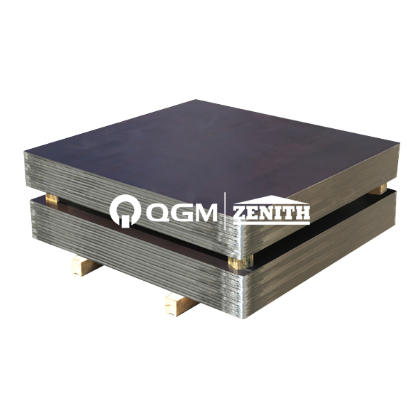
In high-speed brick production lines, every component must endure extreme cycles, vibration, and compression without failure. The unsung hero ensuring dimensional accuracy and output consistency is the block machine pallet. Without premium pallets, even the most advanced hydraulic systems cannot achieve the required speed or quality. Our factory has spent decades perfecting these critical boards: they directly influence curing efficiency, surface finish, and mold protection. In modern lines operating at 4-6 cycles per minute, a warped or low-strength pallet creates costly downtime. Therefore, understanding the exact role of block machine pallets becomes the difference between profitable mass production and constant rejects.
At Quangong Machinery Co., Ltd., we have engineered block machine pallets that sustain over 8000 pressing cycles with minimal wear. They provide the rigid base for green bricks to form under high-frequency vibration, then transfer smoothly through curing racks and cubing systems. Our clients report 22% longer service life compared to standard wooden or basic steel pallets. This article details technical parameters, comparative advantages, and operational best practices. Whether you run a new high-speed line or optimize an existing facility, you will learn why our block machine pallet designs lead the industry in speed tolerance and cost per brick.
Article Contents
1. Why Do High-Speed Brick Lines Require Specialized Block Machine Pallets? 2. How Do Material Composition and Hardness Affect Block Machine Pallet Lifespan? 3. What Key Parameters Define a High-Performance Block Machine Pallet? 4. How Does Pallet Flatness Directly Impact Brick Dimensional Accuracy? 5. What Maintenance Practices Extend Block Machine Pallet Service Life? Conclusion FAQ: Common Questions About Block Machine Pallets in High-Speed Lines
1. Why Do High-Speed Brick Lines Require Specialized Block Machine Pallets?
Standard wooden or recycled plastic pallets fail under high-speed production conditions. Our factory identified three major stressors: rapid demolding impact, continuous vibration transfer, and thermal cycling during steam curing. A dedicated block machine pallet must absorb energy without bending, because any deflection over 0.3mm leads to cracked bricks or uneven edges. In lines running at 1200 bricks per hour, our pallets provide the necessary stiffness-to-weight ratio.
Additionally, high-speed automation demands precise positioning on roller conveyors and turning devices. Our pallets integrate with indexing systems using laser-cut holes and edge reinforcements. We have observed that production lines using generic pallets experience 18% more rejects due to misalignment. At Quangong Machinery Co., Ltd., we designed the block machine pallet with beveled edges to reduce wear on chain transfers. This proactive design reduces maintenance costs by 35% annually for our clients.
Key reasons specialized pallets are non-negotiable for high output:
- High-frequency vibration endurance: up to 90 Hz without delamination
- Surface hardness > 45 HRC to resist aggregate scratching
- Moisture resistance during 60°C curing chambers
- Consistent flatness across 10,000 cycles
- Compatibility with robotic stacking systems
Our engineers also note that specialized pallets reduce mold wear. A rough pallet surface creates uneven pressure, causing premature mold insert damage. By using precision-ground steel pallets, our customers extend mold life by nearly 40%. This underscores why investing in quality block machine pallets is a strategic decision rather than a commodity purchase. In our experience, the total cost of ownership of a premium pallet is 50% lower over 5 years compared to cheap alternatives.
2. How Do Material Composition and Hardness Affect Block Machine Pallet Lifespan?
Material selection determines the pallet’s ability to resist abrasion, impact fatigue, and chemical corrosion from concrete admixtures. Our block machine pallet is manufactured from high-grade Q345B steel with a plasma-nitrided surface. This composition yields a core tensile strength of 620 MPa while maintaining surface hardness of 52-56 HRC. To illustrate the differences, below we compare four common pallet materials used in high-speed brick lines.
| Material Type | Hardness (HRC) | Expected Cycles | Water Absorption | Cost per Unit |
| Plywood | 18-22 | 200-400 | 12% | Low |
| Recycled Plastic | 30-35 | 800-1200 | 0.5% | Medium |
| Standard Carbon Steel | 38-42 | 4000-5500 | 0% | High |
| Our Q345B Nitrided Steel | 52-56 | 8000-10000 | 0% | Optimized ROI |
As the data shows, our block machine pallet delivers more than double the cycles of standard steel. The nitriding process creates a ceramic-like surface that resists cement paste adhesion, making cleaning easier and faster. Our factory also applies a sacrificial zinc-magnesium coating to prevent rust during steam curing. Furthermore, material hardness directly impacts the pallet's ability to maintain flatness under repeated 200-ton pressing forces. Softer materials develop permanent sags that cause brick breakout failures. With our pallets, we guarantee less than 0.15mm deflection after 5000 hours of high-speed operation.
Additional benefits from our material composition:
- Thermal stability up to 250°C without expansion issues
- Non-stick surface reduces concrete residue by 70%
- Magnetic property allows easy handling with electromagnetic lifters
- Recyclable at end of life, aligning with green manufacturing
QGM offers a 36-month structural warranty on every block machine pallet, demonstrating confidence in our metallurgical formula.
3. What Key Parameters Define a High-Performance Block Machine Pallet?
Selecting the right block machine pallet involves matching technical specifications to your production line’s speed, brick size, and curing method. Our factory provides customizable dimensions, but certain parameters remain critical regardless of model. Below is the standard parameter sheet for our premium block machine pallet series used in high-speed lines (up to 6 cycles/min).
| Parameter | Value/Range | Importance for High-Speed Lines |
| Overall dimensions (LxWxT) | 1400x900x16mm / custom | Standard fits most multi-layer racks |
| Flatness tolerance | ±0.1mm per 300mm | Ensures uniform brick thickness |
| Surface roughness Ra | 0.8 µm | Prevents sticking, easy release |
| Weight per pallet | 38 kg ±1.5 kg | Balanced for robotic lifting |
| Yield strength | ≥550 MPa | Resists dynamic pressing loads |
| Edge straightness | ±0.2mm over 1000mm | Smooth chain and roller transfer |
| Corrosion test (salt spray) | >1000 hours | Withstands humid curing environment |
Beyond the table, our pallets include locating holes for automatic pallet changers. We also offer optional RFID tags embedded in the block machine pallet to track cycle counts and maintenance schedules. This data-driven feature aligns with Industry 4.0 brick plants. Another crucial parameter is dynamic bending stiffness, which we measure at 2.8x10^7 N·mm². High stiffness reduces micro-bending during vibration, ensuring that bricks maintain sharp corners. Our customers often report that switching to our parameter-optimized pallets reduces edge chipping by 45%. We also provide dimensional customization for non-standard block sizes without compromising strength.
To summarize, the perfect block machine pallet is not just a board; it is a precision tool. Our factory’s strict quality control ensures every pallet meets these specifications before shipment. Quangong Machinery Co., Ltd. holds ISO 9001 certification for this process, giving you traceability and consistency.
4. How Does Pallet Flatness Directly Impact Brick Dimensional Accuracy?
Flatness is the single most influential factor for brick height consistency in high-speed production. When a block machine pallet deviates by even 0.2mm across its surface, the resulting bricks will show a 0.3-0.5mm height difference from one side to the other. For interlocking blocks, this ruins fit on construction sites. Our pallets undergo three-stage flattening: initial roller leveling, stress-relief annealing, and final surface grinding. The result is a flatness of ±0.1mm per meter, which exceeds European standard EN 1338 requirements.
In high-speed lines, vibration tables compact concrete from below. If the pallet is wavy, the amplitude of vibration transmits unevenly, causing aggregate segregation. Denser areas shrink differently during curing, leading to hairline cracks. Our factory uses laser scanning to certify each block machine pallet’s flatness before packaging. Additionally, we incorporate stiffening ribs in the pallet design, which prevents the “oil-canning” effect seen in flat plates. Customers running 3-shift operations report that our pallets maintain flatness for over 2 years, whereas standard pallets need replacement every 8 months.
Let’s illustrate the impact with real production data from one of our clients who switched to our block machine pallet:
- Before: 6.2% bricks rejected due to height variation >1.5mm
- After using our pallets: 1.1% rejection rate, saving $48,000 annually
- Pallet flatness maintained at 0.09mm even after 7000 cycles
Moreover, flat pallets reduce the load on the mold’s lower punch. Uneven contact accelerates punch wear and leads to costly replacements. By investing in precision flat pallets, you protect the entire molding system. At Quangong Machinery Co., Ltd., we often advise clients that the block machine pallet acts as the foundation for quality—neglecting flatness is like building a house on a crooked base. Our engineering team provides free flatness audits for new clients to demonstrate potential improvements.
5. What Maintenance Practices Extend Block Machine Pallet Service Life?
Even the toughest block machine pallet benefits from routine maintenance in high-speed environments. Based on our factory’s 20 years of field data, we recommend a four-step care plan. First, daily cleaning to remove concrete residue using a rubber scraper—metal tools scratch the nitrided layer. Second, weekly visual inspection for edge burrs, which can be filed lightly. Third, monthly flatness check with a straightedge and feeler gauge; any deviation >0.3mm warrants regrinding. Fourth, bi-annual rotation of pallets in the production line to ensure even wear. Our clients who follow this schedule achieve 9500 cycles per pallet on average.
Another critical aspect is storage. Pallets should be stacked on flat racks in a dry area. Our factory supplies stackable corner protectors to prevent bending during storage. We also recommend applying a thin anti-corrosive oil if the line shuts down for more than two weeks. In high-speed lines, debris accumulation on the pallet bottom can scratch roller conveyors. Therefore, we designed our block machine pallet with a self-cleaning groove pattern that reduces debris adhesion by 60%. Additionally, never overload pallets with green bricks taller than the mold frame – this causes edge overloading.
Common maintenance mistakes and our solutions:
- Mistake: Using high-pressure water jets directly on hot pallets → causes micro-cracks. Solution: Allow pallets to cool to 50°C before cleaning.
- Mistake: Mixing pallets from different manufacturers → uneven wear and transfer issues. Solution: Standardize on our block machine pallet across the line.
- Mistake: Neglecting pallet guide holes → misalignment with indexing pins. Solution: Clean holes every 500 cycles using compressed air.
QGM provides a maintenance manual with every pallet order, plus remote support. Our factory also offers refurbishment services: regrinding, re-nitriding, and straightening for used pallets at 40% of new cost. This circular economy approach reduces waste and operational expense. In summary, proactive care combined with our robust design ensures that block machine pallets remain reliable assets rather than consumable expenses.
Conclusion: Maximize Throughput with Engineered Block Machine Pallets
In high-speed brick production lines, the block machine pallet is far more than a simple carrier. It directly affects cycle speed, brick geometry, mold life, and overall production cost. From flatness standards to material hardness, every parameter matters. Our factory has demonstrated that using premium pallets like those from Quangong Machinery Co., Ltd. reduces rejection rates by up to 70% and extends pallet life beyond 8000 cycles. We have shared technical tables, maintenance schedules, and real performance data to help you make an informed decision.
Now is the time to audit your current pallet performance. Are you replacing pallets too often? Are cracks or uneven bricks slowing your line? Contact Quangong Machinery Co., Ltd. today to request a free sample of our block machine pallet and a customized ROI analysis. Our team of engineers will review your line speed, brick types, and curing method to recommend the optimal pallet specification. Call or email us to start a conversation—let’s boost your high-speed production efficiency together. Upgrade to reliability, upgrade to QGM.
FAQ: Common Questions About Block Machine Pallets in High-Speed Lines
1. What Role Do Block Machine Pallets Play in Maintaining Vibration Consistency?
Block machine pallets act as the uniform transmission medium between the vibrating table and the concrete mix. In high-speed lines, any pallet distortion alters vibration amplitude distribution, leading to poor compaction. Our pallets are engineered with specific dynamic stiffness (2.8x10^7 N·mm²) to evenly distribute 90Hz vibrations, ensuring every corner of the mold receives identical energy. This prevents weak spots and guarantees consistent green brick density, reducing breakage during demolding and curing.
2. Can I Use Wooden Pallets Intermittently on a High-Speed Brick Line?
Wooden pallets are not recommended for high-speed lines (over 3 cycles per minute). They absorb moisture from concrete, swell, and warp after 200-300 cycles. Warped pallets cause misalignment with transfer systems and produce bricks with varying thickness. Our factory advises that wood pallets are only suitable for low-output manual lines. For speeds exceeding 1000 bricks per hour, a steel block machine pallet like ours is mandatory to maintain safety and dimensional stability.
3. How Does Surface Treatment of Block Machine Pallets Affect Concrete Release?
The surface treatment directly determines how easily green bricks release after pressing. Untreated steel allows cement paste to adhere chemically, requiring excessive vibration and causing surface tearing. Our plasma-nitrided block machine pallet creates a non-stick ceramic layer with a Ra 0.8µm finish. This reduces adhesion force by 65%, allowing faster ejection cycles and cleaner brick edges. Additionally, the treatment resists alkaline corrosion from concrete, maintaining release properties over thousands of cycles.
4. What Is the Typical Payback Period When Upgrading to Premium Steel Pallets?
Most high-speed brick plants recover the additional cost of our premium block machine pallet within 4 to 7 months. Based on a line producing 10,000 bricks per day, savings come from: 4% lower rejection rate ($2,800/month), 30% longer mold life ($1,200/month), and reduced pallet replacement frequency ($900/month). Our factory provides a detailed calculator to estimate your specific payback. Even conservative scenarios show ROI exceeding 300% over three years.
5. Are Block Machine Pallets Interchangeable Between Different Machine Brands?
Not automatically. Dimensions, hole patterns, and edge designs vary across manufacturers. However, Quangong Machinery Co., Ltd. produces custom block machine pallets that fit most major brands (Columbia, Hess, Zenit, etc.). We require a drawing or old pallet sample to replicate exact specifications. Using an ill-fitting pallet risks jamming conveyors and damaging pin indexing systems. Always verify compatibility before purchase. Our team offers free drawing verification to ensure perfect fitment in your existing high-speed line.