- English
- Español
- Português
- русский
- Français
- 日本語
- Deutsch
- tiếng Việt
- Italiano
- Nederlands
- ภาษาไทย
- Polski
- 한국어
- Svenska
- magyar
- Malay
- বাংলা ভাষার
- Dansk
- Suomi
- हिन्दी
- Pilipino
- Türkçe
- Gaeilge
- العربية
- Indonesia
- Norsk
- تمل
- český
- ελληνικά
- український
- Javanese
- فارسی
- தமிழ்
- తెలుగు
- नेपाली
- Burmese
- български
- ລາວ
- Latine
- Қазақша
- Euskal
- Azərbaycan
- Slovenský jazyk
- Македонски
- Lietuvos
- Eesti Keel
- Română
- Slovenski
- मराठी
- Srpski језик

How Can the Right Block Making Machine Pallet Improve Concrete Block Production Efficiency
Article Summary: A reliable block making machine pallet is essential for maintaining production stability, supporting fresh concrete blocks, and improving the efficiency of automated manufacturing lines. QGM provides block machine pallet solutions designed to meet different production requirements, with material selection, dimensional accuracy, durability, and machine compatibility all playing important roles in long-term performance. This guide explains how to choose the right pallet, compare common materials, reduce operating costs, and maintain consistent concrete block quality.
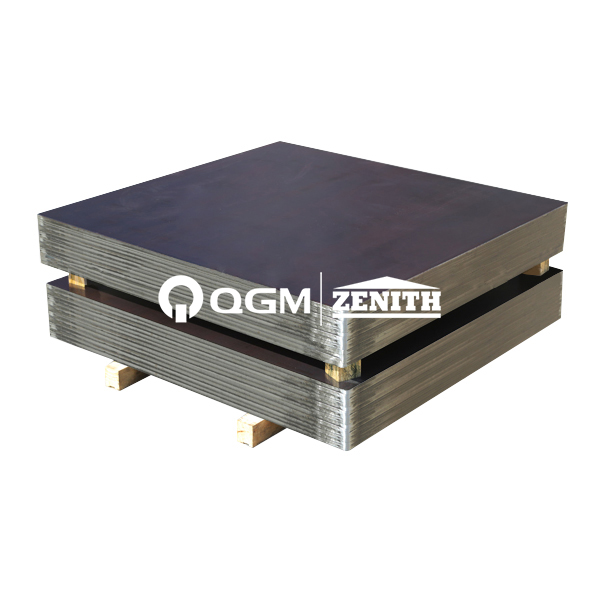
Table of Contents
- What Is a Block Making Machine Pallet?
- Why Does Pallet Quality Matter in Block Production?
- Which Materials Are Used for Block Machine Pallets?
- How Do Different Pallet Materials Compare?
- How to Choose the Right Block Making Machine Pallet
- Maintenance Tips for Longer Pallet Service Life
- Common Purchasing Mistakes to Avoid
- Frequently Asked Questions
- Conclusion: Invest in Reliable Pallet Performance
What Is a Block Making Machine Pallet?
A block making machine pallet is a supporting board used during the production, handling, and transportation of concrete blocks, paving stones, and other cement-based products. As an important component of a block manufacturing line, it provides a stable working surface for freshly formed products and helps them move through subsequent production stages.
In automated concrete block production, pallets repeatedly enter the forming area, receive freshly compacted blocks, and travel through conveying, stacking, or curing-related operations. Their dimensional accuracy and structural stability therefore influence both production continuity and finished product handling.
QGM, also known as Quangong Machinery, offers block machine pallet solutions for different industrial requirements. Depending on the application, buyers may consider steel, wood-based, plastic, or composite pallet constructions. The appropriate choice depends on the machine design, product dimensions, production intensity, and operating environment.
A suitable pallet should provide:
- Consistent dimensions for reliable positioning and machine compatibility.
- Sufficient rigidity to support fresh concrete products during handling.
- A suitable surface finish for practical cleaning and product release.
- Resistance to repeated loading, vibration, abrasion, and environmental exposure.
- Reliable performance throughout repeated production cycles.
Why Does Pallet Quality Matter in Block Production?
In a high-throughput concrete block factory, a pallet is more than a simple support board. It is a frequently used production component that interacts with the forming machine, conveying system, and handling equipment. Inconsistent pallet quality can create operational problems that extend beyond the pallet itself.
1. Stable Support During Forming
Fresh concrete products require appropriate support while they are formed and transferred. A pallet with insufficient stiffness or excessive deformation may compromise handling stability. Selecting a pallet with suitable structural properties helps maintain consistent support throughout the forming cycle.
2. Reliable Machine Operation
Automated production lines depend on accurate pallet positioning and smooth movement. Incorrect dimensions, damaged edges, or uneven surfaces may cause feeding difficulties, interference with conveying components, or unnecessary interruptions. Compatibility with the machine's specified pallet dimensions is therefore essential.
3. Better Control of Operating Costs
The purchase price is only one part of the total cost of ownership. Replacement frequency, cleaning requirements, downtime, handling efficiency, and maintenance labor can all affect the actual cost of using a pallet.
For example, a lower-priced pallet may become more expensive over time if it requires frequent replacement or contributes to production interruptions. Evaluating durability and performance alongside initial cost helps manufacturers make better procurement decisions.
4. Consistent Product Handling
A stable pallet provides a dependable base for moving newly formed blocks through the production process. Although pallet quality alone cannot guarantee finished block quality, suitable pallet design and condition support consistent handling and reduce avoidable production risks.
Which Materials Are Used for Block Machine Pallets?
Material selection should reflect the actual working conditions rather than a single universal preference. Different materials offer different combinations of strength, weight, wear resistance, moisture tolerance, and maintenance requirements.
Steel Pallets
Steel pallets are suitable for applications requiring substantial structural strength and dimensional stability. Their performance depends on steel grade, thickness, fabrication quality, protective treatment, and the machine's operating conditions.
Potential advantages include:
- High structural strength for demanding industrial applications.
- Good resistance to deformation when properly designed.
- Long-term reuse when inspection and maintenance are carried out correctly.
Buyers should also consider pallet weight, corrosion protection, fabrication accuracy, and the suitability of the design for the machine's handling system.
Wood-Based Pallets
Wooden pallets and engineered wood-based boards may provide a practical option for certain production systems. Their characteristics vary according to the wood species, bonding method, board construction, moisture exposure, and manufacturing quality.
These pallets should be inspected for surface damage, swelling, cracks, delamination, and changes in thickness. Consistent storage conditions can help reduce moisture-related problems.
Plastic Pallets
Plastic pallets are available in different formulations and structural designs. Depending on the material, they may offer low weight, moisture resistance, and convenient cleaning. High-quality thermoplastic polypropylene (PP) is one option used in industrial pallet applications.
When evaluating a plastic block making machine pallet, buyers should check stiffness, impact resistance, dimensional stability, wear behavior, and performance under repeated loading and vibration. Material specifications and actual machine compatibility are more useful than relying on the general term "plastic."
Composite Pallets
Composite pallets combine different materials or reinforcing structures to achieve a particular balance of strength, weight, durability, and cost. Fiberglass-reinforced and other engineered boards may be considered for suitable block production environments.
Because composite performance varies by formulation and construction, buyers should request technical documentation and verify suitability for their specific machine and operating conditions.
How Do Different Pallet Materials Compare?
The following table provides a general comparison of common pallet materials. Actual performance depends on the product design, manufacturing quality, machine configuration, and maintenance practices.
| Evaluation Factor | Steel Pallet | Wood-Based Pallet | Plastic Pallet | Composite Pallet |
|---|---|---|---|---|
| Structural strength | Generally high | Depends on board construction | Depends on formulation and design | Depends on reinforcement and structure |
| Weight | Generally heavy | Varies by material | Often relatively light | Varies by construction |
| Moisture resistance | Requires suitable corrosion protection | Requires moisture management | Often good | Depends on resin and construction |
| Maintenance focus | Corrosion, welds, and deformation | Cracks, moisture, and delamination | Wear, cracking, and deformation | Surface damage and structural integrity |
| Key selection priority | Strength and dimensional stability | Board quality and operating conditions | Rigidity and repeated-load performance | Reinforcement and service conditions |
No material is automatically the best choice for every factory. The correct decision should be based on verified performance requirements, machine compatibility, expected service life, and the overall operating cost.
How to Choose the Right Block Making Machine Pallet
Before purchasing a replacement pallet or planning a new production line, manufacturers should establish clear technical requirements. This reduces the risk of ordering a product that cannot operate reliably with existing equipment.
1. Confirm the Machine Model and Pallet Dimensions
Start with the manufacturer's technical documentation. Confirm the required length, width, thickness, dimensional tolerances, edge configuration, and any special positioning features. Do not assume that pallets from different machine brands are interchangeable, even when their nominal dimensions appear similar.
2. Evaluate the Production Process
Consider the types of concrete products being manufactured, the forming cycle, vibration conditions, conveying method, stacking requirements, and production volume. A pallet used in an intensive automated line may require different structural characteristics from one used in a smaller operation.
3. Review Material and Manufacturing Quality
Ask suppliers about material specifications, fabrication methods, surface treatment, dimensional inspection, and quality-control procedures. Where relevant, request information about load performance, wear resistance, and compatibility testing.
4. Calculate Total Cost of Ownership
Compare the initial purchase price with expected service life, maintenance requirements, replacement costs, and the potential financial impact of downtime.
A practical purchasing checklist includes:
- Machine model and required pallet dimensions.
- Material type and thickness.
- Expected loading and production conditions.
- Required surface finish and corrosion protection.
- Compatibility with conveying and handling equipment.
- Inspection procedures and supplier quality documentation.
- Order quantity, delivery schedule, and after-sales support.
For manufacturers seeking a suitable block making machine pallet, discussing these requirements with an experienced supplier can help narrow down the available options and reduce unnecessary procurement risks.
Maintenance Tips for Longer Pallet Service Life
Even a well-manufactured pallet requires regular inspection. Maintenance practices should reflect the material used and the operating environment, particularly in factories with frequent production cycles and continuous material handling.
Establish a Routine Inspection Schedule
Inspect pallets regularly for cracks, bent edges, surface damage, excessive wear, and changes in dimensions. Steel pallets should also be checked for corrosion and damaged joints, while wood-based and composite pallets require attention to splitting, delamination, and moisture-related deterioration.
Keep Pallet Surfaces Clean
Remove accumulated concrete residue and other contaminants using cleaning methods compatible with the pallet material. Excessive buildup may affect positioning, surface contact, and handling accuracy. Avoid aggressive tools or chemicals that could damage protective coatings or pallet surfaces.
Store Pallets Correctly
Use stable, level storage areas and follow the supplier's recommendations for stacking. Keep wood-based products protected from excessive moisture and inspect plastic or composite pallets for deformation caused by unsuitable storage conditions.
Replace Damaged Pallets Promptly
Do not continue using pallets that no longer meet the machine's dimensional or structural requirements. Establishing clear rejection criteria helps prevent damaged pallets from disrupting production or creating avoidable handling hazards.
A consistent maintenance program supports predictable production planning and helps manufacturers make better use of their pallet inventory.
Common Purchasing Mistakes to Avoid
Choosing a pallet based only on its quoted price can lead to compatibility issues and higher long-term costs. Buyers should avoid several common mistakes when comparing suppliers.
- Ignoring dimensional tolerances: Small differences in thickness or overall dimensions may affect pallet feeding and positioning.
- Choosing materials without considering operating conditions: Moisture, vibration, impact, and loading frequency influence performance.
- Relying on unsupported service-life claims: Expected lifespan should be assessed against actual operating conditions and documented product specifications.
- Overlooking quality inspection: Material consistency, surface condition, and dimensional accuracy should be verified.
- Failing to consider total operating costs: Maintenance, downtime, replacement frequency, and handling efficiency can outweigh initial price differences.
- Assuming universal compatibility: Always confirm that the pallet matches the specific block-making machine and production line.
Working with a qualified manufacturer helps clarify technical requirements before an order is placed. For customized solutions, provide machine drawings or verified dimensions whenever possible, along with details about production conditions and intended applications.
Frequently Asked Questions
1. What is a block making machine pallet used for?
A block making machine pallet supports freshly formed concrete blocks and provides a stable base for transferring products through the manufacturing and handling process. Its dimensions and structural properties must match the machine's requirements.
2. Which material is best for a block making machine pallet?
The best material depends on the application. Steel may suit demanding structural requirements, while plastic, wood-based, and composite options may be appropriate for other production conditions. Compare strength, weight, moisture resistance, maintenance needs, and total operating cost before making a decision.
3. How can I confirm whether a pallet fits my block-making machine?
Check the machine model and the manufacturer's technical specifications. Confirm the pallet's length, width, thickness, dimensional tolerances, edge design, and compatibility with the feeding and conveying systems before ordering.
4. How long does a block machine pallet last?
Service life varies according to material quality, manufacturing accuracy, production intensity, loading conditions, maintenance, and storage. Rather than relying on a universal lifespan estimate, review supplier documentation and monitor pallet condition during actual operation.
5. Can block making machine pallets be customized?
Customization may be available depending on the manufacturer and product type. Buyers should provide the required dimensions, material preferences, machine model, production conditions, and any special structural requirements for evaluation.
6. How can I reduce block machine pallet maintenance costs?
Use pallets that meet the machine's specifications, maintain a regular inspection schedule, clean surfaces appropriately, store pallets correctly, and replace damaged units before they affect production. Tracking maintenance and replacement records can also help identify recurring problems.
7. What information should I provide when requesting a pallet quotation?
Provide the machine model, pallet dimensions, required material, estimated quantity, operating environment, and delivery destination. Drawings, photographs, or existing pallet samples may help the supplier assess compatibility and prepare a more accurate quotation.
Conclusion: Invest in Reliable Pallet Performance
A high-quality block making machine pallet contributes to stable handling, dependable machine operation, and efficient concrete block production. By evaluating material properties, dimensional accuracy, production requirements, maintenance practices, and total cost of ownership, manufacturers can select pallets that better match their operational goals.
QGM offers block machine pallet solutions for different industrial applications, with product selection guided by specific equipment and production requirements. Whether you are replacing existing pallets, upgrading a production line, or evaluating customized options, careful technical assessment is the foundation of a practical purchasing decision. Explore the available block making machine pallet solutions and contact us to discuss your machine specifications, material requirements, and purchasing needs. The QGM team can help you evaluate suitable options for your concrete block manufacturing operation.