- English
- Español
- Português
- русский
- Français
- 日本語
- Deutsch
- tiếng Việt
- Italiano
- Nederlands
- ภาษาไทย
- Polski
- 한국어
- Svenska
- magyar
- Malay
- বাংলা ভাষার
- Dansk
- Suomi
- हिन्दी
- Pilipino
- Türkçe
- Gaeilge
- العربية
- Indonesia
- Norsk
- تمل
- český
- ελληνικά
- український
- Javanese
- فارسی
- தமிழ்
- తెలుగు
- नेपाली
- Burmese
- български
- ລາວ
- Latine
- Қазақша
- Euskal
- Azərbaycan
- Slovenský jazyk
- Македонски
- Lietuvos
- Eesti Keel
- Română
- Slovenski
- मराठी
- Srpski језик
Polishing brick making machine
The Polishing brick making machine represents the final frontier in concrete product manufacturing—where structural integrity meets architectural aesthetics. This specialized equipment transforms standard concrete bricks, blocks, and pavers into premium finished products with smooth, polished surfaces suitable for exposed architectural applications. By integrating high-precision grinding and buffing technology with automated material handling, our Polishing brick making machine delivers consistent surface quality that meets the demanding standards of modern construction and landscaping projects.
Surface Treatment Technology
The fundamental capability of a Polishing brick making machine lies in its ability to process the brick surface through progressive refinement stages. Our machine employs a multi-stage polishing system that transforms rough concrete surfaces into smooth, aesthetically finished products:
• Progressive abrasive refinement: The machine utilizes polishing grinding heads that process the brick surface through multiple stages, from rough grinding to fine polishing. This ensures thorough removal of surface imperfections without creating secondary scratching grooves from residual debris.
• Integrated flushing system: Between each polishing stage, an integrated flushing unit removes loose particles and grinding residue from the brick surface. This prevents debris from causing secondary scratches during subsequent processing stages, ensuring a consistently smooth final finish.
• Advanced grinding head design: The polishing mechanism incorporates a rotor with multiple abrasive holders distributed around its circumference, with an internal cleaning hose that directs flush fluid through strategically positioned through-holes. This design ensures that debris is continuously cleared during operation, maintaining optimal grinding efficiency.
• Precision flatness control: The machine maintains consistent pressure across the entire brick surface, achieving zero-defect flatness and mirror-like gloss on the finished product.
This progressive surface refinement typically achieves surface smoothness within ±0.02mm tolerance, enabling bricks to be used in exposed applications such as facades, flooring, and architectural features.
Intelligent Control & Material Adaptability
Modern Polishing brick making machines must accommodate varying material compositions and hardness levels. Our system incorporates advanced control features that optimize performance across different formulations:
• Adaptive processing parameters: The intelligent control module automatically adjusts polishing speed, pressure, and abrasive selection based on the material being processed—whether standard concrete, ceramic compositions, or granite powder blends.
• CNC precision system: High-precision computer numerical control ensures consistent processing parameters across all bricks, eliminating operator-dependent variation and maintaining uniform quality throughout production runs.
• Real-time monitoring: The system monitors surface finish quality during operation, providing feedback for immediate parameter adjustment if deviations are detected.
This intelligent adaptability typically reduces rejection rates by 60%–70% compared to manual or fixed-parameter polishing systems, while significantly reducing the operator skill requirement.
Production Integration
The Polishing brick making machine is designed for seamless integration into existing brick production lines, with capabilities for both standalone and automated production configurations:
| Configuration Parameter | Specification | Operational Advantage |
| Processing Speed | 4–8 bricks per minute | Balances throughput with quality assurance |
| Polishing Stages | 3–5 progressive stages | Enables coarse-to-fine surface refinement |
| Material Compatibility | Concrete, ceramics, stone composites | Versatile for diverse product lines |
| Dust Extraction | Integrated adaptive dust removal system | Environmentally compliant operation |
| Automation Level | Semi-automatic to fully automatic | Scalable for production volume needs |
The integrated dust extraction system captures over 95% of airborne particulates generated during the polishing process, ensuring compliance with occupational health standards and creating a cleaner work environment.
Competitive Benchmark — Polishing Solutions Compared
The following comparison evaluates our Polishing brick making machine against alternative surface finishing approaches:
| Parameter | Our Polishing Brick Machine | Manual Grinding | Standalone Polishing Unit | Conventional Surface Finishing |
|---|---|---|---|---|
| Surface Finish Quality | Mirror-like gloss, zero defects | Variable, operator-dependent | Good, limited consistency | Basic smoothing only |
| Processing Speed (bricks/hour) | 240–480 | 20–40 | 120–200 | 80–150 |
| Labor Requirement | 1–2 operators | 4–6 skilled workers | 2–3 operators | 3–4 operators |
| Surface Flatness Tolerance | ±0.02mm | ±0.5–1.0mm | ±0.05mm | ±0.3mm |
| Dust Control | Integrated extraction >95% | Minimal protection | External extraction required | Often inadequate |
| Initial Investment | $65,000–$120,000 | $5,000–$10,000 | $45,000–$80,000 | $25,000–$50,000 |
| Annual Operating Cost | $15,000–$22,000 | $60,000–$90,000 (labor) | $25,000–$35,000 | $35,000–$50,000 |
| Rejection Rate (%) | <2% | 8%–15% | 5%–8% | 6%–10% |
| 5-Year Total Cost | $140,000–$230,000 | $330,000–$490,000 | $180,000–$260,000 | $210,000–$300,000 |
Value Proposition: Our Polishing brick making machine delivers premium architectural surface quality at a mid-range investment point, achieving superior consistency and lower total cost than manual methods while providing better dust control than conventional alternatives.
Application Scenarios
Polished concrete bricks and blocks command premium prices in architectural applications. Our Polishing brick making machine enables manufacturers to access these higher-margin markets:
• Architectural Facades: Polished bricks with mirror-like surfaces are increasingly specified for contemporary building exteriors, where they provide a modern aesthetic with the durability of concrete.
• Interior Flooring: Polished concrete pavers and tiles offer a sophisticated alternative to natural stone, with consistent coloring and superior wear resistance.
• Landscape Features: Polished blocks and pavers are used in high-end landscaping applications, including plazas, commercial walkways, and garden features.
• Decorative Elements: Custom-polished concrete products serve as architectural details, including window surrounds, cornices, and ornamental elements.
By adding polishing capability to existing brick production, manufacturers typically achieve a 25%–40% price premium for polished products compared to standard concrete masonry units, representing a significant revenue enhancement opportunity.
Frequently Asked Questions
Q1: What types of concrete products can be polished with this machine?
The Polishing brick making machine is compatible with standard concrete bricks, hollow blocks, pavers, and specialty masonry units with a minimum compressive strength of 15MPa. It can also process ceramic compositions and stone-based materials with appropriate abrasive selection.
Q2: Does the polishing process affect product strength?
The polishing process removes only surface material (typically 0.5–1.5mm) and does not compromise structural integrity. For load-bearing applications, we recommend verifying product strength with a compressive strength test after polishing.
Q3: How does the machine control dust during operation?
The machine is equipped with an integrated adaptive dust removal system that captures particulates at the point of generation, combined with water flush systems that suppress airborne dust.
Q4: Can the machine handle different brick sizes?
Yes, with appropriate adjustment of the work platform and polishing heads. The machine accommodates bricks up to 500mm in length and 200mm in height, with processing capabilities adjustable for various product dimensions.
Q5: What maintenance is required for the polishing machine?
The machine requires regular abrasive replacement, cleaning of the flushing system, and periodic inspection of the grinding head components. A complete maintenance schedule with recommended intervals is provided with the equipment.
Q6: How does the machine achieve consistent gloss across production runs?
The CNC-based precision control system ensures consistent processing parameters for every brick, eliminating operator-dependent variation.
Elevating Concrete Products to Architectural Standards
The Polishing brick making machine represents a strategic investment for manufacturers seeking to capture higher-value market segments:
• Product Premium: Achieve 25%–40% higher pricing for polished concrete products.
• Quality Consistency: CNC precision ensures uniform surface finish across all production.
• Operational Efficiency: Automated processing reduces labor requirements and minimizes waste.
• Environmental Compliance: Integrated dust extraction meets modern workplace safety standards.
Related Products


Hot Products

Brick Making Machine Pallet
QGM/Zenith is a professional Brick Making Machine Pallet manufacturer and supplier in China, you can rest assured to buy Brick Making Machine Pallet from our factory and we will offer you the best after-sale service and timely delivery.It is mainly used to store and transport bricks, tiles and other building materials during the brick making process.
Energy-Efficient Brick Machine Pallet
QGM/Zenith is Energy-Efficient Brick Machine Pallet manufacturer and supplier in China. We can provide professional service and better price for you. Energy-Efficient Brick machine Pallet refers to the auxiliary equipment used to hold up the brick embryo during the production process of the brick machine.If you interested in products, please contact with us. We follow the quality of rest assured that the price of conscience, dedicated service.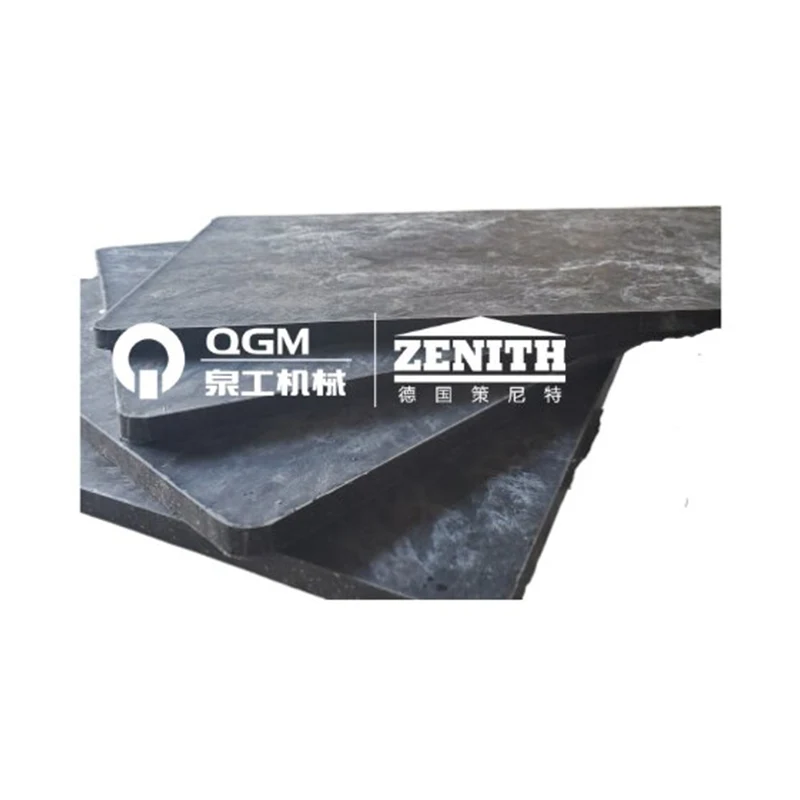
Paver Block Making Machine Pallet
High quality Paver Block Making Machine Pallet is offered by China manufacturer QGM/Zenith. Buy Paver Block Making Machine Pallet which is of high quality directly. It is usually located at the front of the manufacturing machine and is responsible for receiving, temporarily storing and evenly laying the materials on the road surface.
Solid Wood Brick Machine Pallet
With years of experience in production Solid Wood Brick Machine Pallet, QGM/Zenith can supply a wide range of Solid Wood Brick Machine Pallet. High quality product can meet many applications, if you need, please get our online timely service about product. In addition to the product list below, you can also customize your own unique product according to your specific needs.
Plastic Brick Pallet
You can rest assured to buy Plastic Brick Pallet from us. We look forward to cooperating with you, if you want to know more, you can consult us now, we will reply to you in time! The main function of Plastic Brick Pallet is to provide a stable and flat platform for the transportation, storage and stacking of various items.
Concrete Block Brick Machine Pallet
One of Chinese manufacturer of Concrete Block Brick Machine Pallet, offering excellent quality at a competitive price, is QGM/Zenith. Feel free to get in touch. They are used as transportation auxiliary tools in building logistics, which can improve transportation efficiency and work safety, and are also beneficial to environmental protection.
- Related Blog
- Reviews