- English
- Español
- Português
- русский
- Français
- 日本語
- Deutsch
- tiếng Việt
- Italiano
- Nederlands
- ภาษาไทย
- Polski
- 한국어
- Svenska
- magyar
- Malay
- বাংলা ভাষার
- Dansk
- Suomi
- हिन्दी
- Pilipino
- Türkçe
- Gaeilge
- العربية
- Indonesia
- Norsk
- تمل
- český
- ελληνικά
- український
- Javanese
- فارسی
- தமிழ்
- తెలుగు
- नेपाली
- Burmese
- български
- ລາວ
- Latine
- Қазақша
- Euskal
- Azərbaycan
- Slovenský jazyk
- Македонски
- Lietuvos
- Eesti Keel
- Română
- Slovenski
- मराठी
- Srpski језик
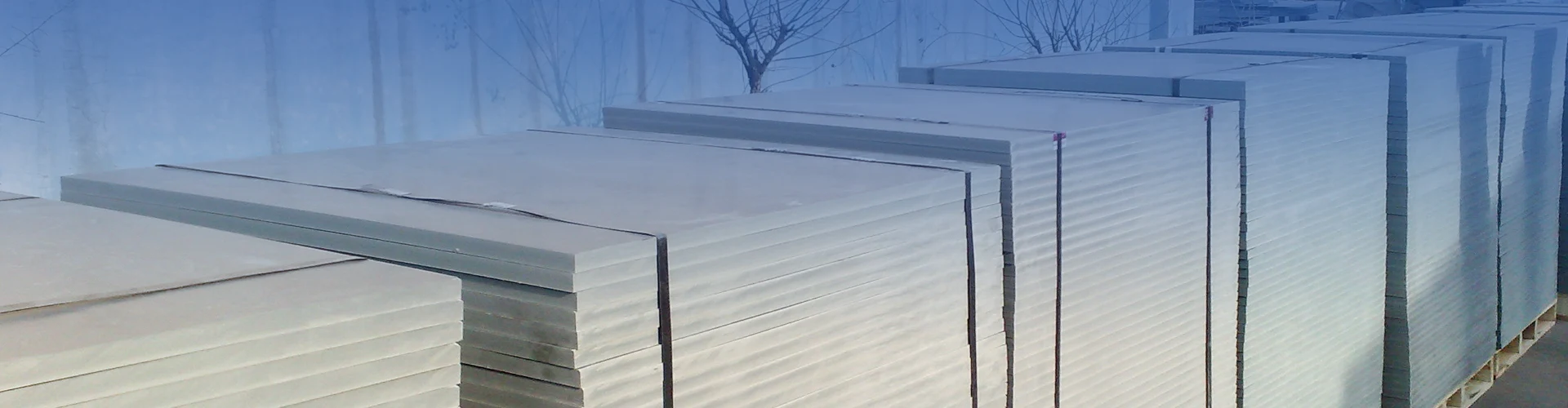
China Kerbstone Brick Machine Manufacturer, Supplier, Factory
The Kerbstone Brick Machine is a specialized concrete forming system designed for the production of road kerbstones, curbstones, and edging units used in infrastructure and landscaping projects. Unlike general-purpose block machines, this equipment is engineered to handle the unique geometric and structural requirements of kerbstone production—including curved profiles, chamfered edges, and consistent dimensional accuracy. Our Kerbstone Brick Machine integrates high-pressure hydraulic compaction with precise mold control to produce durable, dimensionally stable kerbstones that meet international road construction standards.
Kerbstone-Specific Molding Technology
Kerbstone production imposes distinct demands on forming equipment. The finished product must have consistent cross-section geometry, smooth visible surfaces, and sufficient edge strength to withstand handling and installation stresses. Our Kerbstone Brick Machine addresses these requirements through:
• Controlled material feed distribution: Even distribution of concrete mixture across the mold cavity, which often has an elongated, narrow shape compared to standard blocks.
• Multi-point vibration system: Multiple vibrator positions ensure uniform compaction in long mold cavities, preventing density variations along the kerbstone length.
• Mold profile versatility: Supports a wide range of kerbstone profiles, including straight, radius, and custom shapes with specialized top edges (chamfered, rounded, or bullnose).
The molding cycle for kerbstones typically uses a two-stage compaction: a preliminary low-pressure fill and consolidation stage, followed by full-pressure pressing with sustained dwell time to eliminate air voids and achieve target density.
Technical Specifications & Production Capacity
The following table provides specifications for the Kerbstone Brick Machine based on the ZS-QT6-15 platform, optimized for kerbstone production:
| Parameter | Specification |
| Overall Dimensions (mm) | 3100 × 2100 × 2700 |
| Molding Cycle | 18–22 seconds (kerbstones) |
| Total Power (KW) | 40.5 |
| Molding Area (mm) | 900 × 800 |
| Max Molding Height (mm) | 300 (suitable for kerbstones) |
| Pallet Size (mm) | 850 × 680 × 25 |
| Machine Weight (T) | 8.5 |
| Rated Pressure (MPa) | 32 |
| Exciting Force (KN) | 70–80 |
Production output for kerbstones depends on the number of pieces per mold and cycle time. Typical production capacities:
| Kerbstone Type | Dimensions (mm) | Pieces per Cycle | Pieces per 8-Hour Shift |
| Standard Road Kerb | 1000 × 200 × 150 | 2 | 2,880 |
| Medium Kerb | 750 × 200 × 120 | 3 | 4,320 |
| Garden Edging | 500 × 150 × 100 | 4 | 5,760 |
| Channel Kerb | 1000 × 250 × 200 | 1 | 1,440 |
Mold Design & Quick-Change Pallet Integration
The Kerbstone Brick Machine is equipped with a Quick-Change Block Machine Pallet that significantly reduces changeover time when switching between kerbstone profiles or other product types. This pallet system includes:
• Interchangeable mold cassettes: Designed for rapid attachment and removal without specialized tools, enabling a single machine to produce multiple kerbstone profiles.
• Surface treatment: Chemical treatment in the final production stage prevents concrete residue build-up, ensuring consistent product finish and reducing cleaning downtime.
• Flatness and vibration transmission: Precision-ground pallet surfaces ensure perfect flatness and superior vibration transmission, producing kerbstones with crack-free edges and uniform density.
The quick-change feature is particularly valuable for manufacturers producing small batch quantities of different kerbstone designs—allowing rapid response to municipal contracts or landscape project specifications without lengthy setup times.
Edge Quality & Surface Finish Control
Road kerbstones require high-quality edge finish to ensure safe and visually appealing installation. Our Kerbstone Brick Machine achieves superior edge quality through:
• Controlled demolding speed: The ejection system operates at a programmed rate that minimizes friction between the green kerbstone and the mold walls, reducing edge chipping.
• Wear-resistant mold materials: Mold cavities are machined from abrasion-resistant steel with precision-ground surfaces to maintain consistent geometry over thousands of cycles.
• Vibration energy optimization: Vibration parameters are adjustable for different kerbstone shapes and heights, allowing fine-tuning to achieve the required surface density without causing material segregation.
The machine's vibration system operates at 4,500 RPM, with adjustable amplitude to suit different kerbstone profiles. The compact design of the molding area ensures efficient energy transmission through the pallet to the concrete material.
Comparative Advantage — Kerbstone Brick Machine vs. Alternatives
The following comparison evaluates our Kerbstone Brick Machine against common alternatives used for kerbstone production:
| Parameter | Our Kerbstone Machine | Manual Press | Standard Block Machine (with kerb mold) | Imported Premium System |
|---|---|---|---|---|
| Dedicated Kerbstone Molding | Yes—optimized profiles | Yes—limited to basic shapes | Compatible but not specialized | Yes |
| Quick-Change Pallet System | Integrated—minutes to change | No | Optional (manual) | Integrated |
| Edge Quality Consistency | High—controlled demolding | Variable—operator dependent | Moderate—limited profile control | Very high |
| Profile Versatility | Wide range—straight, radius, custom | Limited to straight | Limited by mold availability | Wide range |
| Production Output (kerbstones/shift) | Up to 4,320 (medium size) | 1,000–2,000 | 2,500–3,500 | 5,000–8,000 |
| Initial Investment (USD) | $85,000–$150,000 | $15,000–$30,000 | $60,000–$120,000 | $250,000–$500,000 |
| 5-Year Total Cost of Ownership | $195,000–$265,000 | $250,000–$350,000 (labor) | $200,000–$280,000 | $480,000–$720,000 |
Key Differentiator: Our Kerbstone Brick Machine combines dedicated kerbstone forming capability with the versatility of the quick-change pallet system, delivering specialized performance at a mid-range price point.
Frequently Asked Questions
Q1: What kerbstone profiles can the machine produce?
Kerbstone Brick Machine supports a wide variety of kerbstone profiles, including standard road kerbstones (with chamfered, bullnose, or rounded edges), garden edging, channel kerbstones, radius kerbstones for curved installations, and custom profiles. Mold sets are interchangeable for different shapes.
Q2: How does the quick-change pallet system improve kerbstone production?
The quick-change pallet system allows operators to switch from one kerbstone profile to another in minutes, rather than hours. This is particularly beneficial for manufacturers who produce multiple kerbstone sizes or designs in small batches, reducing downtime and improving production flexibility.
Q3: Can the machine produce both kerbstones and other concrete products?
Yes. By changing the mold and adjusting parameters, the same machine can produce standard bricks, hollow blocks, paving stones, and other concrete masonry units. This versatility makes it a valuable asset for manufacturers with diverse product portfolios.
Q4: What is the typical compressive strength of kerbstones produced on this machine?
With appropriate mix design and proper curing, kerbstones produced on this machine consistently achieve compressive strengths exceeding 35 MPa, meeting most international road construction standards.
Q5: Does the machine require special handling for kerbstone production?
Kerbstone Brick Machine requires careful attention to mold preparation and demolding timing to prevent edge damage. The machine's controlled demolding speed and adjustable vibration settings help mitigate these risks.
Related Products


Hot Products

Hollow Block Machine Pallet
You are welcomed to come to QGM/Zenith factory to buy the latest selling, low price, and high-quality Hollow Block Machine Pallet. We look forward to cooperating with you. The design and material selection of the pallet are crucial to improving production efficiency and product quality.
Fiberglass Brick Machine Pallet
QGM/Zenith as the professional manufacturer, we would like to provide you high quality Fiberglass Brick Machine Pallet. And we will offer you the after-sale service and timely delivery. It has the characteristics of light weight, corrosion resistance, high temperature resistance, moisture resistance, and corrosion resistance.
Plastic Brick Pallet
You can rest assured to buy Plastic Brick Pallet from us. We look forward to cooperating with you, if you want to know more, you can consult us now, we will reply to you in time! The main function of Plastic Brick Pallet is to provide a stable and flat platform for the transportation, storage and stacking of various items.
Sustainable Building Brick Machine Pallets
Find a huge selection of Sustainable Building Brick Machine Pallets from China at QGM/Zenith. They are usually made of wood or plastic and have the characteristics of strong carrying capacity, ventilation and air permeability, and easy cleaning. Its main uses include protecting products, improving production efficiency and reducing labor costs.
Block Making Machine Pallet
As one of professional manufacturer, QGM/Zenith would like to provide you high quality Block Making Machine Pallet. And we will offer you the best after-sale service and timely delivery. Block Making Machine Pallet is usually made of wood or other durable materials, and is designed with durability and stability in mind.
Multipurpose Block Machine Pallet
QGM/Zenith is one of professional leader China Multipurpose Block Machine Pallet manufacturer with high quality and reasonable price. Welcome to contact us.The four corners of the bottom of the pallet body are fixedly connected with legs. The pallet body is provided with an installation chamber.
- Related Blog
- Reviews