- English
- Español
- Português
- русский
- Français
- 日本語
- Deutsch
- tiếng Việt
- Italiano
- Nederlands
- ภาษาไทย
- Polski
- 한국어
- Svenska
- magyar
- Malay
- বাংলা ভাষার
- Dansk
- Suomi
- हिन्दी
- Pilipino
- Türkçe
- Gaeilge
- العربية
- Indonesia
- Norsk
- تمل
- český
- ελληνικά
- український
- Javanese
- فارسی
- தமிழ்
- తెలుగు
- नेपाली
- Burmese
- български
- ລາວ
- Latine
- Қазақша
- Euskal
- Azərbaycan
- Slovenský jazyk
- Македонски
- Lietuvos
- Eesti Keel
- Română
- Slovenski
- मराठी
- Srpski језик
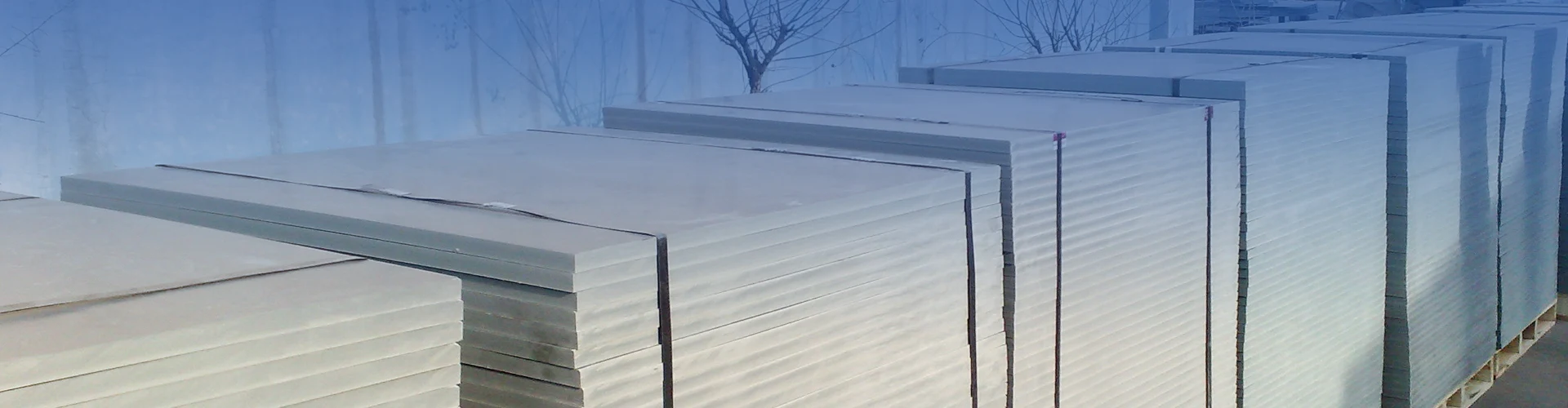
Concrete product forming machine
The Concrete Product Forming Machine is a comprehensive forming solution designed for manufacturers producing a diverse range of concrete products. Whether your portfolio includes curb stones, paving blocks, retaining wall units, hollow cores, or custom architectural elements, this system delivers consistent quality, operational flexibility, and long-term value across the entire product spectrum. It represents the convergence of advanced vibration technology, precision pallet engineering, and practical production experience.
This machine is built on a simple premise: that the best forming equipment is the one that producers can rely on day after day, year after year, without constant adjustment or intervention. By focusing on the fundamentals – robust construction, precise pallet systems, and intuitive controls – we have created a machine that performs consistently across all operating conditions, from the first shift to the ten-thousandth cycle.
Thickness Options – Application-Specific Selection
The selection of pallet thickness should reflect the specific requirements of your production environment. For applications with a 600kg per pallet load capacity, the following options are available:
| Steel Pallet (L×W) | Product | Load Condition | Raw Material | Thickness (mm) |
| 1400 × 1000 mm | Curb Stone | Up to 600kg | KS SS400 / DIN St 44.2 | 15 / 16 / 18 |
| 1400 × 1000 mm | Curb Stone | Up to 600kg | KS SS490 / DIN St 50.2 / DIN St 52.3 | 15 / 16 / 18 |
Product Adaptability
The Concrete Product Forming Machine is designed to accommodate the diverse product portfolios required by modern concrete manufacturers. This adaptability is achieved through a combination of design features and operational flexibility:
• Broad Product Range: The machine is configured to produce a wide range of concrete products including curb stones, interlocking paving blocks, retaining wall units, hollow core blocks, solid masonry units, and custom architectural elements. Forming parameters can be adjusted to suit the specific requirements of each product type.
• Mix Design Compatibility: The machine accommodates a broad spectrum of mix formulations – from conventional cement-sand-aggregate mixes to specialized formulations with additives, pigments, and supplementary cementitious materials. The efficient vibration transmission ensures consistent compaction across different mix consistencies.
• Rapid Changeover Capability: The standardized pallet system and adjustable forming parameters allow for quick transitions between product types. This is particularly valuable for manufacturers who produce multiple product lines or need to respond quickly to changing order requirements.
• Scalability for Growth: The machine's robust construction and flexible control system make it suitable for both small-scale operations and large-scale industrial production. This scalability ensures that the machine can grow with your business.
Material Performance Comparison
The choice of pallet material affects forming quality, operating costs, maintenance requirements, and environmental footprint. The following comparison provides a comprehensive view of steel pallet performance:
| Parameter | Steel Pallet Performance |
| Durability | Proven resistance to impact, vibration fatigue, and environmental factors – designed for high-cycle industrial applications |
| Waste | 100% recyclable at end of life – supports circular economy and reduces landfill impact |
| End-of-life value | Scrap metal recovery provides a documented financial return – a unique advantage over alternatives |
| Environmental impact | Inert material – no chemical additives, no emissions, no moisture-related degradation |
| Product strength | Excellent > Wood / Plastic – rigid support maximizes compaction and product density |
| Mold block strength | Excellent > Wood / Plastic – dimensional stability under sustained compression loads |
| Finished product appearance | Superior surface quality > Wood / Plastic – precision surface reduces texture defects |
| Elastic modulus | 200 GPa (rigid support) > Wood / Plastic – predictable deflection under load |
| Vibration transmission rate | High (enhances compaction efficiency) > Wood / Plastic – direct energy transfer to the mix |
Operational Economics
When evaluating capital equipment, it is essential to consider the full financial picture – not just the initial purchase price but also operating costs, maintenance requirements, and asset recovery over the equipment's lifecycle. The Concrete Product Forming Machine offers a compelling financial value proposition:
• Reduced Material Waste: The precision forming system and consistent pallet quality result in lower rejection rates, typically below 1.5%. This reduces the cost of wasted material and the labor cost associated with reprocessing or disposing of rejected products.
• Extended Asset Life: The steel pallets and robust machine construction extend the useful life of the system, reducing the frequency of capital replacement and the associated costs. This is a significant financial advantage for facilities with long planning horizons.
• End-of-Life Recovery: The scrap metal value of steel pallets provides a documented financial return at end of life. This recovery value typically ranges from 20-30% of the original pallet cost, effectively reducing the net cost of the pallet system over its service life.
• Lower Operating Costs: The reduced maintenance requirements and extended service intervals associated with the machine result in lower operating costs over its lifetime. This is particularly valuable for facilities with tight operating budgets or high labor costs.
Quality Assurance System – From Input to Output
Quality in concrete product forming is the result of a chain of factors, each dependent on the others. The Concrete Product Forming Machine is designed to support quality throughout this chain:
• Consistent Forming Conditions: The precision pallet system and closed-loop vibration control ensure that forming conditions remain consistent across all production cycles. This eliminates the variability that often arises from pallet-to-pallet differences or operator adjustments.
• Material Utilization Efficiency: The reduced rejection rate (typically below 1.5%) means that a higher percentage of raw materials are converted into finished products. This reduces material waste and improves overall production economics.
• Traceability and Documentation: Production data, including pallet performance metrics and quality indicators, can be documented for quality assurance and regulatory compliance. This is increasingly important for manufacturers supplying to projects with strict quality requirements.
• Continuous Improvement Capability: The machine's consistent performance provides a stable baseline for process improvement. When changes are made to mix designs, forming parameters, or other variables, the results can be reliably assessed against this baseline.
Environmental & Sustainability Considerations
As environmental regulations become more stringent and customer expectations for sustainable products continue to rise, concrete product manufacturers are increasingly evaluated on their environmental performance. The Concrete Product Forming Machine is designed to support your sustainability objectives:
• Resource Efficiency: The precision forming system reduces material waste by minimizing rejection rates. For a typical production facility, this can result in annual material savings of 3-5% compared to conventional systems.
• Energy Optimization: The efficient vibration transmission through steel pallets reduces the energy required per unit of production. Lower energy consumption translates to reduced Scope 2 emissions and lower operating costs.
• Circular Economy Alignment: The steel pallet system is 100% recyclable at end of life, contributing to closed-loop material flows. This is a significant advantage over wood and plastic pallets, which typically end up in landfills.
• Chemical-Free Operation: The machine requires no chemical treatments, preservatives, or coatings for its pallet system. This eliminates the use of potentially hazardous substances and simplifies environmental compliance.
• Extended Product Lifecycle: The durability of steel pallets (3-5 years of service life) reduces the frequency of manufacturing and disposal cycles, reducing the overall environmental impact over time.
Competitive Advantage Analysis – A Detailed Examination
When evaluating concrete product forming equipment, the differences in engineering philosophy, manufacturing standards, and quality assurance processes have significant implications for your production outcomes. The following analysis provides a detailed examination of how our Concrete Product Forming Machine compares to typical alternatives available in the market.
1. Pallet Dimensional Precision – The Foundation of Consistency
Our pallets are manufactured using CNC aerated bidirectional linear cutting, achieving dimensional tolerances within ±0.5 mm. This precision ensures that every pallet provides a perfectly uniform forming surface, which is essential for consistent product thickness and geometry. In contrast, most conventional automatic systems rely on standard cutting methods that result in tolerances of ±2.0 to 3.0 mm. Entry-level equipment typically exhibits even wider variations of ±3.0 to 5.0 mm. These differences may seem minor, but they translate directly to measurable variations in product dimensions – variations that can lead to increased finishing costs, higher rejection rates, and customer complaints about product inconsistency. Our precision advantage means that your products meet specification more consistently, with less rework and fewer rejects.
2. Stress Relief Engineering – Preventing the Inevitable
One of the most significant differentiators is our systematic stress-relief process. Residual tensile stresses from the cutting process are eliminated in both horizontal and vertical orientations, preventing the gradual development of pallet distortion that occurs with untreated steel. This is not a cosmetic improvement – it addresses a fundamental engineering challenge that affects pallet performance over time. Most standard automatic systems do not perform stress relief, treating it as an unnecessary cost rather than an essential process. Entry-level equipment never includes this step. The consequence is that pallets from these systems typically begin to show signs of warping and distortion within 12-18 months of use, leading to product defects, increased rejection rates, and the need for premature replacement. Our pallets, by contrast, maintain their flatness and dimensional stability for 3-5 years of continuous service.
3. Quality Inspection Coverage – Certainty vs. Probability
Our quality assurance protocol includes 100% automated flatness inspection for every pallet produced. This means that every pallet that reaches your production line has been verified to meet the required specification – there are no gaps in the inspection process, no "passing" pallets that might have marginal flatness issues. Conventional systems typically rely on random sampling, inspecting only 10-20% of production. This means that 80-90% of pallets are accepted based on statistical probability rather than actual verification. Entry-level systems often rely on visual inspection only, which is subject to human error and cannot detect subtle flatness deviations. The difference in approach is significant: our 100% inspection provides certainty, while sampling-based methods provide only probability. This certainty translates to fewer unexpected quality issues on your production line and more predictable outcomes.
4. Material Grade Selection – Matching Steel to Application
We offer five standard material grades, including KS SS400, KS SS490, DIN St 44.2, DIN St 50.2, and DIN St 52.3. This range allows you to select the optimal grade for your specific application – balancing cost against strength, durability, and service life requirements. Most competitors offer only one or two grades, limiting your ability to optimize for your particular production conditions. Entry-level equipment typically uses a single grade of unspecified quality. Our material grade flexibility means that you are not forced to accept a "one-size-fits-all" solution that may be either over-engineered (costing more than necessary) or under-engineered (failing to provide adequate service life). You can select the grade that precisely matches your production requirements.
Frequently Asked Questions
Q1: What types of concrete products can this machine produce?
A: The Concrete Product Forming Machine is designed to produce a wide range of concrete products including curb stones, paving blocks, retaining wall units, hollow core blocks, solid masonry units, and custom architectural elements. Product-specific parameters can be adjusted through the control system to achieve optimal forming conditions for each product type.
Q2: How does the machine handle different mix designs?
A: The machine accommodates a broad spectrum of mix designs – from standard cement-sand-aggregate mixes to specialized formulations with additives, pigments, and supplementary cementitious materials. The vibration parameters can be adjusted to achieve optimal compaction for the specific mix formulation being used.
Q3: What is the typical learning curve for operators?
A: Most operators with experience in concrete forming equipment can become proficient with the machine's basic functions within 2-3 shifts. Comprehensive training is provided as part of the installation process, with ongoing support available for advanced features and optimization techniques.
Q4: How long does it take to change between different product types?
A: The time required for product changeovers depends on the specific products involved, but typical changeover times range from 30 minutes to 2 hours. This is significantly faster than manual systems that require physical mold changes, as the machine's parameter adjustments can be accomplished through the control interface.
Q5: What is the recommended maintenance schedule?
A: We recommend a regular maintenance schedule that includes daily visual inspections, weekly checks of critical components, and quarterly inspections of the vibration system and control systems. Detailed maintenance instructions are provided with the machine documentation.
Q6: What support is available after purchase?
A: Our support includes telephone and email technical assistance, remote diagnostics (where connectivity is available), on-site service visits, and access to a comprehensive documentation library. We also provide training and support for installation and commissioning to ensure smooth startup.
Related Products


Hot Products
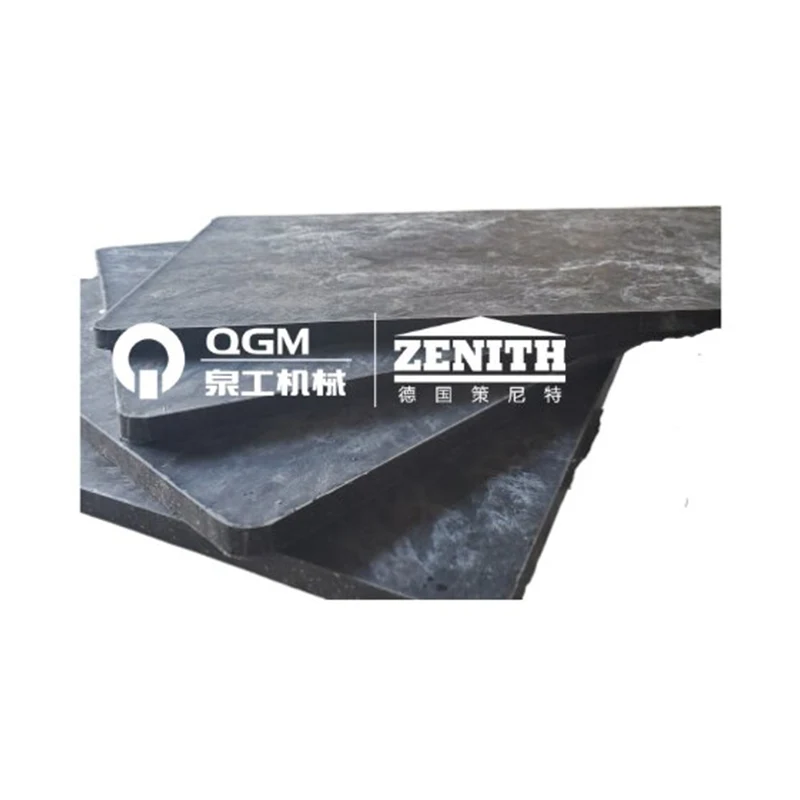
Paver Block Making Machine Pallet
High quality Paver Block Making Machine Pallet is offered by China manufacturer QGM/Zenith. Buy Paver Block Making Machine Pallet which is of high quality directly. It is usually located at the front of the manufacturing machine and is responsible for receiving, temporarily storing and evenly laying the materials on the road surface.
High-Capacity Block Machine Board
QGM/Zenith is High-Capacity Block Machine Board manufacturer and supplier in China, we can provide professional service.The advantage of High-Capacity Block Machine Board is that it can significantly reduce the production cost of bricks, solve the problem of traditional pallets being easily damaged, and at the same time improve production efficiency and product quality.
Fly Ash Brick Machine Board
As a professional Fly Ash Brick Machine Board manufacturer, you can rest assured to buy Fly Ash Brick Machine Board from our factory and QGM/Zenith will offer you the best after-sale service and timely delivery. This material is not only environmentally friendly, but also effectively utilizes industrial waste fly ash.
Sustainable Building Brick Machine Pallets
Find a huge selection of Sustainable Building Brick Machine Pallets from China at QGM/Zenith. They are usually made of wood or plastic and have the characteristics of strong carrying capacity, ventilation and air permeability, and easy cleaning. Its main uses include protecting products, improving production efficiency and reducing labor costs.
Quick-Change Block Machine Pallet
QGM/Zenith invites you to visit our factory to purchase the high-quality Quick-Change Block Machine Pallet. We are looking forward to working with you. The main materials of the block machine pallet include steel and wood. Steel provides structural support, while wood increases the load-bearing capacity and stability.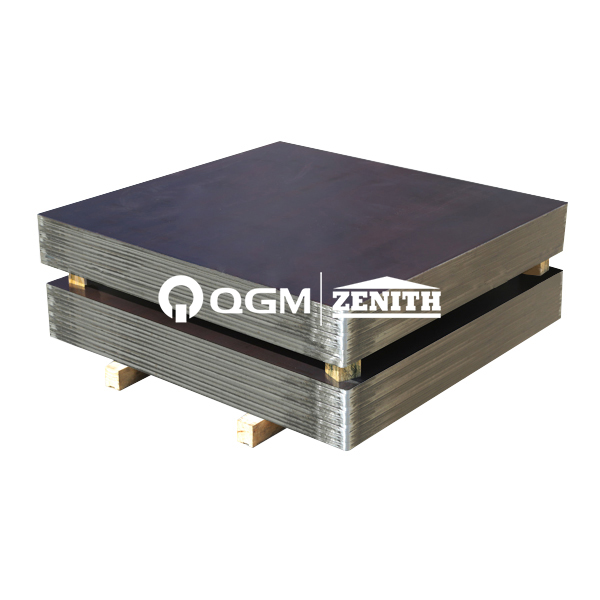
Solid Steel Pallet
As one of professional manufacturer in China, QGM/Zenith would like to provide you Solid Steel Pallet. And we will offer you the best after-sale service and timely delivery. Through CNC machine tools, aerated bidirectional balance (CNC aerated) straight-line cutting method, accurate length, width, and diagonal dimensions.
- Related Blog
- Reviews