- English
- Español
- Português
- русский
- Français
- 日本語
- Deutsch
- tiếng Việt
- Italiano
- Nederlands
- ภาษาไทย
- Polski
- 한국어
- Svenska
- magyar
- Malay
- বাংলা ভাষার
- Dansk
- Suomi
- हिन्दी
- Pilipino
- Türkçe
- Gaeilge
- العربية
- Indonesia
- Norsk
- تمل
- český
- ελληνικά
- український
- Javanese
- فارسی
- தமிழ்
- తెలుగు
- नेपाली
- Burmese
- български
- ລາວ
- Latine
- Қазақша
- Euskal
- Azərbaycan
- Slovenský jazyk
- Македонски
- Lietuvos
- Eesti Keel
- Română
- Slovenski
- मराठी
- Srpski језик

How Are Advanced Materials Transforming Block Machine Pallet Performance?
The humble pallet—the flat platform on which concrete blocks are formed, cured, and transported—has undergone a remarkable transformation in recent years. Once considered a simple wooden or steel board, the Block Machine Pallet is now a high-performance engineering component, thanks to the advent of advanced materials. These new materials, including high-strength steel alloys, fiber-reinforced composites, and ultra-wear-resistant coatings, are fundamentally improving pallet performance in three key areas: dimensional stability, wear resistance, and weight reduction. At Quangong Machinery Co., Ltd., our factory has been at the forefront of this transformation, developing Block Machine Pallet solutions that last longer, produce more consistent blocks, and reduce overall operating costs. This article delves into the material science behind these innovations and explains how they are reshaping the economics of block production.
The performance of a Block Machine Pallet directly affects the quality of the finished blocks. A warped or worn pallet causes uneven block thickness, surface imperfections, and increased breakage during demolding. Advanced materials address these issues by offering superior flatness retention, higher resistance to abrasion from concrete aggregates, and reduced thermal expansion, which prevents deformation during curing cycles. Moreover, modern pallets are designed for integration with automated conveyor systems, requiring precise dimensions and consistent weight. By adopting materials such as boron steel, polymer composites with glass-fiber reinforcement, and tungsten carbide-infused coatings, manufacturers are extending pallet life from a typical 2,000 cycles to over 20,000 cycles, drastically reducing the cost per block. In this comprehensive guide, we will examine the material options available, compare their performance characteristics, and provide detailed technical specifications to help you choose the ideal Block Machine Pallet for your production environment.
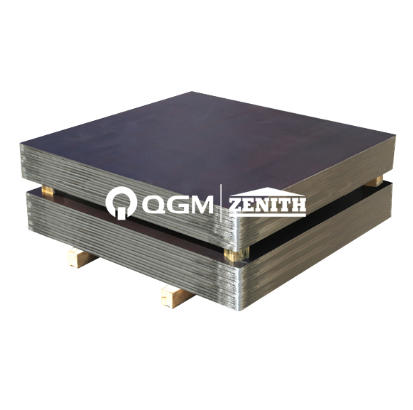
Table of Contents
- 1. Why Is Material Selection Critical for Block Machine Pallet Performance?
- 2. How Do Advanced Steel Alloys and Composites Improve Pallet Durability?
- 3. What Are the Key Specifications of Our Block Machine Pallet Range?
- 4. How Can Pallet Surface Treatments and Coatings Extend Service Life?
- Frequently Asked Questions (FAQ)
- Conclusion and Pallet Selection Assistance
Why Is Material Selection Critical for Block Machine Pallet Performance?
The Block Machine Pallet is subjected to some of the harshest conditions in a concrete block plant: repeated impacts from the mold head, high-frequency vibration, abrasive aggregates, exposure to moisture and alkali, and thermal cycling from steam curing. Each of these factors can degrade pallet performance. A substandard pallet will develop surface roughness, leading to blocks that stick during demolding; it will lose flatness, resulting in varying block heights; and it will suffer from edge chipping, increasing the risk of damage to the conveyor system. Material selection therefore directly influences the quality of the final product, the efficiency of the production line, and the maintenance costs over time. At Quangong Machinery Co., Ltd., our factory has analyzed the failure modes of thousands of pallets and identified the key material properties that determine longevity: yield strength, surface hardness, thermal expansion coefficient, and resistance to chemical attack.
Critical material properties for Block Machine Pallet performance:
- Yield strength and fatigue resistance: The pallet must withstand millions of cycles of vibration and impact without permanent deformation. High-strength steel alloys (such as S690QL) offer yield strengths above 690 MPa, which is almost twice that of standard structural steel, ensuring that the pallet maintains its flatness over its lifespan.
- Surface hardness and abrasion resistance: The concrete mix contains sharp aggregates (sand, gravel) that can abrade the pallet surface. A hard surface, achieved through case hardening or hardfacing, reduces wear and maintains the smooth finish required for easy block release. Hardness values above 55 HRC are recommended for high-volume production.
- Thermal expansion matching: During steam curing, pallets are exposed to temperatures ranging from 40°C to 80°C. If the pallet material expands at a different rate than the block or the conveyor components, it can lead to misalignment and stress. Low-expansion alloys or composites with tailored coefficients are preferred.
- Corrosion resistance: Concrete is highly alkaline, and moisture penetrates the pallet surface. Corrosion can cause pitting and weaken the structure. Advanced materials with chromium, nickel, or zinc coatings provide superior resistance to alkali attack, extending pallet life in humid environments.
To illustrate the impact of material choice, we can compare two pallets in a typical production setting. A standard mild steel pallet of 3mm thickness may show visible wear after 1,500 cycles, requiring resurfacing or replacement. In contrast, a pallet made from high-strength, wear-resistant steel with a hardened surface can endure 15,000 cycles with less than 0.1mm of surface wear. Over a decade of operation, the advanced pallet reduces the total number of pallet replacements from 20 to just 2, representing a cost saving of over USD 50,000 for a medium-sized block plant. Our factory at Quangong Machinery Co., Ltd. has developed a proprietary steel grade, designated QG-750, specifically for Block Machine Pallet applications. This material provides the optimal balance of hardness, toughness, and weldability, and it is the standard option for our premium pallets.
Furthermore, material selection affects the weight of the Block Machine Pallet, which has implications for handling and conveyor system design. Lighter pallets reduce the load on motors and conveyors, leading to energy savings. Advanced composites, which weigh approximately 40 percent less than steel, are increasingly used in automated systems where acceleration and deceleration are frequent. However, composites must be carefully engineered to provide sufficient stiffness and impact resistance. Our factory's material engineering team has developed a composite Block Machine Pallet that combines a carbon-fiber-reinforced polymer core with steel edge protectors, offering both light weight and exceptional durability. This material evolution is transforming what was once a simple consumable into a strategic asset for block producers.
How Do Advanced Steel Alloys and Composites Improve Pallet Durability?
Durability is the single most important performance metric for a Block Machine Pallet, as it determines the replacement frequency and the associated downtime. Advanced steel alloys and composite materials have significantly enhanced durability compared to traditional materials. The key improvement lies in the microstructure of the material. Advanced steel alloys, such as martensitic and bainitic steels, are heat-treated to achieve a fine-grained structure that resists crack propagation and wear. These steels can be further hardened through surface treatments like nitriding or induction hardening, which create a hard outer layer (up to 70 HRC) while maintaining a tough core. Our factory at Quangong Machinery Co., Ltd. uses a dual-phase steel for our Block Machine Pallet that combines a 550 MPa yield strength core with a 60 HRC surface, providing both impact resistance and wear resistance.
Specific durability improvements from advanced steel alloys and composites:
- High-strength low-alloy (HSLA) steels: These steels contain small amounts of vanadium, niobium, or titanium to refine the grain size and increase strength without reducing ductility. HSLA steel pallets exhibit up to 300 percent longer life than mild steel pallets, with reduced susceptibility to fatigue cracking.
- Composite materials: Fiber-reinforced polymer (FRP) composites, with glass or carbon fibers embedded in a thermoset resin matrix, offer outstanding abrasion resistance and do not corrode. They are also dimensionally stable across a wide temperature range. Our composite Block Machine Pallet has been tested to 25,000 cycles with negligible wear, making it ideal for highly abrasive concrete mixes.
- Wear-resistant coatings applied to base materials: Even the best base material can be enhanced with a hard coating. Tungsten carbide, chromium carbide, and ceramic coatings are applied via thermal spray or weld overlay. These coatings increase surface hardness to 65-75 HRC, dramatically reducing abrasive wear. A 1mm thick tungsten carbide coating can extend pallet life by a factor of 10 compared to uncoated steel.
- Improved weldability and repairability: Advanced steel alloys are designed for good weldability, allowing worn areas to be repaired by welding and re-machining. Our factory provides a repair service for pallets, where the surface can be built up and reground to restore its original flatness, further extending the pallet's service life.
A field trial comparing a standard mild steel pallet with our QG-750 advanced steel Block Machine Pallet illustrates the durability gains. Both pallets were used on a high-speed block machine producing 4,000 blocks per hour. The mild steel pallet showed visible surface wear at 800 hours of operation, with flatness decreasing from 0.2mm to 0.8mm, leading to unacceptable block height variations. The QG-750 pallet, after 8,000 hours, showed a surface wear of only 0.15mm, and the flatness remained within the required tolerance. The plant operator calculated that the advanced pallet saved over USD 8,000 in maintenance and replacement costs per year, in addition to reducing block rejection rates from 3.5 percent to 1.2 percent. This case underscores the significant return on investment offered by advanced materials.
In addition, advanced materials enable the production of larger pallets (up to 1400x1200mm) without compromising stiffness. Traditional steel pallets of this size require thick sections to prevent deflection, adding considerable weight. Our composite and high-strength steel pallets achieve the same stiffness with thinner sections, reducing the overall weight by 25-40 percent. This weight reduction not only simplifies handling but also reduces the load on the conveyor system, extending its service life. Our factory provides a custom pallet design service, where we use finite element analysis (FEA) to optimize the material distribution for your specific loading and support conditions, ensuring that you receive the most durable and lightweight Block Machine Pallet for your production line.
What Are the Key Specifications of Our Block Machine Pallet Range?
Quangong Machinery Co., Ltd. manufactures a comprehensive range of Block Machine Pallet options to suit various block sizes, production speeds, and operating environments. Our product line includes steel, composite, and hybrid pallets, all of which are precision-ground to ensure surface flatness within 0.15mm. The table below provides the technical specifications for our most popular pallet models, which are used in conjunction with our Germany Zenith block machines and are also compatible with many other block machine brands. Our factory can customize any dimension, thickness, or material combination to meet your specific requirements.
| Pallet Model | Material | Dimensions (mm) | Thickness (mm) | Weight (kg) | Surface Hardness (HRC) | Expected Cycles (min) | Application |
| QG-S-800 | HSLA Steel (QG-750) | 800 x 600 | 4.5 | 26 kg | 58-62 | 20,000 | Standard hollow blocks, pavers |
| QG-S-1000 | HSLA Steel (QG-750) | 1000 x 800 | 5.0 | 39 kg | 58-62 | 18,000 | Larger blocks, retaining wall units |
| QG-S-1200 | HSLA Steel (QG-750) | 1200 x 900 | 5.5 | 55 kg | 58-62 | 16,000 | Heavy-duty paving, large slabs |
| QG-C-800 | Carbon-fiber composite | 800 x 600 | 15.0 | 14 kg | 65-70 (coated) | 25,000 | High-speed production, automated lines |
| QG-C-1000 | Glass-fiber composite | 1000 x 800 | 18.0 | 22 kg | 60-65 (coated) | 22,000 | Aggressive mix designs, corrosive environments |
| QG-H-800 | Hybrid (steel frame + composite top) | 800 x 600 | 5.0 (frame) + 6.0 (top) | 21 kg | 60-65 | 20,000 | Balanced weight and wear resistance |
In addition to the standard models, our factory offers a "heavy-duty" series of Block Machine Pallet with reinforced edges and additional support ribs for high-stress applications, such as producing very large blocks (600x600mm or larger). We also provide a "precision" series with surface flatness of 0.08mm for applications where block dimensional tolerances are exceptionally tight. All our pallets are supplied with a 2-year warranty against manufacturing defects, and we provide a detailed inspection report upon delivery.
Our quality control process for Block Machine Pallet includes a 100 percent flatness check using a laser interferometer, a hardness test on the surface and core, and a dye-penetrant inspection for surface cracks. For steel pallets, we also perform a tensile test on samples from each batch to verify the mechanical properties. Our factory maintains a stock of standard pallet sizes for immediate dispatch, and we can deliver custom-sized pallets within 3-4 weeks. We also provide a pallet reconditioning service, where worn pallets are reground and re-coated, restoring them to near-new performance at a fraction of the cost of a new pallet.
How Can Pallet Surface Treatments and Coatings Extend Service Life?
Even the best base material will eventually wear if left unprotected. Surface treatments and coatings are therefore essential for extending the service life of a Block Machine Pallet. These technologies create a barrier between the pallet surface and the abrasive concrete mix, reducing friction, preventing adhesion, and providing a sacrificial layer that can be reapplied. At Quangong Machinery Co., Ltd., we offer a range of surface treatments for our Block Machine Pallet, each designed for specific production conditions. The most common treatments are hard chromium plating, thermal spray coatings (tungsten carbide, chromium carbide, and ceramic), and polymer-based anti-stick coatings. The choice of treatment depends on the wear severity, the desired surface finish, and the budget.
Effective surface treatments and coatings for Block Machine Pallet:
- Hard chromium plating (electroplating): A layer of chromium (typically 50-100 microns thick) is electrodeposited onto the pallet surface. This provides excellent wear resistance (68-72 HRC) and a very smooth finish that reduces block sticking. However, hard chrome is not recommended for highly alkaline environments due to potential micro-cracking, and it requires a skilled operator to apply.
- Thermal spray carbide coatings: Tungsten carbide (WC-Co) or chromium carbide (Cr3C2-NiCr) is applied via high-velocity oxygen fuel (HVOF) or plasma spraying. These coatings achieve hardness values of 70-75 HRC and provide exceptional resistance to abrasive wear and impact. The coating thickness is typically 200-400 microns, and the coated pallet can last up to 30,000 cycles. This is the premium option for high-volume block plants.
- Polymer-based anti-stick coatings: PTFE (Teflon) or polyurethane coatings are applied to reduce the adhesion of the wet concrete to the pallet. These coatings do not add significant hardness but dramatically improve demolding, reducing block breakage and surface defects. They are often used in combination with a hard base coating for optimal performance.
- Nitriding and case hardening: For steel pallets, a nitriding treatment diffuses nitrogen into the surface, forming a hard nitride layer (up to 65 HRC) without the risk of delamination. This treatment is cost-effective and provides good wear resistance, particularly for pallets that are subject to impact rather than sliding abrasion.
A study conducted at our factory compared four different coating types on steel Block Machine Pallet under identical production conditions (4,000 blocks per shift, 2 shifts per day). The uncoated steel pallet showed significant wear after 2,000 cycles and was replaced at 2,500 cycles. The hard chrome pallet lasted 6,000 cycles before the coating began to wear through. The HVOF tungsten carbide coated pallet showed minimal wear after 12,000 cycles and was still in service at the end of the 18,000-cycle test. The cost analysis revealed that while the HVOF coating had a higher initial cost, the cost per cycle was 40 percent lower than the uncoated pallet and 25 percent lower than the hard chrome pallet, due to the extended service life and reduced downtime for replacement.
In addition to extending the service life, coatings also reduce the frequency of pallet cleaning. Concrete residue tends to adhere to bare metal surfaces, requiring regular scraping or cleaning with chemical agents. The smooth, non-porous surface of a coated Block Machine Pallet allows concrete to release more easily, reducing cleaning time and minimizing the risk of contamination. Our factory provides a re-coating service for pallets that have reached the end of their first coating's life, allowing you to reuse the base pallet structure and significantly reduce long-term costs. With the right surface treatment, a Block Machine Pallet can be a long-term asset rather than a consumable item.
Frequently Asked Questions (FAQ)
Question 1: How do I determine the ideal pallet material for my block production line?
Answer: The ideal pallet material depends on several factors: your production volume, the abrasiveness of your concrete mix, the curing method (ambient vs. steam), and your budget. For high-volume production with abrasive mixes, we recommend our QG-750 high-strength steel pallet with tungsten carbide coating. For operations with aggressive chemical environments (e.g., high chloride or sulfate content in aggregate), our composite pallets are superior. For smaller operations with moderate wear, our standard HSLA steel pallet offers a good balance of performance and cost. Our factory at Quangong Machinery Co., Ltd. provides a material selection guide and can recommend the optimal pallet based on a sample of your concrete mix.
Question 2: What is the typical service life of a Block Machine Pallet made from advanced materials?
Answer: With proper maintenance and optimal operating conditions, advanced material pallets can last between 15,000 and 30,000 cycles. Our QG-750 steel pallet with HVOF tungsten carbide coating has a confirmed service life of over 25,000 cycles in field conditions, while our composite pallets have demonstrated 20,000+ cycles. This compares to 2,000-3,000 cycles for standard mild steel pallets. The actual lifespan depends on factors such as vibration intensity, aggregate particle size, and operator handling. We recommend monitoring the flatness of your pallets regularly and scheduling reconditioning at the first sign of wear.
Question 3: Can a worn Block Machine Pallet be reconditioned, or does it need to be replaced completely?
Answer: Yes, a worn steel pallet can be reconditioned by grinding the surface to restore flatness and then reapplying the protective coating. Typically, a steel pallet can be reconditioned 2-3 times before the base material becomes too thin. Composite pallets are more difficult to recondition, but we offer a repair service where the top layer can be replaced or re-bonded. Our factory provides a reconditioning service at our facility, and we also offer on-site grinding services for large operations. Reconditioning is significantly more economical than replacement and can extend the pallet's life by an additional 50-80 percent of its original service life.
Question 4: Do advanced material pallets require different handling or maintenance than traditional pallets?
Answer: Advanced material pallets generally require less maintenance than traditional steel pallets, but there are some best practices to follow. For coated steel pallets, avoid using steel scrapers or sharp tools for cleaning, as this can damage the coating. Use rubber-bladed scrapers or high-pressure water jets instead. For composite pallets, avoid prolonged exposure to ultraviolet (UV) light, as this can degrade the resin matrix. Store them in a shaded area. Both types should be checked periodically for flatness using a straightedge, and we recommend marking pallets to track their age and service history. Our factory provides a maintenance manual for all our Block Machine Pallet products.
Question 5: What technical support does Quangong Machinery Co., Ltd. offer for Block Machine Pallet selection and maintenance?
Answer: We offer comprehensive support, including material selection consultation, custom pallet design, sample testing for your concrete mix, and on-site pallet inspection. Our factory has a dedicated service team that can perform pallet reconditioning, coating renewal, and even pallet replacement with a quick turnaround. We also provide training for your operators on proper pallet handling and cleaning techniques. All our Block Machine Pallet products come with a 2-year warranty, and we offer extended warranties for premium coatings. Additionally, we maintain a stock of spare pallets for immediate replacement, minimizing your downtime. Our goal is to ensure that your Block Machine Pallet investment delivers maximum value over its entire lifecycle.
Conclusion: Transform Your Block Production with Advanced Pallet Materials
The evolution of Block Machine Pallet materials from simple steel plates to high-performance engineering composites and coated alloys is transforming the economics of concrete block manufacturing. Advanced materials deliver longer service life, reduced wear and tear on production equipment, lower block rejection rates, and significant cost savings over the long term. At Quangong Machinery Co., Ltd., our factory has invested heavily in material science and manufacturing technology to offer a comprehensive range of pallet solutions that meet the diverse needs of block producers worldwide. Whether you require the extreme durability of our QG-750 steel with tungsten carbide coating, the lightness and corrosion resistance of our composite pallets, or the balanced performance of our hybrid designs, we have the right solution for your production line.
Are you ready to upgrade your Block Machine Pallet performance? Contact Quangong Machinery Co., Ltd. today for a free pallet performance assessment. Provide your current pallet specifications and production challenges, and our material engineering team will recommend the optimal advanced material solution tailored to your operation. We offer free sample pallets for testing, detailed cost-benefit analysis, and flexible delivery options to minimize disruption. Request your free pallet consultation now from Quangong Machinery Co., Ltd. and discover how advanced materials can boost your block production efficiency.