- English
- Español
- Português
- русский
- Français
- 日本語
- Deutsch
- tiếng Việt
- Italiano
- Nederlands
- ภาษาไทย
- Polski
- 한국어
- Svenska
- magyar
- Malay
- বাংলা ভাষার
- Dansk
- Suomi
- हिन्दी
- Pilipino
- Türkçe
- Gaeilge
- العربية
- Indonesia
- Norsk
- تمل
- český
- ελληνικά
- український
- Javanese
- فارسی
- தமிழ்
- తెలుగు
- नेपाली
- Burmese
- български
- ລາວ
- Latine
- Қазақша
- Euskal
- Azərbaycan
- Slovenský jazyk
- Македонски
- Lietuvos
- Eesti Keel
- Română
- Slovenski
- मराठी
- Srpski језик

Why Do Block Machine Pallets Crack and How Can You Prevent It?
Block machine pallets are the silent workhorses of concrete block production. They support the freshly formed blocks, carry them through curing, and endure the repeated impacts of vibration and demolding. Yet, despite their critical role, pallets often crack prematurely, leading to production stoppages, block quality issues, and costly replacements. Why do block machine pallets crack? The answer lies in a combination of factors: material fatigue from cyclic loading, impact stresses during demolding, thermal cycling in curing chambers, and inadequate maintenance. At Quangong Machinery Co.,Ltd., we have analyzed thousands of failed pallets across various block plants and identified the primary causes and, more importantly, the most effective prevention strategies. Understanding these factors is the first step toward extending pallet life and ensuring smooth, uninterrupted production.
Cracked pallets are not just a nuisance—they are a significant cost driver. A single cracked pallet can damage the block machine's mold, cause uneven compaction, and lead to rejected blocks. In high-volume operations, a pallet that fails prematurely can cost hundreds of dollars in direct replacement, plus thousands in lost production. Our factory has developed a comprehensive approach to pallet design and maintenance that addresses the root causes of cracking. This article will detail the mechanical, thermal, and operational reasons behind pallet cracks, provide a detailed technical specification table for our pallet range, and offer actionable prevention tips. Whether you use wooden, steel, or composite pallets, the principles we share will help you maximize your pallet investment and maintain consistent block quality.
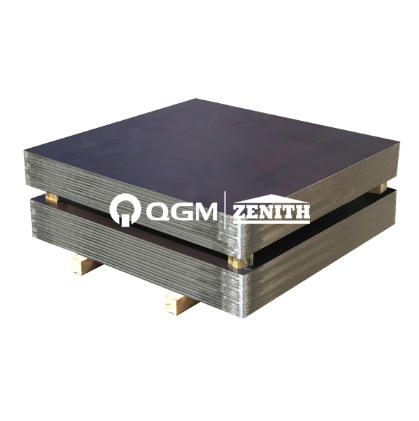
Table of Contents
- 1. Why Does Material Fatigue Cause Block Machine Pallets to Crack?
- 2. How Do Impact and Thermal Stresses Contribute to Pallet Cracking?
- 3. What Are the Key Specifications of Our Block Machine Pallet Range?
- 4. How Can Proper Handling and Maintenance Prevent Pallet Cracks?
- Frequently Asked Questions (FAQ)
- Conclusion and Pallet Selection Consultation
Why Does Material Fatigue Cause Block Machine Pallets to Crack?
Material fatigue is the number one reason block machine pallets fail. Each time a pallet is placed under the mold, it receives a high-energy vibration to compact the concrete mix. This cyclic loading, repeated thousands of times over a pallet's life, gradually weakens the material structure. For steel pallets, fatigue initiates at microscopic stress concentrations—weld points, sharp edges, or surface imperfections—and propagates as hairline cracks that eventually lead to complete fracture. For wooden pallets, fatigue manifests as fiber separation and delamination, which then propagates into full-thickness cracks. Our factory at Quangong Machinery Co.,Ltd. has conducted extensive fatigue testing on various pallet materials, and we have found that the number of cycles to failure can vary from as low as 5,000 for poorly designed wooden pallets to over 150,000 for our premium steel pallets.
Key factors that accelerate material fatigue in block machine pallets:
- Vibration intensity: Modern block machines operate at frequencies of 4,000 to 7,000 rpm, delivering millions of impacts over a pallet's life. Higher vibration amplitude directly increases the stress on the pallet surface, reducing fatigue life. Our factory recommends matching the pallet thickness and material to the machine's vibration energy.
- Uneven load distribution: When blocks are not uniformly placed on the pallet, or when the mold cavity is not perfectly aligned, localized stress concentrations occur. These high-stress zones become the starting points for fatigue cracks. We have found that proper mold alignment and careful pallet placement can double pallet life.
- Edge stress concentration: The corners and edges of a pallet are particularly vulnerable to fatigue, as they experience higher bending stresses during demolding and transport. Our pallet designs feature rounded corners and reinforced edges to distribute stress more evenly.
- Material quality variations: Steel pallets made from low-grade steel or with poor-quality welds will have a much shorter fatigue life. Our factory uses S235JR and S355JR steel grades, which offer excellent fatigue resistance. For wooden pallets, we recommend hardwood species like oak or beech, with proper grain orientation to resist splitting.
A case study from a block plant in Australia illustrates the impact of material fatigue. The plant was using steel pallets with a thickness of 8 mm, and they were experiencing cracking after approximately 20,000 cycles (about 6 months of operation). After switching to our 10 mm steel pallets with a stress-relieving heat treatment and improved weld geometry, the average pallet life increased to 65,000 cycles—over three times longer. The plant saved AUD 45,000 annually in pallet replacement costs and reduced production downtime by 12 percent. This example underscores the importance of selecting pallets designed with fatigue resistance as a primary consideration.
To address fatigue, our factory has developed a proprietary design that incorporates a stress-relief groove pattern on the pallet surface. This pattern redistributes the vibrational energy, preventing it from concentrating at any single point. Additionally, we use a multi-pass welding process with controlled cooling to minimize residual stresses that contribute to crack initiation. We also offer a pallet testing service that uses strain gauges to map the stress distribution on your existing pallets, identifying potential failure zones before they crack. This proactive approach is the most effective way to combat material fatigue and extend pallet service life.
How Do Impact and Thermal Stresses Contribute to Pallet Cracking?
Beyond fatigue, block machine pallets are subjected to two other major stress types: impact stresses and thermal stresses. Impact stresses occur during the demolding process when the freshly formed blocks are pushed out of the mold and onto the pallet. This can produce a sharp, high-magnitude load that, over time, can cause indentation and micro-cracking. Thermal stresses arise from the curing process, especially in systems that use steam or hot water. The pallet expands when heated and contracts upon cooling, creating internal stresses that can lead to cracking if the material or design is not able to accommodate this dimensional change. Our factory at QGM has developed specific pallet designs and material selections to mitigate both impact and thermal stresses, ensuring that our pallets remain crack-free even in the most demanding environments.
Specific ways impact and thermal stresses cause cracking:
- Demolding impact: When the block machine strips the blocks from the mold, the blocks may drop a few millimeters onto the pallet. This repeated drop, combined with the weight of the blocks (often 50-100 kg per pallet), creates a localized impact that can dent steel pallets or split wooden ones. Over time, these surface imperfections become stress concentrators, leading to crack initiation.
- Thermal cycling: In steam-curing chambers, the pallet temperature can rise to 60-80°C and then cool to ambient. Steel has a relatively high coefficient of thermal expansion (12 x 10^-6 /°C), meaning that a 1.2-meter long steel pallet will expand by approximately 0.8 mm over a 60°C temperature range. If the pallet is constrained (e.g., by a rigid pallet conveyor), this expansion can cause warping and stress cracking. Our pallets are designed with expansion slots and are mounted on flexible carriers to allow free movement.
- Moisture-induced stress: In wood pallets, moisture absorption and desorption during curing cause the wood to swell and shrink. This cyclic dimensional change creates internal stresses that can lead to surface checking and, eventually, splitting. Our factory recommends using kiln-dried wood with a protective coating to minimize moisture-related cracking.
Thermal stress can be particularly insidious because it is not always visible. A pallet may appear sound, but the cumulative effect of thousands of thermal cycles can cause micro-cracks to form within the material. These micro-cracks eventually grow into macro-cracks that affect block quality. In one notable case, a block plant in Europe experienced a surge in pallet cracking that correlated with the installation of a new, higher-temperature curing system. By switching to our thermally stabilized steel pallets (with a pre-heat treatment to relieve residual stress), the plant reduced the cracking rate by 90 percent.
To mitigate impact stresses, our factory recommends using pallets with a thicker surface layer or a replaceable wear plate. Our premium steel pallets feature a hardened surface (45-50 HRC) that resists indentation and a chamfered edge design that reduces stress concentration. For wooden pallets, we offer a reinforced construction with laminated hardwood layers, which distribute impact forces more evenly. We also provide a rubber cushioning pad that can be fitted to the pallet surface to absorb the demolding impact. By addressing both impact and thermal stresses through material selection and design geometry, the risk of cracking is significantly reduced, leading to longer pallet life and more consistent block production.
What Are the Key Specifications of Our Block Machine Pallet Range?
Quangong Machinery Co.,Ltd. manufactures a complete range of block machine pallets designed to withstand the rigors of high-volume concrete production. Our pallet portfolio includes high-strength steel pallets, engineered wood pallets (for lower-weight applications), and hybrid composite pallets that combine the benefits of both. The table below provides the key specifications for our most popular steel pallet models, which are used in conjunction with various block machine types, including our Germany Zenith Block Machine series. All dimensions are customizable, and our factory can produce pallets to match any machine or mold configuration.
| Model | Material | Thickness | Dimensions (L x W) | Surface Hardness | Weight | Max Load Capacity | Recommended Use |
| QMP-S8 | S235JR Steel | 8 mm | 1200 x 800 mm | 35-40 HRC | 52 kg | 800 kg | Standard hollow blocks, pavers |
| QMP-S10 | S355JR Steel | 10 mm | 1400 x 900 mm | 45-50 HRC | 78 kg | 1200 kg | Heavy-duty blocks, large format |
| QMP-S12 | S355JR + Hardox | 12 mm | 1600 x 1000 mm | 52-56 HRC | 112 kg | 1800 kg | Extreme high-output plants |
| QMP-WP | Engineered Oak | 25 mm | 1200 x 800 mm | N/A | 18 kg | 400 kg | Lightweight blocks, portable plants |
| QMP-Comp | Steel + Polymer Composite | 12 mm | 1400 x 900 mm | 40-45 HRC | 65 kg | 1000 kg | Noise reduction, thermal stable |
In addition to the standard models, our factory offers custom features to enhance pallet durability and performance. These include: undercut grooves for improved demolding, slotted holes for better pallet conveyor traction, and a high-temperature-resistant paint coating (for steam-curing applications). We also offer a pallet rebuilding service, where we grind down the surface of worn steel pallets and weld a new wear plate, extending the pallet's life by up to 60 percent at a fraction of the cost of a new pallet.
Quality control is paramount in our pallet production. Every steel pallet is subjected to a flatness test (maximum deviation of 1.5 mm per meter) and a magnetic particle inspection to detect any surface or subsurface cracks. We also perform a vibration test that simulates 10,000 cycles of block machine operation to ensure that the pallet can withstand real-world conditions. Each pallet is stamped with a unique serial number, allowing us to trace its production history and provide targeted support if any issues arise. Our pallets are backed by a 12-month warranty against manufacturing defects, and we offer bulk discounts and pallet exchange programs for high-volume customers.
How Can Proper Handling and Maintenance Prevent Pallet Cracks?
While the quality of the pallet itself is critical, the way it is handled and maintained has an equally significant impact on its lifespan. Many pallet cracks are not inevitable—they are the result of poor handling practices, incorrect cleaning procedures, or insufficient lubrication. Our factory at Quangong Machinery Co.,Ltd. has developed a comprehensive pallet care program that we share with all our customers. By following these guidelines, block plant operators can often extend pallet life by 50 percent or more, resulting in substantial cost savings and fewer production interruptions.
Key handling and maintenance practices to prevent pallet cracks:
- Regular cleaning and inspection: After each shift, remove any residual concrete and debris from the pallet surface. Use a plastic scraper or a soft brush—avoid metal tools that can scratch the surface and create stress risers. Inspect the pallet for any signs of cracking or deformation, especially around the edges and near the block-supporting areas. Early detection allows for repair or replacement before a catastrophic failure occurs.
- Lubrication of moving parts: For pallets that are part of a conveyor system, ensure that the roller bearings and guide rails are properly lubricated. Friction from misaligned or jammed rollers can cause the pallet to bend or twist, leading to stress fractures. Our factory recommends a monthly lubrication check using a high-quality lithium-based grease.
- Storage practices: When not in use, store pallets in a dry, covered area away from direct sunlight and extreme temperature fluctuations. For wooden pallets, avoid storing them in contact with the ground, as moisture can penetrate and accelerate decay. Stack pallets with adequate ventilation to allow moisture to escape.
- Periodic surface reconditioning: For steel pallets, a worn surface can be resurfaced by grinding or milling to restore flatness. This also removes any microscopic cracks that may have started. Our factory offers a reconditioning service where we machine the pallet surface and apply a new protective coating, effectively giving the pallet a new lease on life.
A prime example of the importance of maintenance comes from a block plant in South Africa. The plant had been experiencing pallet cracking every 8,000-10,000 cycles, despite using our premium steel pallets. After a site inspection, we discovered that their pallet cleaning process involved using a metal wire brush, which was creating microscopic scratches that served as crack initiation sites. After switching to a nylon bristle brush and implementing a weekly inspection routine, the pallet life increased to over 30,000 cycles, saving the plant over USD 30,000 annually in pallet replacement costs.
Furthermore, we recommend implementing a pallet rotation system, particularly for plants that operate multiple block machines. By rotating pallets between different machines, the wear pattern becomes more uniform, and no single pallet is subjected to the worst-case stress scenario. Our factory provides a pallet logbook that tracks the number of cycles each pallet has completed, allowing plant managers to predict maintenance needs and plan replacements proactively. With a systematic maintenance approach, the life of block machine pallets can be maximized, ensuring consistent block quality and reducing overall production costs.
Frequently Asked Questions (FAQ)
Question 1: How many hours does a typical block machine pallet last before cracking?
Answer: The lifespan of a block machine pallet varies greatly depending on the material, design, operating conditions, and maintenance. A standard 8mm steel pallet in a moderate-duty plant may last 20,000 to 30,000 cycles (approximately 6-12 months), while a 10mm or 12mm steel pallet in a well-maintained plant can exceed 60,000 cycles. Wooden pallets typically last 5,000 to 10,000 cycles. Our factory's premium steel pallets are designed to achieve 50,000 to 80,000 cycles under typical operating conditions, and we have documented cases of over 100,000 cycles with proper maintenance. The key to longevity is not just the pallet itself but also the operational and maintenance practices employed.
Question 2: Can cracked block machine pallets be repaired, or should they always be replaced?
Answer: In many cases, cracked pallets can be repaired, especially if the crack is small and located in a non-critical area. For steel pallets, small cracks can be welded and ground smooth. For wooden pallets, a cracked board can be replaced. However, if the crack is large or located near a load-bearing area, it is safer and more cost-effective to replace the pallet. Our factory offers a pallet repair service for steel pallets that includes crack detection, welding, stress-relieving heat treatment, and resurfacing. This service can restore the pallet to near-original condition at 40-60 percent of the cost of a new pallet. We recommend an annual pallet inspection to determine which pallets are candidates for repair and which should be retired.
Question 3: What is the most crack-resistant material for block machine pallets?
Answer: For crack resistance in demanding block production environments, high-strength steel (S355JR or equivalent) with a surface hardness of 45-50 HRC offers the best combination of strength, toughness, and fatigue resistance. Our factory's Hardox-lined pallets (QMP-S12 series) are specifically designed for extreme durability, with a wear-resistant surface that also provides excellent crack resistance. Wooden pallets, while more affordable, are more prone to cracking due to moisture and impact and are generally not recommended for high-output plants. Composite pallets offer a middle ground, with good crack resistance but higher cost than wood.
Question 4: How can I tell if my pallet is about to crack, to prevent sudden failure?
Answer: There are several warning signs that indicate an impending pallet crack. For steel pallets, look for any visible rust spots or discoloration—these can be signs of micro-cracking where moisture has penetrated. A change in the sound when the block machine is operating, specifically a more metallic clang, can indicate a pallet that has lost its rigidity. Regular flatness checks (using a straightedge) can detect warping that often precedes cracking. For wooden pallets, any splits or splintering around the edges are early warning signs. Our factory recommends a weekly visual inspection and a monthly flatness measurement to catch issues early. Additionally, we offer an ultrasonic crack detection service for steel pallets, which can identify sub-surface cracks before they become visible.
Question 5: Does Quangong Machinery Co.,Ltd. offer a pallet exchange program for block plant operators?
Answer: Yes, we offer a comprehensive pallet exchange program for our customers. Under this program, you can return worn or cracked pallets to our factory, and we will provide you with reconditioned pallets at a reduced cost. This program is especially beneficial for high-volume block plants that go through many pallets each year. The returned pallets are inspected, repaired, resurfaced, and re-certified to meet original specifications. This circular approach reduces waste, lowers your pallet costs, and ensures that you always have a steady supply of high-quality pallets. Contact our sales team to learn more about the exchange program and the terms and conditions.
Conclusion: Protect Your Investment with High-Quality Pallets and Proactive Maintenance
Block machine pallets are a critical investment in your production line, and their unexpected failure can be costly and disruptive. Understanding why pallets crack—whether due to material fatigue, impact stress, thermal cycling, or poor maintenance—is the first step toward prevention. By selecting the right pallet material and thickness for your specific application, implementing a rigorous maintenance schedule, and using quality pallets from a trusted manufacturer like Quangong Machinery Co.,Ltd., you can significantly extend pallet life, reduce downtime, and improve block quality. Our factory's extensive range of steel, wood, and composite pallets is designed to meet the highest durability standards, and our technical team is ready to help you optimize your pallet management strategy.
Are you experiencing frequent pallet failures or looking to upgrade your pallet inventory? Contact Quangong Machinery Co.,Ltd. today for a comprehensive pallet consultation. We will analyze your production data, recommend the ideal pallet model, and provide a detailed implementation plan. We also offer a free pallet trial program for qualifying customers. Request your pallet sample and maintenance guide now from Quangong Machinery Co.,Ltd. and take the first step toward crack-free block production.