- English
- Español
- Português
- русский
- Français
- 日本語
- Deutsch
- tiếng Việt
- Italiano
- Nederlands
- ภาษาไทย
- Polski
- 한국어
- Svenska
- magyar
- Malay
- বাংলা ভাষার
- Dansk
- Suomi
- हिन्दी
- Pilipino
- Türkçe
- Gaeilge
- العربية
- Indonesia
- Norsk
- تمل
- český
- ελληνικά
- український
- Javanese
- فارسی
- தமிழ்
- తెలుగు
- नेपाली
- Burmese
- български
- ລາວ
- Latine
- Қазақша
- Euskal
- Azərbaycan
- Slovenský jazyk
- Македонски
- Lietuvos
- Eesti Keel
- Română
- Slovenski
- मराठी
- Srpski језик
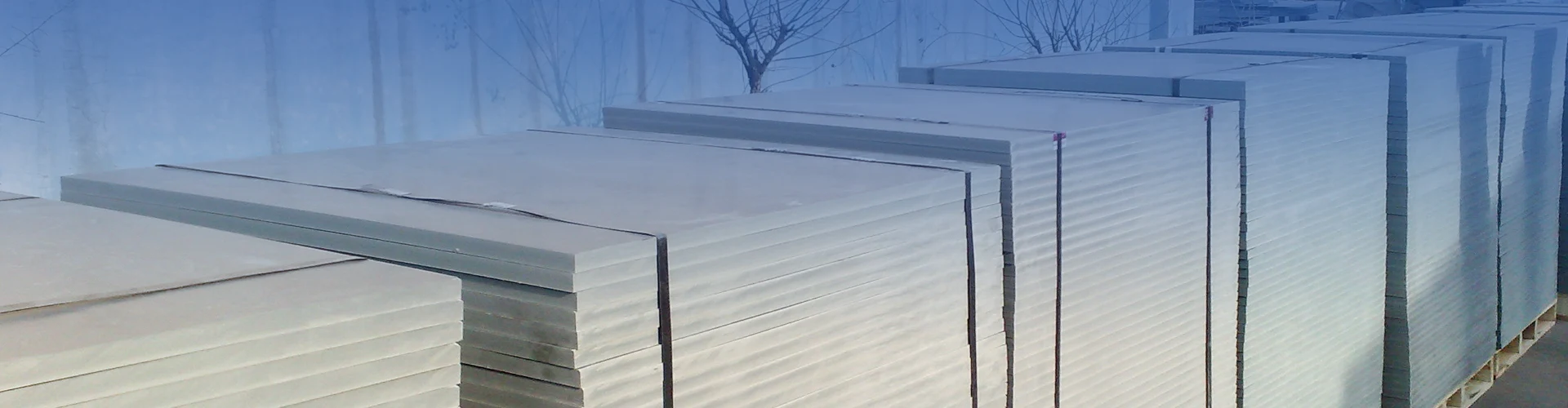
Autoclaved Aerated Concrete machine
The Autoclaved Aerated Concrete Machine is a specialized industrial system for manufacturing lightweight, porous concrete products through a controlled chemical aeration and autoclave curing process. Unlike conventional concrete forming equipment, an AAC machine handles the entire production cycle—from raw material slurry preparation to finished block cutting—using a combination of mixing, pouring, cutting, and high-temperature pressure vessel systems. The output is a cellular concrete material with densities ranging from 300 to 900 kg/m³, thermal conductivity of 0.10–0.20 W/(m·K), and compressive strengths suitable for both load-bearing and non-load-bearing construction applications.
Core Forming Equipment: The Autoclaved Aerated Concrete Machine Suite
The Autoclaved Aerated Concrete Machine comprises several integrated equipment units that work in sequence to produce finished aerated concrete products. The core forming equipment includes:
• Pouring mixer: A high-shear mixing vessel where raw materials are combined with water and aluminum powder paste. The mixer includes a steam injection system to raise slurry temperature to 40–50°C, which accelerates the aeration reaction. The mixer design incorporates a sealed mixing chamber with a discharge gate for controlled pouring of the aerated slurry into molds.
• Mold cars and side plates: Transport platforms that carry the slurry-filled molds through the production line. The molds are rectangular steel vessels with removable side plates that define the block dimensions. After pouring, the mold cars transport the material to the pre-curing chamber.
• Cutting line: A series of machines that transform the cured cake into finished blocks. The cutting line includes a tilting crane to rotate the cake, a horizontal cutting machine to trim top and bottom surfaces, and vertical cutting machines to slice the cake into block dimensions. The cutting system uses steel wire cutting technology that produces smooth surfaces without disturbing the cellular structure.
• Autoclave system: Pressure vessels where the cut blocks undergo high-temperature, high-pressure curing. The autoclave operates at 1.2 MPa pressure and 180–200°C temperature, completing the hydrothermal reaction between silica and lime to form tobermorite crystals.
Each component of the Autoclaved Aerated Concrete Machine is designed for continuous operation, with the production cycle—from mixing to finished block—completed in approximately 12 hours.
Process Parameters
The Autoclaved Aerated Concrete Machine's performance is determined by the precise control of process parameters at each production stage. The following table summarizes key parameters and their control ranges:
| Process Stage | Controlled Parameter | Value Range | Control Method |
| Raw Material Milling | Fineness | 200 mesh (residue < 15%) | Ball mill operation time; screen analysis |
| Batching | Material proportions | Fly ash/sand: 55–65%; Cement: 10–20%; Lime: 18–30%; Gypsum: 2–5% | Weigh scale; automatic batching system |
| Mixing | Slurry temperature; Mixing time | 40–50°C; 30–40 seconds (with aluminum powder) | Steam injection; PLC timing control |
| Pre-curing | Resting time; Ambient conditions | 2–2.5 hours; Temperature 40–50°C | Pre-curing chamber environment control |
| Cutting | Cutting speed; Wire tension | Varies by block size; Consistent tension maintained | Automatic cutting machine parameters |
| Autoclave Curing | Pressure; Temperature; Cycle timing | 1.2 MPa; 180–200°C; 8 hours total | Autoclave control system; pressure relief valves |
The entire process is coordinated through a central PLC control system that monitors and adjusts parameters in real time, ensuring product quality consistency across production batches.
Machine Architecture & Component Specifications
Each major component of the Autoclaved Aerated Concrete Machine is engineered with specific design parameters to meet production requirements. The following table provides technical specifications for the key components:
| Component | Specification | Construction Material |
| Pouring Mixer | Capacity: 30–50 m³/hour; Mixing speed: variable; Steam injection system | Stainless steel mixing chamber; carbon steel frame |
| Mold Car | Dimensions: Varies by line capacity; Load capacity: 50–100 tons; Track gauge: Varies | Steel frame; cast iron wheels |
| Horizontal Cutting Machine | Cutting width: 1,200–2,000 mm; Cutting speed: adjustable; Wire diameter: 1.5–2.0 mm | Steel frame; high-tensile cutting wires |
| Vertical Cutting Machine | Cutting height: 1,200–2,000 mm; Cutting thickness: adjustable 75–300 mm | Steel frame; multiple wire configuration |
| Autoclave | Diameter: 2.0–3.2 m; Length: 25–40 m; Working pressure: 1.2 MPa | Steel cylinder; pressed 16MnR steel cover; forged 16Mn flanges |
The autoclave is the most critical component and is manufactured to strict pressure vessel standards. The vessel body is constructed from steel plate, with a cover formed from pressed 16MnR steel board. Flanges are forged and machined from 16Mn steel, and all welded components undergo heat treatment and non-destructive testing to ensure structural integrity.
Product Dimensional Range
The Autoclaved Aerated Concrete Machine produces blocks in a range of standard dimensions, with sizes configurable through cutting machine settings:
| Dimension | Standard Sizes (mm) | Dimensional Tolerance |
| Length | 600 | ±1.0 mm |
| Width | 75, 100, 125, 150, 175, 200, 250 | ±1.0 mm |
| Height | 200, 240, 250, 300 | ±1.0 mm |
The cutting system's precision is maintained through regular calibration of wire tension and alignment. Dimensional tolerance checks are performed at regular intervals, with cutting machine settings adjusted as needed to maintain specifications.
Production Capacity
Autoclaved Aerated Concrete Machines are available in multiple capacity configurations, with annual outputs ranging from 50,000 to 300,000 m³. The capacity is determined primarily by the number and size of autoclaves in the system, as the autoclave cycle is the critical path in the production process.
| Annual Capacity (m³/year) | Total Power (KW) | Daily Output (m³/day) | Autoclave Count | Plant Area Required (m²) |
| 50,000 | 400 | 166 | 2 | 2,000 |
| 100,000 | 500 | 333 | 4 | 2,000 |
| 150,000 | 630 | 500 | 6 | 2,500 |
| 200,000 | 720 | 666 | 8 | 3,000 |
| 300,000 | 1,186 | 1,000 | 6 (D2.85×32.5) | 3,500 |
The selection of a specific capacity configuration depends on raw material availability, market demand, and investment capacity. The machine is designed for continuous, three-shift operation where required.
Quality Standards & Certification
The Autoclaved Aerated Concrete Machine and its components are manufactured under comprehensive quality management systems. All equipment is designed, manufactured, and tested to international standards, with certifications including:
• ISO9001:2008: Quality management system certification for design, manufacturing, and service processes.
• CE certification: Compliance with European Union safety and performance standards.
• BV and SGS: Additional quality verification for specific market requirements.
Each autoclave undergoes individual non-destructive testing (NDT) and is supplied with material test reports and certification of conformity. The complete line is inspected before shipment to ensure compliance with specifications.
Comparative Analysis: AAC vs. Conventional Concrete Forming
The following comparison highlights the differences between Autoclaved Aerated Concrete Machine production and conventional concrete block forming:
| Characteristic | AAC Machine Production | Conventional Block Forming |
|---|---|---|
| Product Density | 300–900 kg/m³ | 1,800–2,400 kg/m³ |
| Thermal Conductivity | 0.10–0.20 W/(m·K) | 0.80–1.20 W/(m·K) |
| Production Process | Chemical aeration + autoclave curing | Mechanical compaction + ambient curing |
| Maximum Block Size (mm) | 600 × 250 × 300 | 400 × 200 × 200 (typical) |
| Dimensional Tolerance | ±1.0 mm | ±2.0–3.0 mm |
| Fire Resistance | Class A1 non-combustible | Variable; typically lower |
| Investment Scale | Higher—complete facility required | Lower—standalone forming machine |
| Typical Annual Output | 50,000–300,000 m³ | 10,000–100,000 m³ |
The Autoclaved Aerated Concrete Machine enables the production of a distinctly different product category, addressing the growing demand for energy-efficient building materials in modern construction.
Frequently Asked Questions
Q1: What raw materials does the AAC machine process?
The Autoclaved Aerated Concrete Machine processes siliceous materials (fly ash, sand, or slag at 55–65%), calcareous materials (cement at 10–20% and lime at 18–30%), gypsum at 2–5%, and aluminum powder paste as the gas-forming agent. Water is added to achieve the required slurry consistency.
Q2: How long is the complete production cycle?
The production cycle from raw material batching to finished product is approximately 12 hours, with the autoclave curing stage requiring about 8 hours.
Q3: What are the block dimensions produced by the machine?
Standard blocks are 600mm in length, with widths of 75, 100, 125, 150, 175, 200, and 250mm, and heights of 200, 240, 250, and 300mm. Custom dimensions can be produced by adjusting the cutting machine parameters.
Q4: What is the autoclave's operating pressure and temperature?
The autoclave operates at a working pressure of 1.2 MPa and a temperature of 180–200°C. The pressure vessel is designed and manufactured to strict international standards.
Q5: What quality certifications does the AAC machine hold?
The Autoclaved Aerated Concrete Machine is manufactured under ISO9001:2008 certified quality management systems, with CE certification for European market compliance, and additional certifications such as BV and SGS.
Related Products




Hot Products

Unburned Brick Machine Pallet
You can rest assured to buy Unburned Brick Machine Pallet from QGM/Zenith. We look forward to cooperating with you, if you want to know more, you can consult us now, we will reply to you in time! The unburned brick machine pallet plays a vital role in the production process of the unburned brick machine, ensuring that the brick embryo will not be damaged during transportation and handling.
Bamboo Brick Machine Pallet
QGM/Zenith as a professional high quality Bamboo Brick Machine Pallet manufacturer, you can rest assured to buy Bamboo Brick Machine Pallet from our factory and we will offer you the after-sale service and timely delivery. Bamboo brick machine pallets are mainly used in the production process of various brick machines, especially in the use of unfired brick machines and clay brick machines.
Industrial Grade Brick Board
QGM/Zenith is a professional Industrial Grade Brick Board manufacturer and supplier in China, you can rest assured to buy Industrial Grade Brick Board from our factory and we will offer you the best after-sale service and timely delivery.These pallets play a vital role in brick machine production, which can effectively reduce the wear of the board body and improve production efficiency and product quality.
Durable Concrete Block Board
QGM/Zenith warmly welcome you to buy high quality Durable Concrete Block Board from our factory. We will provide you with good service.Common durable concrete block pallets include light steel brick machine pallets and bamboo glue brick machine pallets.
Block Making Machine Pallet
As one of professional manufacturer, QGM/Zenith would like to provide you high quality Block Making Machine Pallet. And we will offer you the best after-sale service and timely delivery. Block Making Machine Pallet is usually made of wood or other durable materials, and is designed with durability and stability in mind.
Concrete Block Brick Machine Pallet
One of Chinese manufacturer of Concrete Block Brick Machine Pallet, offering excellent quality at a competitive price, is QGM/Zenith. Feel free to get in touch. They are used as transportation auxiliary tools in building logistics, which can improve transportation efficiency and work safety, and are also beneficial to environmental protection.
- Related Blog
- Reviews