- English
- Español
- Português
- русский
- Français
- 日本語
- Deutsch
- tiếng Việt
- Italiano
- Nederlands
- ภาษาไทย
- Polski
- 한국어
- Svenska
- magyar
- Malay
- বাংলা ভাষার
- Dansk
- Suomi
- हिन्दी
- Pilipino
- Türkçe
- Gaeilge
- العربية
- Indonesia
- Norsk
- تمل
- český
- ελληνικά
- український
- Javanese
- فارسی
- தமிழ்
- తెలుగు
- नेपाली
- Burmese
- български
- ລາວ
- Latine
- Қазақша
- Euskal
- Azərbaycan
- Slovenský jazyk
- Македонски
- Lietuvos
- Eesti Keel
- Română
- Slovenski
- मराठी
- Srpski језик
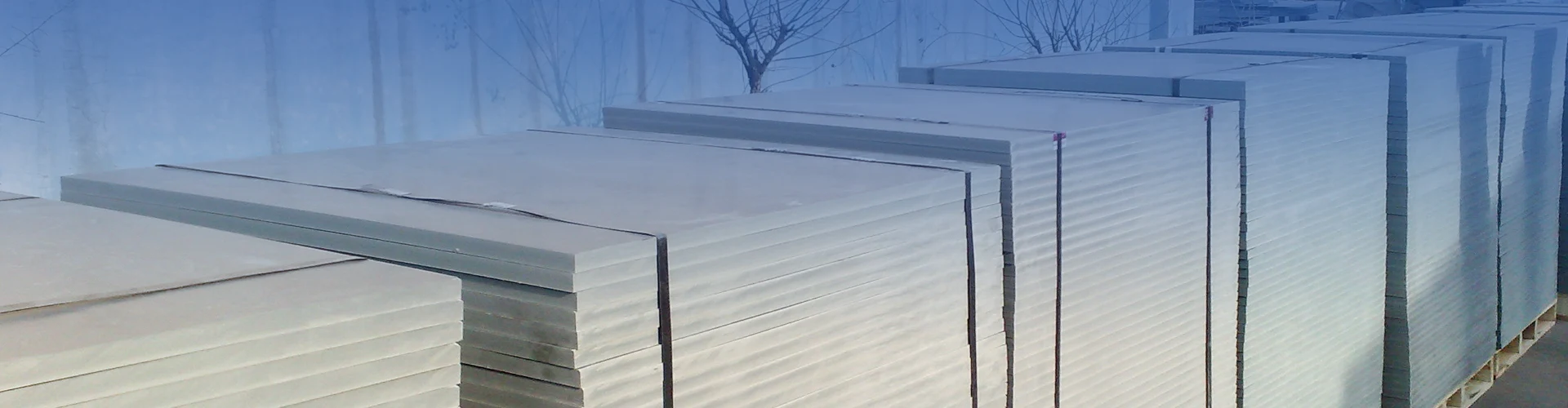
AAC production line
An AAC Production Line is a complete industrial facility designed to manufacture Autoclaved Aerated Concrete products—a lightweight, highly insulating building material with a cellular structure formed through a chemical aeration process. The production line integrates multiple process stages: raw material preparation, batching, mixing, pouring, pre-curing, cutting, autoclave curing, and finished product packaging. Unlike conventional concrete block production, the AAC process involves a chemical reaction between aluminum powder and alkaline slurry to create porosity, followed by high-temperature, high-pressure curing that develops the material's final structural properties.
From Raw Materials to Finished Product: The AAC Value Chain
An AAC production line is not a single machine but a coordinated system of equipment working in sequence. The value chain begins with raw material reception and ends with packaged blocks ready for shipment:
• Raw material reception and storage: Siliceous materials (fly ash, sand, or slag) are received and stored in covered areas to maintain moisture content. Calcareous materials (cement and lime) are stored in silos. The gas-forming agent (aluminum powder paste) is stored under controlled conditions to prevent premature reaction.
• Milling and preparation: Siliceous materials are milled to the required fineness of 200 mesh. Wet or dry ball mills are used, with dust collection systems to maintain air quality.
• Batching and mixing: Materials are weighed to formulation specifications (fly ash/sand 55–65%, cement 10–20%, lime 18–30%, gypsum 2–5%). A high-shear mixer combines the materials with water, and steam raises the slurry temperature to 40–50°C. Aluminum powder paste is added with 30–40 seconds of mixing to initiate the aeration reaction.
• Pouring and pre-curing: The aerated slurry is poured into molds mounted on mold cars. The filled molds transfer to a pre-curing chamber where they remain for 2–2.5 hours while the aeration reaction expands the material to its final volume.
• Cutting: Once the material reaches cutting strength, the mold side plates are removed. A tilting crane rotates the cake from horizontal to vertical. Horizontal and vertical cutting machines then slice the cake into blocks of specified dimensions.
• Autoclave curing: Cut blocks are loaded onto steam carts and transferred into autoclaves. The autoclave cycle—vacuum, pressure rise, pressure hold at 1.2 MPa (180–200°C), pressure reduction—requires approximately 8 hours.
The complete production cycle from raw material batching to finished product takes approximately 12 hours, with the autoclave stage being the most time-consuming and energy-intensive.
Product Specifications & Performance Metrics
AAC blocks produced on the production line are characterized by specific physical and mechanical properties that determine their construction applications:
| Property | Value Range | Application Implication |
| Volume Density | 300–900 kg/m³ | Reduced structural load; can be cut, sawed, and nailed |
| Compressive Strength | 3.5–10.0 MPa | Suitable for load-bearing walls (higher densities) and partition walls (lower densities) |
| Thermal Conductivity | 0.10–0.20 W/(m·K) | Significant insulation value; reduced heating/cooling loads |
| Dimensional Tolerance | ±1.0–±2.0 mm | Precision cutting allows thin-bed mortar application, reducing construction time |
| Porosity | 70–85% | Open-cell structure provides air pockets for insulation; closed-cell component reduces water absorption |
| Fire Resistance (100mm wall) | ≥ 4 hours | Class A1 non-combustible material; maintains integrity under fire exposure |
Standard block dimensions produced on the line are 600mm in length, with widths of 75, 100, 125, 150, 175, 200, and 250mm, and heights of 200, 240, 250, and 300mm. The dimensions can be adjusted through cutting machine configuration to meet specific project requirements.
Capacity Options
AAC production lines are specified by annual output capacity. The plant footprint, power requirement, and autoclave count vary with the selected capacity:
| Annual Capacity (m³) | Power (KW) | Daily Output (m³) | Autoclaves Required | Plant Area (m²) |
| 50,000 | 400 | 166 | 2 | 2,000 |
| 100,000 | 500 | 333 | 4 | 2,000 |
| 150,000 | 630 | 500 | 6 | 2,500 |
| 200,000 | 720 | 666 | 8 | 3,000 |
| 300,000 | 1,186 | 1,000 | 6 | 3,500 |
The plant area includes raw material storage, batching and mixing station, pouring and pre-curing zone, cutting line, autoclave area, and finished product storage. Layout is typically arranged in a linear flow from raw material entry to product exit, with the autoclave area centrally located to minimize material handling distances.
Autoclave Specification
Autoclaves are the core equipment in an AAC production line. The following table provides technical specifications for the autoclave system:
| Parameter | Value |
| Vessel Type | Horizontal steel cylinder |
| Material | Steel cylinder, pressed 16MnR steel cover, forged 16Mn steel flanges |
| Working Pressure | 1.2 MPa |
| Working Temperature | 180–200°C |
| Cycle Duration | 8 hours (vacuum + pressure rise + hold + pressure reduction) |
| Safety Features | Pressure relief valves, emergency shutdown, interlock mechanisms |
| Testing | Individual NDT (non-destructive testing), material test reports |
The autoclave is designed and manufactured in accordance with strict quality control procedures. All welded components undergo stress relief heat treatment and NDT to ensure structural integrity. The vessel can be customized according to user requirements, with options for different vessel sizes and configurations.
Utility Requirements
AAC production requires significant utility infrastructure. The following table summarizes typical utility requirements:
| Utility | Requirement | Notes |
| Electrical Power | 400–1,200 KW (capacity dependent) | Three-phase industrial supply; transformer included |
| Steam | Fuel-dependent (coal, natural gas, biomass) | Boiler system supplies steam for pre-curing and autoclave operation |
| Compressed Air | 6–8 bar | Required for cutting equipment and instrumentation |
| Water | Batching, cooling, cleaning | Recycling system recommended to minimize consumption |
| Fuel Storage | Dependent on boiler type | Coal yard, gas connection, or biomass storage |
Utility planning must be completed before equipment installation, as the design of the autoclave and boiler systems affects the overall plant layout and operational efficiency.
Operating Standards
The AAC production line is designed and manufactured under comprehensive quality management systems. All equipment is manufactured in accordance with the following standards:
• Quality management: ISO9001:2008 certified for design, manufacturing, and service processes.
• Product certification: CE certified for European market compliance; BV and SGS certifications available.
• Equipment testing: Each autoclave undergoes individual NDT testing and is supplied with material test reports and certification of conformity.
• Pre-shipment inspection: Complete production lines are inspected before delivery to ensure compliance with specifications.
Documentation provided with the production line includes equipment operation manuals, maintenance schedules, and quality control procedures for each process stage.
FAQ
Q1: What raw material sources are suitable for an AAC production line?
The line processes siliceous materials including fly ash (preferred), sand, slag, and tailings. Fly ash from coal-fired power plants is widely used where available. Sand-based lines are more common in regions without fly ash sources.
Q2: How is the line capacity determined?
Annual capacity is determined by the number of autoclaves, their size, and the cycle time. The table in Section III provides typical capacities for standard configurations.
Q3: What is the typical lead time for a complete production line?
Complete AAC production line projects typically require 8–12 months from order to commissioning, including equipment manufacturing, civil works, installation, and testing.
Q4: How are dimensional tolerances maintained across production?
Dimensional accuracy is achieved through precise cutting machine calibration and consistent material handling. The cutting system's accuracy, combined with controlled pre-curing conditions, ensures blocks meet tolerances of ±1.0–±2.0mm.
Q5: Can the line produce blocks of non-standard dimensions?
Yes. The cutting line can be configured to produce custom block dimensions by adjusting the cutting machine parameters. Custom dimensions require coordination with equipment specifications.
Q6: What is the typical autoclave cycle duration?
The autoclave cycle including vacuum, pressure rise, pressure hold, and pressure reduction requires approximately 8 hours. Total production cycle time including batching, pouring, pre-curing, cutting, and autoclaving is approximately 12 hours.
Related Products


Hot Products

Concrete Brick Machine Pallet
Welcome to buy Concrete Brick Machine Pallet from us, every request from customers is being replied within 24 hours. QGM/Zenith is the professional manufacturer, we would like to provide you Concrete Brick Machine Pallet and we will offer you the best after-sale service and timely delivery.
Fiberglass Brick Machine Pallet
QGM/Zenith as the professional manufacturer, we would like to provide you high quality Fiberglass Brick Machine Pallet. And we will offer you the after-sale service and timely delivery. It has the characteristics of light weight, corrosion resistance, high temperature resistance, moisture resistance, and corrosion resistance.
Recycled Material Brick Board
QGM/Zenith is a professional Recycled Material Brick Boardmanufacturer and supplier in China. Recycled Material Brick Board is an auxiliary equipment used to hold up the brick embryo in the production process of the brick machine. If you interested in products, please contact with us. We follow the quality of rest assured that the price of conscience, dedicated service.
Automated Block Machine Board
As the professional manufacturer, QGM/Zenith would like to provide you Automated Block Machine Board. And QGM/Zenith will offer you the after-sale service and timely delivery. Automated Block Machine BoardIn the process of producing blocks, the pallet provides a stable support plane for the blocks.
High Strength Concrete Brick Pallet
QGM/Zenith is one of China manufacturer & supplier who mainly produces High Strength Concrete Brick Pallet with many years of experience. Hope to build business relationship with you. It is usually composed of a steel frame and a reinforced steel plate. It has a high load-bearing capacity and good mechanical properties, and can effectively protect bricks from damage during transportation.
Hollow Block Machinery Pallet
Being a proficient manufacturer, QGM/Zenith aims to offer you top-notch Hollow Block Machinery Pallet. We promise to provide you with the best after-sale support and prompt delivery. Its main function is to protect the blocks from damage during production and transportation, while facilitating stacking and handling. Hollow Block Machinery Pallet is usually made of wood or plastic.
- Related Blog
- Reviews