- English
- Español
- Português
- русский
- Français
- 日本語
- Deutsch
- tiếng Việt
- Italiano
- Nederlands
- ภาษาไทย
- Polski
- 한국어
- Svenska
- magyar
- Malay
- বাংলা ভাষার
- Dansk
- Suomi
- हिन्दी
- Pilipino
- Türkçe
- Gaeilge
- العربية
- Indonesia
- Norsk
- تمل
- český
- ελληνικά
- український
- Javanese
- فارسی
- தமிழ்
- తెలుగు
- नेपाली
- Burmese
- български
- ລາວ
- Latine
- Қазақша
- Euskal
- Azərbaycan
- Slovenský jazyk
- Македонски
- Lietuvos
- Eesti Keel
- Română
- Slovenski
- मराठी
- Srpski језик
China Intelligent Non Burning Brick Machine Manufacturer, Supplier, Factory
The Intelligent Non Burning Brick Machine brings a new level of automation and precision to the production of curb stones and concrete masonry units. Designed for manufacturers who demand consistent quality, operational intelligence, and long-term reliability, this system integrates advanced vibration technology with a meticulously engineered steel pallet platform – creating a forming environment that maximizes both product performance and production efficiency.
What sets this machine apart is its intelligent control architecture. Real-time monitoring of vibration parameters, pallet positioning, and material compaction allows the system to adapt dynamically to variations in mix design or environmental conditions. This ensures that every cycle produces bricks with uniform density and dimensional accuracy, regardless of operator experience or shift changes.
Intelligent Steel Pallet System
The steel pallet is the critical interface between the machine's forming energy and the concrete mix. Our pallet system is manufactured with an uncompromising focus on precision, durability, and performance consistency. The following features define its technical excellence:
• CNC Precision Cutting: Using aerated bidirectional linear cutting technology, each pallet achieves exact length, width, and diagonal dimensions. This level of accuracy ensures that every brick is formed within tight tolerances, reducing downstream finishing requirements.
• Robotic Edge Finishing: All four corners are automatically smoothed and polished by robotic systems, with an additional steel-brush and press operation. This process removes sharp edges, enhances safety during handling, and reduces wear on adjacent machine components.
• Comprehensive Stress Relief: Residual tensile stresses from the cutting process are systematically eliminated in both horizontal and vertical axes. This prevents the pallet from tilting or distorting under vibration – a primary cause of cracks and surface defects in formed products.
• Dual-Axis Flatness Control: A two-stage precision correction process, followed by fully automated 100% inspection, guarantees that every pallet remains perfectly flat throughout its service life. This eliminates the risk of product warping and ensures uniform thickness across the entire forming surface.
Recommended Pallet Thickness for Curb Stone Production
The optimal pallet thickness depends on the specific production requirements, including product weight, mix characteristics, and expected operational intensity. Based on extensive field testing, we offer the following options for applications up to 600kg per pallet:
| Steel Pallet (L×W) | Product | Load Condition | Raw Material | Thickness (mm) |
| 1400 × 1000 mm | Curb Stone | Up to 600kg | KS SS400 / DIN St 44.2 | 15 / 16 / 18 |
| 1400 × 1000 mm | Curb Stone | Up to 600kg | KS SS490 / DIN St 50.2 / DIN St 52.3 | 15 / 16 / 18 |
Performance Comparison
When evaluating pallet materials for high-frequency vibration forming, the superiority of steel becomes evident across multiple performance indicators. The following comparison highlights why steel is the preferred choice for demanding production environments:
| Parameter | Steel Pallet Performance |
| Durability | Exceptional resistance to impact, abrasion, and fatigue; decades of service under continuous operation |
| Waste | Zero process waste – 100% recyclable at end of life, aligning with circular economy principles |
| End-of-life value | Scrap metal recovery provides a meaningful financial return, reducing net acquisition cost |
| Environmental impact | Inert and non-reactive – no chemical emissions, no moisture absorption, no biological degradation |
| Product strength | Excellent > Wood / Plastic – delivers higher green strength immediately after forming |
| Mold block strength | Excellent > Wood / Plastic – maintains dimensional integrity under high compaction forces |
| Finished product appearance | Superior surface quality > Wood / Plastic – clean edges, smooth faces, minimal surface defects |
| Elastic modulus | 200 GPa (rigid support) > Wood / Plastic – minimizes deflection, maximizes energy transfer |
| Vibration transmission rate | High (enhances compaction efficiency) > Wood / Plastic – optimal energy coupling to the mix |
Key Benefits for Production Managers
Adopting the Intelligent Non Burning Brick Machine with its integrated steel pallet system delivers tangible operational and financial advantages:
• Intelligent Process Control: Real-time monitoring and adaptive adjustment of vibration parameters ensure consistent compaction across all production cycles, reducing quality variation and rework.
• Reduced Operating Costs: Steel pallets outlast wood and plastic alternatives by a significant margin, lowering replacement frequency and associated procurement expenses. Their recyclability further enhances the economic value proposition.
• Improved Product Consistency: The combination of CNC-precise pallets and automated flatness control ensures that every brick meets the same high standard, enhancing customer satisfaction and reducing claims.
• Minimized Downtime: The durability and precision of steel pallets reduce wear on forming components, extending maintenance intervals and keeping the production line running longer between scheduled stops.
• Future-Ready Design: The machine's intelligent architecture allows for integration with plant-wide monitoring systems, enabling data-driven optimization and predictive maintenance strategies.
Intelligent Features – Real-Time Process Visibility
Beyond the pallet system, the Intelligent Non Burning Brick Machine incorporates smart features that provide operators and managers with unprecedented visibility into the forming process:
• Vibration Parameter Monitoring: Frequency, amplitude, and duration of each vibration cycle are monitored in real-time. Deviations from set parameters trigger alerts, enabling immediate correction before product quality is affected.
• Pallet Condition Tracking: Each pallet can be identified and its service history tracked. This includes cycle count, flatness measurement history, and any maintenance or repair events. This data enables condition-based replacement rather than reactive replacement.
• Production Analytics Dashboard: A centralized interface provides visibility into key performance indicators including production rate, cycle time, quality metrics, and equipment utilization. This supports continuous improvement initiatives and management reporting.
• Predictive Maintenance Alerts: By analyzing performance trends, the system can identify patterns that precede equipment issues. This enables maintenance to be scheduled during planned downtime, reducing unplanned interruptions to production.
• Data Export and Integration: Production data can be exported for analysis in external systems or integrated with plant-wide manufacturing execution systems (MES) and enterprise resource planning (ERP) platforms.
Frequently Asked Questions
Q1: What data does the Intelligent Non Burning Brick Machine collect?
A: The system collects data on vibration parameters, cycle counts, pallet condition metrics, product quality indicators, and machine operating status. This data is stored locally and can be accessed through the production dashboard or exported for external analysis.
Q2: How does the intelligent system help with quality control?
A: Real-time monitoring allows operators to detect deviations in forming parameters immediately, enabling rapid correction. The system also logs quality data that can be correlated with production parameters, helping identify root causes of quality issues and supporting continuous improvement efforts.
Q3: What is the typical payback period for the intelligent features?
A: The payback period depends on production volume and current quality levels, but typical payback for the intelligent control and monitoring capabilities ranges from 12 to 24 months, driven by reduced rejection rates, improved equipment utilization, and extended pallet service life through condition-based maintenance.
Q4: Can the intelligent system be retrofitted to existing equipment?
A: The intelligent control and monitoring features are integrated into the machine design. However, we offer upgrade paths for existing systems depending on the specific configuration and age of the equipment. Please consult our technical team for a detailed assessment.
Q5: Is internet connectivity required for the intelligent features to function?
A: No, the system operates independently and does not require external connectivity. Data is stored locally on the machine's control system. Internet connectivity can be provided for remote monitoring and support if desired.
Q6: How does the system support operator training?
A: The intuitive dashboard and clear visual indicators make it easier for operators to understand machine status and production parameters. This reduces the learning curve and enables operators to become productive more quickly. We also provide comprehensive training as part of the installation process.
Related Products


Hot Products

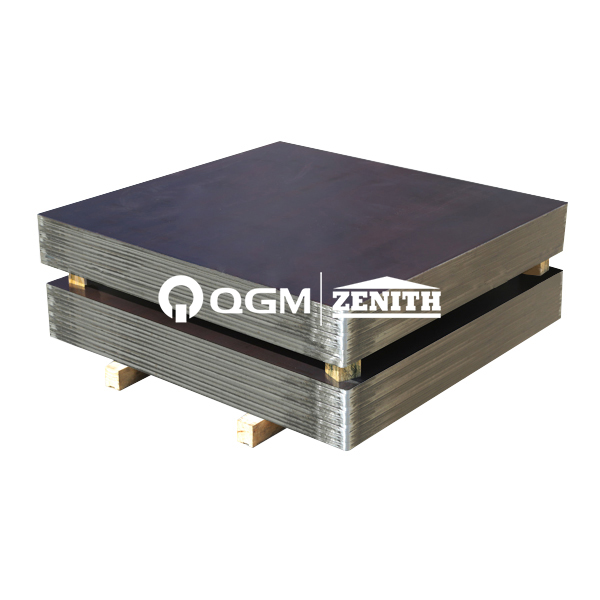
Unburned Brick Machine Pallet
You can rest assured to buy Unburned Brick Machine Pallet from QGM/Zenith. We look forward to cooperating with you, if you want to know more, you can consult us now, we will reply to you in time! The unburned brick machine pallet plays a vital role in the production process of the unburned brick machine, ensuring that the brick embryo will not be damaged during transportation and handling.
Fiberglass Brick Machine Pallet
QGM/Zenith as the professional manufacturer, we would like to provide you high quality Fiberglass Brick Machine Pallet. And we will offer you the after-sale service and timely delivery. It has the characteristics of light weight, corrosion resistance, high temperature resistance, moisture resistance, and corrosion resistance.
Quick-Change Block Machine Board
QGM/Zenith is one of the professional Quick-Change Block Machine Board manufacturer and supplier in China. Our products are CE certified and have in stock of factory, welcome to buy Quick-Change Block Machine Board from us. The main purpose of the block machine pallet is to carry and transfer bricks, ensuring that the bricks can be smoothly and evenly distributed after transportation and fixation to avoid dislocation or breakage.
Automated Block Machine Board
As the professional manufacturer, QGM/Zenith would like to provide you Automated Block Machine Board. And QGM/Zenith will offer you the after-sale service and timely delivery. Automated Block Machine BoardIn the process of producing blocks, the pallet provides a stable support plane for the blocks.
Concrete Paver Board
One of the Chinese companies offering Concrete Paver Board for buy is QGM/Zenith. For you, we can offer better pricing and competent service. Should you be intrigued by Concrete Paver Board, kindly get in touch with us. We adhere to the standard of conscience-driven, committed service at the cost of quality assurance.OneWe adhere to the standard of conscience-priced, devoted service, so you can feel secure.
Green Building Block Board
QGM/Zenith is a proficient manufacturer and supplier of Green Building Block Board in China. If you're searching for the Green Building Block Board at an affordable price, get in touch with us right away! The Green Building Block Machine Pallet can be used in a variety of building block machine production lines, such as concrete block machines, cement block machines and brick machines.
- Related Blog
- Reviews