- English
- Español
- Português
- русский
- Français
- 日本語
- Deutsch
- tiếng Việt
- Italiano
- Nederlands
- ภาษาไทย
- Polski
- 한국어
- Svenska
- magyar
- Malay
- বাংলা ভাষার
- Dansk
- Suomi
- हिन्दी
- Pilipino
- Türkçe
- Gaeilge
- العربية
- Indonesia
- Norsk
- تمل
- český
- ελληνικά
- український
- Javanese
- فارسی
- தமிழ்
- తెలుగు
- नेपाली
- Burmese
- български
- ລາວ
- Latine
- Қазақша
- Euskal
- Azərbaycan
- Slovenský jazyk
- Македонски
- Lietuvos
- Eesti Keel
- Română
- Slovenski
- मराठी
- Srpski језик
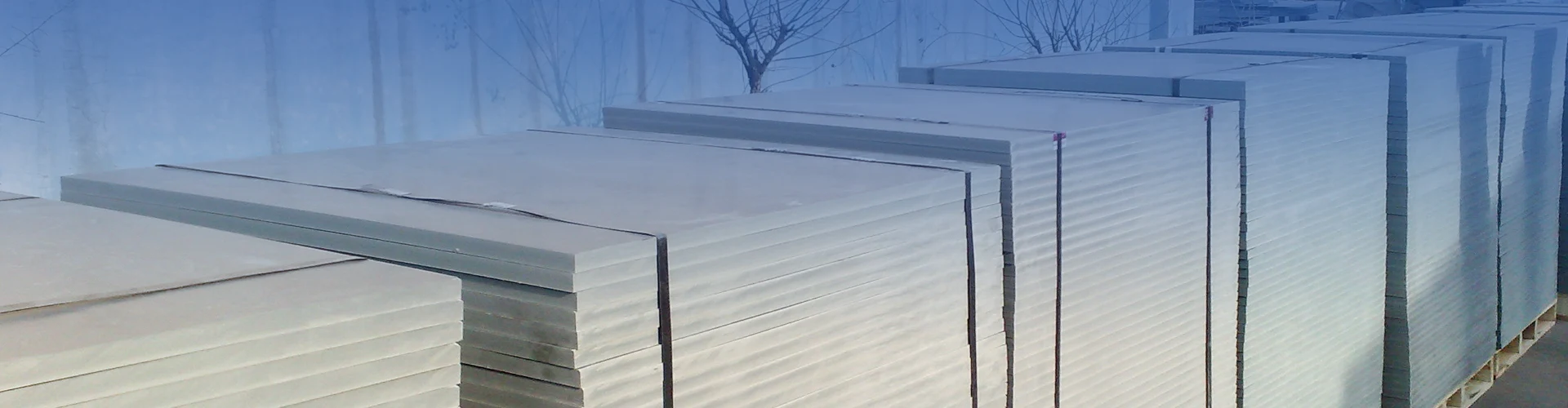
Intelligent brick making machine
The Intelligent Brick Making Machine is not just another forming system – it is a production intelligence platform that happens to make bricks. Designed for forward-thinking manufacturers who recognize that data is as valuable as output, this machine combines precision forming hardware with a sophisticated control architecture that learns, adapts, and improves over time. The result is a production asset that becomes more valuable the longer it operates.
What sets this system apart is its ability to transform raw production data into actionable insights. Every vibration cycle, every pallet movement, every quality measurement is captured and analyzed. Over time, the system builds a comprehensive understanding of your specific production environment – including mix characteristics, ambient conditions, and equipment wear patterns – and uses this knowledge to optimize forming parameters automatically. This means better bricks, with less waste, using less energy, and requiring fewer operator interventions.
Intelligent Steel Pallet Foundation
The steel pallet system serves as both the physical foundation for forming and a rich source of operational data. Our manufacturing process ensures that every pallet meets the highest precision standards, while the intelligent system tracks its performance throughout its service life:
• CNC-Validated Dimensional Precision: Through aerated bidirectional linear cutting, each pallet achieves exact length, width, and diagonal specifications. The intelligent system records these initial measurements and tracks any changes over time, providing early warning of potential issues.
• Robotic Edge Processing with Quality Verification: Automated smoothing, polishing, and steel-brushing of all corners are performed with consistent parameters. The intelligent system verifies edge quality and logs the results for traceability and quality assurance purposes.
• Stress-Relief Performance Tracking: Residual tensile stresses are systematically eliminated in both horizontal and vertical orientations. The system monitors pallet performance indicators that reflect the effectiveness of this stress-relief process over time.
• Flatness Control with Continuous Monitoring: Beyond the initial two-stage correction and 100% inspection, the intelligent system tracks flatness trends throughout the pallet's service life. This enables condition-based decisions about pallet rotation, maintenance, or replacement.
Pallet Thickness Options – Data-Driven Selection
The selection of pallet thickness can be optimized using data from your production environment. For curb stone applications with a 600kg per pallet load capacity, the following options are available:
| Steel Pallet (L×W) | Product | Load Condition | Raw Material | Thickness (mm) |
| 1400 × 1000 mm | Curb Stone | Up to 600kg | KS SS400 / DIN St 44.2 | 15 / 16 / 18 |
| 1400 × 1000 mm | Curb Stone | Up to 600kg | KS SS490 / DIN St 50.2 / DIN St 52.3 | 15 / 16 / 18 |
Comparative Intelligence – Steel Pallet Performance Metrics
The advantages of steel pallets are measurable and trackable through the intelligent monitoring system. The following comparison highlights key performance indicators:
| Parameter | Steel Pallet Performance |
| Durability | Measurable service life extension – data shows 3-5 years of consistent performance under normal operating conditions |
| Waste | 100% recyclable – contributes to measurable waste reduction and circular economy metrics |
| End-of-life value | Scrap metal recovery – provides documented financial return with predictable market value |
| Environmental impact | Zero emissions – simplifies environmental compliance and sustainability reporting |
| Product strength | Excellent > Wood / Plastic – measurable improvement in compressive strength and density |
| Mold block strength | Excellent > Wood / Plastic – consistent dimensional stability reduces quality variation |
| Finished product appearance | Superior surface quality > Wood / Plastic – measurable reduction in surface defects |
| Elastic modulus | 200 GPa (rigid support) > Wood / Plastic – predictable deflection for precise process control |
| Vibration transmission rate | High (enhances compaction efficiency) > Wood / Plastic – measurable energy transfer efficiency |
Four Dimensions of Intelligence
The Intelligent Brick Making Machine incorporates intelligence at multiple levels, creating a comprehensive system that delivers value beyond basic production:
1. Process Optimization Intelligence: The system continuously monitors and adjusts vibration parameters to maintain optimal forming conditions. By analyzing trends in cycle performance, it can identify opportunities to reduce cycle time, improve compaction, or reduce energy consumption. This adaptive capability ensures that the machine is always operating at its peak, even as conditions change.
2. Asset Management Intelligence: Each pallet is tracked throughout its service life, with data on cycle count, flatness trends, and any maintenance events. This enables predictive maintenance planning, optimizing pallet rotation schedules, and ensuring that replacement occurs at the optimal time – not too early (wasting asset value) and not too late (risking quality issues).
3. Quality Assurance Intelligence: By correlating production parameters with quality outcomes, the system builds a predictive model of product quality. This allows operators to anticipate quality issues before they occur and take corrective action proactively. The result is fewer rejected products, less rework, and more consistent customer satisfaction.
4. Resource Efficiency Intelligence: The system monitors energy consumption, material usage, and cycle efficiency. By identifying inefficiencies and recommending improvements, it supports continuous reduction in operating costs and environmental footprint. This intelligence is particularly valuable for manufacturers with sustainability targets or energy cost concerns.
Competitive Advantage Analysis – How We Compare to Alternative Solutions?
When selecting intelligent brick forming equipment, the differences in design philosophy, engineering quality, and support infrastructure are critical to long-term success. The following table provides a direct comparison between our Intelligent Brick Making Machine and typical alternatives available in the market:
| Evaluation Criteria | Our Intelligent Brick Making Machine | Conventional Automatic Machines | Semi-Automatic / Manual Systems |
| Pallet Dimensional Tolerance | ±0.5 mm (CNC controlled) | ±2.0 – 3.0 mm (standard cutting) | ±3.0 – 5.0 mm (manual/offline cutting) |
| Stress Relief Treatment | Systematic horizontal + vertical elimination | Typically not performed | Not performed |
| Pallet Inspection Coverage | 100% automated flatness inspection | Random sampling (5-10%) | Visual inspection only |
| Material Grade Options | Multiple (SS400, SS490, St 44.2, St 50.2, St 52.3) | Single standard grade | Single grade, often lower quality |
| Edge Finishing Method | Robotic automated + brushing/pressing | Manual or semi-automated grinding | Manual deburring only |
| Pallet Service Life (Typical) | 3 – 5 years | 12 – 18 months | 6 – 12 months |
| Real-Time Process Monitoring | Full vibration + quality parameter tracking | Basic cycle counting only | None |
| Predictive Maintenance Capability | Built-in trend analysis + alerts | None – reactive maintenance only | None |
| Data Export / Integration | Standard (MES/ERP compatible) | Limited or not available | Not available |
| Pallet End-of-Life Recovery | Scrap metal value (20-30% of initial cost) | Minimal value (mixed/unknown steel) | Zero value |
| Product Rejection Rate (Typical) | < 1.5% | 3 – 5% | 5 – 10% |
| Operator Training Requirement | 2-3 shifts for basic operation | 1-2 weeks for proficiency | 3-5 days for basic operation |
Frequently Asked Questions
Q1: How does the intelligent system handle variations in raw material properties?
A: The system continuously monitors forming performance and can adapt vibration parameters in response to changes in material behavior. Over time, it builds a model of how different mix characteristics affect forming, allowing it to anticipate required adjustments. This reduces the impact of material variability on product quality.
Q2: What kind of training is required for operators to use the intelligent features?
A: The user interface is designed to be intuitive, with clear visual indicators and straightforward navigation. Most operators become proficient with the basic functions within 2-3 shifts. For advanced features such as data analysis and process optimization, we provide additional training that can be tailored to your team's needs and technical background.
Q3: Can the system integrate with my existing plant management software?
A: Yes, the system supports standard data export formats and can be integrated with MES, ERP, and other plant management platforms through established interfaces. Our technical team can work with your IT department to ensure seamless integration.
Q4: How much does the intelligent system improve production efficiency?
A: Improvements vary based on current operations, but typical customers report efficiency gains of 10-25% within the first year of operation. These gains come from reduced cycle times, lower rejection rates, less unplanned downtime, and better utilization of pallets and other assets.
Q5: What happens if the intelligent system detects a problem with a pallet?
A: The system generates an alert with specific information about the issue and recommended actions. This may include performing a flatness check, rotating the pallet out of service, or scheduling maintenance. The alert includes the relevant data to support decision-making, reducing the time required for diagnosis and corrective action.
Related Products


Hot Products

Eco-Friendly Brick Machine Pallet
QGM/Zenith is a professional Eco-Friendly Brick Machine Palletmanufacturer and supplier in China. If you interested in products, please contact with us. We follow the quality of rest assured that the price of conscience, dedicated service.
Hollow Block Machine Pallet
You are welcomed to come to QGM/Zenith factory to buy the latest selling, low price, and high-quality Hollow Block Machine Pallet. We look forward to cooperating with you. The design and material selection of the pallet are crucial to improving production efficiency and product quality.
Bamboo Brick Machine Pallet
QGM/Zenith as a professional high quality Bamboo Brick Machine Pallet manufacturer, you can rest assured to buy Bamboo Brick Machine Pallet from our factory and we will offer you the after-sale service and timely delivery. Bamboo brick machine pallets are mainly used in the production process of various brick machines, especially in the use of unfired brick machines and clay brick machines.
Clay Brick Machine Board
You can rest assured to buy Clay Brick Machine Board from QGM/Zenith factory and we will offer you the after-sale service and timely delivery.Its main function is to hold up the brick embryo during the brick making process to ensure the smooth progress of brick making.
Automated Block Machine Board
As the professional manufacturer, QGM/Zenith would like to provide you Automated Block Machine Board. And QGM/Zenith will offer you the after-sale service and timely delivery. Automated Block Machine BoardIn the process of producing blocks, the pallet provides a stable support plane for the blocks.
Quick-Change Block Machine Pallet
QGM/Zenith invites you to visit our factory to purchase the high-quality Quick-Change Block Machine Pallet. We are looking forward to working with you. The main materials of the block machine pallet include steel and wood. Steel provides structural support, while wood increases the load-bearing capacity and stability.
- Related Blog
- Reviews