- English
- Español
- Português
- русский
- Français
- 日本語
- Deutsch
- tiếng Việt
- Italiano
- Nederlands
- ภาษาไทย
- Polski
- 한국어
- Svenska
- magyar
- Malay
- বাংলা ভাষার
- Dansk
- Suomi
- हिन्दी
- Pilipino
- Türkçe
- Gaeilge
- العربية
- Indonesia
- Norsk
- تمل
- český
- ελληνικά
- український
- Javanese
- فارسی
- தமிழ்
- తెలుగు
- नेपाली
- Burmese
- български
- ລາວ
- Latine
- Қазақша
- Euskal
- Azərbaycan
- Slovenský jazyk
- Македонски
- Lietuvos
- Eesti Keel
- Română
- Slovenski
- मराठी
- Srpski језик
Hollow Bricks Machine
The Hollow Bricks Machine is purpose-built to address one of the most persistent challenges in concrete masonry: producing lightweight, structurally sound units that reduce material consumption without compromising strength. Unlike solid brick equipment, this machine must manage the complex interplay between cavity formation, wall thickness consistency, and vibration energy distribution. Our Hollow Bricks Machine resolves these competing demands through precision-engineered core systems and intelligent process control, delivering hollow blocks that consistently meet international standards while maximizing material efficiency.
The Cavity Geometry Challenge
The defining characteristic of hollow block production is the internal cavity—and the core assemblies that form it. Our Hollow Bricks Machine features precision-engineered core systems that ensure consistent cavity geometry across every production cycle:
• Core taper optimization: Internal cores are manufactured with a precision taper (typically 1.5°–2.0°) that enables smooth demolding without damaging cavity surfaces. This design minimizes friction during ejection, reducing wear on both cores and the finished product.
• Interchangeable core configurations: The machine supports core sets for 2-cavity, 3-cavity, and 4-cavity blocks, enabling manufacturers to produce the specific hollow block configuration required for different structural applications.
• Multi-stage demolding sequence: The machine employs a controlled core retraction sequence that allows material relaxation before final ejection, reducing surface cracking and edge chipping.
This core system precision enables consistent wall thickness uniformity within ±1.0mm across all cavities—a critical requirement for hollow block structural performance and construction site acceptance.
Comparing Hollow vs. Solid Production
The economic advantage of hollow block production is measured in material savings. Our Hollow Bricks Machine maximizes this advantage through precise cavity formation that achieves the optimal balance between void volume and structural integrity:
| Product Type | Material per Unit (kg) | Material Savings vs. Solid | Annual Savings (1M units) |
| Solid Brick (240×115×53mm) | ~2.8 kg | Baseline | — |
| 2-Cavity Hollow (400×200×200mm) | ~12.0 kg | ~45% | ~$120,000 |
| 3-Cavity Hollow (400×200×200mm) | ~10.5 kg | ~50% | ~$140,000 |
| 4-Cavity Hollow (400×200×200mm) | ~9.0 kg | ~55% | ~$160,000 |
These material savings are achieved without compromising structural performance. Our Hollow Bricks Machine produces blocks with face shell thicknesses of 20–30mm and compressive strengths of 15–25MPa, meeting or exceeding ASTM C90 and BS EN 771 requirements for load-bearing applications.
The Physics of Hollow Block Compaction
Hollow block compaction presents a unique physics challenge: the internal cavities create an irregular material distribution that can lead to density variations and weak zones. Our Hollow Bricks Machine addresses this through zoned vibration energy distribution that delivers the right compaction energy to each section of the block:
• Cavity zone processing: Lower vibration amplitude (0.3–0.5mm) prevents core deformation while achieving face shell compaction.
• Web zone processing: Higher amplitude (0.8–1.0mm) for full compaction in the narrow material sections between cavities.
• Surface zone processing: Intermediate amplitude (0.6–0.8mm) delivers a dense, smooth finish.
This zoned approach achieves uniform density distribution across the block, with variation typically below 3%—significantly better than conventional machines where variation can exceed 8%. The result is hollow blocks with consistent strength characteristics across all sections.
Production Capacity & Mold Flexibility
The Hollow Bricks Machine is designed for high-volume production with rapid mold changeover capability. The ZS-QT8-15 series, for example, achieves cycle times of 15–18 seconds with production capacities reaching 15,360 hollow blocks per day (390×190×190mm) or 76,800 standard bricks per day :
| Product Type | Dimensions (mm) | Pcs per Cycle | Daily Output (8h) |
| Hollow Block | 390×190×190 | 8 | 15,360 |
| Multi-hole Brick | 240×115×90 | 20 | 38,400 |
| Standard Brick | 240×115×53 | 40 | 76,800 |
| Pathway Brick | 200×100×60 | 26 | 34,112 |
Control & Automation: PLC-Integrated Production
Modern Hollow Bricks Machines integrate comprehensive automation that ensures consistent quality and minimizes operator dependency. The ZS-QT series uses Japan Mitsubishi PLC control systems with Delta Touch Screen interfaces :
• Visualization screen: Easy operation with intuitive interface that allows operators to set up, update, and amend production parameters to maximize output .
• Dynamic status display: Real-time monitoring of system status with automatic troubleshooting and warning notices .
• Safety interlocks: Automatic-locking function prevents mechanical accidents caused by operational mistakes .
• Proportional valve control: High-dynamic proportional and directional valves automatically adjust oil flow and pressure as per specific working requirements .
The machine also incorporates multi-shaft rotating and compulsory feeding, which improves block density and intensity while reducing feeding time .
Hollow Bricks Machine Comparison
The following comparison evaluates our Hollow Bricks Machine against common alternatives:
| Parameter | Our Hollow Bricks Machine | Egg-Laying Mobile Machine | Manual Press System | Imported Premium System |
|---|---|---|---|---|
| Cycle Time (seconds) | 15–18 | 20–25 | 40–60 | 12–15 |
| Hollow Blocks/Day (8h shift) | 15,360 | 5,000–8,000 | 2,000–4,000 | 18,000–25,000 |
| Mold Changeover Time | 15–30 minutes | 30–45 minutes | 60+ minutes | 10–20 minutes |
| PLC Control System | Mitsubishi / Siemens | Basic | None | Siemens / Allen-Bradley |
| Pallet Requirement | Pallet-based, high precision | Floor-laying, no pallets | Pallet-based | Pallet-based |
| Product Strength Consistency | High (PLC controlled) | Moderate | Variable | Very high |
| Initial Investment (USD) | $85,000–$150,000 | $15,000–$35,000 | $25,000–$50,000 | $280,000–$550,000 |
| 5-Year Total Cost of Ownership | $195,000–$265,000 | $230,000–$300,000 | $280,000–$350,000 | $480,000–$720,000 |
Practical Answers for Decision Makers
Q1: What hollow block sizes can the machine produce?
The machine supports block heights from 50mm to 300mm, with common sizes including 400×200×200mm, 390×190×190mm, 400×150×200mm, and custom configurations. Quick mold changeover enables rapid switching between sizes.
Q2: What is the typical wall thickness achievable?
The machine maintains face shell and web thickness within ±1.0mm tolerance. Minimum wall thickness capability is 20mm, with typical production thicknesses ranging from 20–30mm depending on application requirements.
Q3: Can the machine produce both hollow and solid products?
Yes. By changing molds, the same machine produces hollow blocks, solid bricks, multi-hole bricks, paving stones, and curb stones. The hydraulic and vibration parameters adjust based on mold configuration to ensure optimal compaction .
Q4: What is the expected product strength?
The machine produces hollow blocks with compressive strengths of 15–25MPa, meeting ASTM C90 and BS EN 771 standards for load-bearing and non-load-bearing applications.
Q5: What are the power requirements?
Total power requirements range from 40.5KW to 54KW depending on model, with the ZS-QT8-15 requiring 46KW . All models operate on standard industrial three-phase power.
Q6: Does the machine require special foundation work?
A reinforced concrete foundation is recommended, with dimensions appropriate to machine weight (8.5 tons for the ZS-QT8-15) . Foundation drawings and specifications are provided with the machine.
Related Products



Hot Products

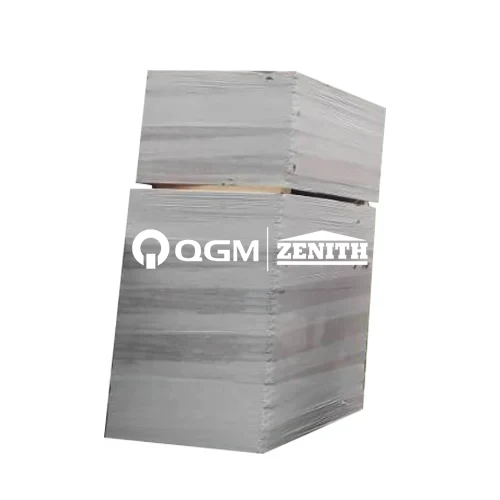
Energy-Efficient Brick Machine Pallet
QGM/Zenith is Energy-Efficient Brick Machine Pallet manufacturer and supplier in China. We can provide professional service and better price for you. Energy-Efficient Brick machine Pallet refers to the auxiliary equipment used to hold up the brick embryo during the production process of the brick machine.If you interested in products, please contact with us. We follow the quality of rest assured that the price of conscience, dedicated service.
Heavy-Duty Brick Machine Pallet
QGM/Zenith is a professional China Heavy-Duty Brick Machine Pallet manufacturer and supplier, if you are looking for the Heavy-Duty Brick Machine Pallet, It plays an important role in building logistics and has strong load-bearing capacity and wear resistance.
Lightweight Block Machine Board
Welcome to buy Lightweight Block Machine Board from us, every request from customers is being replied within 24 hours. QGM/Zenith is the professional manufacturer, we would like to provide you Lightweight Block Machine Board and we will offer you the best after-sale service and timely delivery.
Automated Block Machine Board
As the professional manufacturer, QGM/Zenith would like to provide you Automated Block Machine Board. And QGM/Zenith will offer you the after-sale service and timely delivery. Automated Block Machine BoardIn the process of producing blocks, the pallet provides a stable support plane for the blocks.
Block Forming Machine Pallet
QGM/Zenith is one of leading China Block Forming Machine Pallet manufacturer, supplier and exporters. Block Forming Machine Pallet is an important part of block forming machines, used to carry and transport blocks. The design and function of the pallet directly affect the efficiency and product quality of the forming machine.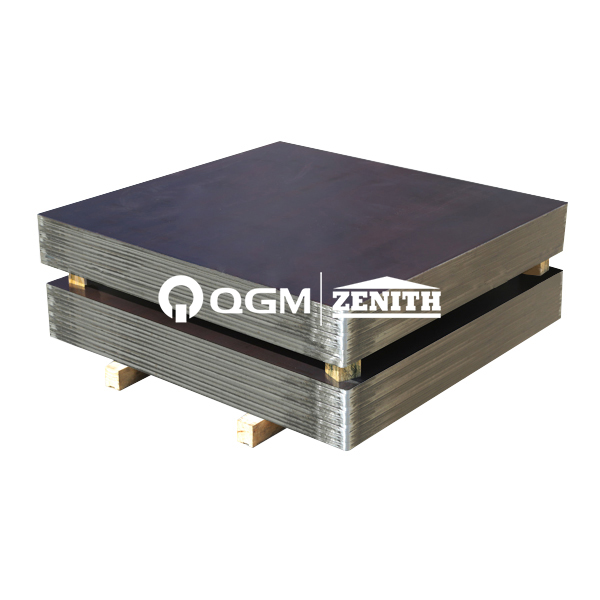
Solid Steel Pallet
As one of professional manufacturer in China, QGM/Zenith would like to provide you Solid Steel Pallet. And we will offer you the best after-sale service and timely delivery. Through CNC machine tools, aerated bidirectional balance (CNC aerated) straight-line cutting method, accurate length, width, and diagonal dimensions.
- Related Blog
- Reviews