- English
- Español
- Português
- русский
- Français
- 日本語
- Deutsch
- tiếng Việt
- Italiano
- Nederlands
- ภาษาไทย
- Polski
- 한국어
- Svenska
- magyar
- Malay
- বাংলা ভাষার
- Dansk
- Suomi
- हिन्दी
- Pilipino
- Türkçe
- Gaeilge
- العربية
- Indonesia
- Norsk
- تمل
- český
- ελληνικά
- український
- Javanese
- فارسی
- தமிழ்
- తెలుగు
- नेपाली
- Burmese
- български
- ລາວ
- Latine
- Қазақша
- Euskal
- Azərbaycan
- Slovenský jazyk
- Македонски
- Lietuvos
- Eesti Keel
- Română
- Slovenski
- मराठी
- Srpski језик

What Factors Should You Consider When Buying Block Machine Pallets?
Picture this: a concrete block plant operating at full capacity, producing thousands of blocks per hour. The machines are humming, the mix is perfect, and the crew is working efficiently. But there is a silent bottleneck—the Block Machine Pallet. These seemingly simple platforms are the foundation of the entire production process. They must be perfectly flat, durable enough to withstand the constant pounding of the block machine's vibration, and resistant to the harsh environment of wet concrete and high pressure. A warped, worn, or poor-quality pallet can cause a cascade of problems: misshapen blocks, increased waste, and costly downtime. Choosing the right Block Machine Pallet is not a simple procurement decision; it is a strategic investment that directly impacts the quality, efficiency, and profitability of your entire block production operation.
The process of selecting the right Block Machine Pallet can be daunting. There is a wide range of materials, sizes, and designs, each with its own set of advantages and disadvantages. Wood, steel, plastic, and composite materials are all used, and each offers a different balance of durability, cost, and performance. The pallet's flatness, surface finish, and dimensional accuracy are critical for producing blocks that meet specifications. The pallet must also be compatible with the block machine's handling system and capable of withstanding the required loads. This article will guide you through the essential factors to consider when purchasing Block Machine Pallets, helping you make an informed decision that will maximize your production efficiency and minimize your long-term costs.
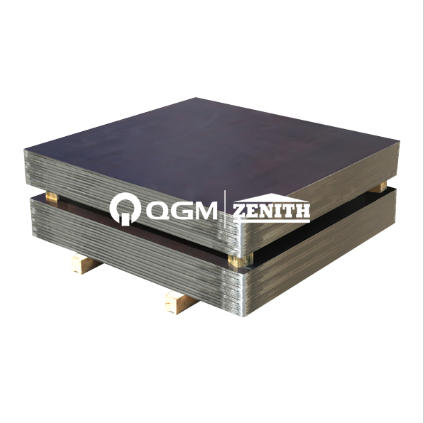
Table of Contents
- 1. What Materials Are Used for Block Machine Pallets?
- 2. Why Is Pallet Flatness Critical for Block Quality?
- 3. How Do Pallet Dimensions and Thickness Affect Production?
- 4. What Is the Total Cost of Ownership of a Block Machine Pallet?
- 5. How Can You Extend the Life of Your Block Machine Pallets?
- 6. Frequently Asked Questions (FAQ)
- 7. Conclusion
1. What Materials Are Used for Block Machine Pallets?
The material of a Block Machine Pallet is the primary determinant of its performance, durability, and cost. The right material depends on the specific demands of your production environment—the type of concrete mix, the block machine's vibration intensity, and the expected lifespan of the pallet. There are four main categories of pallet materials: wood, steel, plastic, and composite. Each has its own strengths and weaknesses, and understanding these is the first step in making an informed choice.
Wooden Pallets: Historically, wood was the most common material for Block Machine Pallets. They are inexpensive to produce and readily available. However, their limitations are significant. Wood is susceptible to moisture absorption, which causes warping and dimensional instability. The surface of a wooden pallet can also be damaged by the abrasive action of the concrete mix, and the pallets are prone to rotting and decay. These issues lead to a short service life, often measured in months rather than years. For these reasons, wooden pallets are generally not recommended for modern, high-volume block production. They are better suited for small-scale operations with low production requirements.
Steel Pallets: Steel Block Machine Pallets offer exceptional durability and dimensional stability. They are virtually immune to moisture absorption and can withstand the high impact and vibration of block production. Steel pallets also provide a very smooth surface, which contributes to excellent block surface finish. The primary disadvantages of steel pallets are their weight, which makes them difficult to handle, and their susceptibility to corrosion, particularly if the concrete mix is highly alkaline. They also have a higher initial cost compared to wood. For high-volume, automated production lines, steel pallets are often a preferred choice due to their long service life.
Plastic Pallets: Plastic Block Machine Pallets, typically made from high-density polyethylene (HDPE) or polypropylene (PP), offer a good balance between cost and performance. They are lightweight, resistant to moisture and chemicals, and can be molded to precise dimensions. Plastic pallets are also easy to clean and do not corrode. However, they may not offer the same level of rigidity as steel pallets under heavy loads, and they can be susceptible to deformation under high temperature or pressure. The quality of plastic pallets can vary significantly depending on the manufacturing process and the materials used.
Composite Pallets: The most advanced Block Machine Pallets are made from composite materials. These combine the strengths of different materials to achieve a superior performance profile. A common composite design is a high-density wood or fiber core, bonded with a durable, wear-resistant surface layer, such as a phenolic resin coating. This construction provides excellent dimensional stability, high load capacity, and superior abrasion resistance. Composite pallets are often the best choice for demanding, high-production environments. At Quangong Machinery Co., Ltd., we have developed a specialized composite Block Machine Pallet that combines the rigidity of steel with the light weight and corrosion resistance of plastic, providing our customers with a pallet that delivers exceptional performance and longevity. The table below provides a comparison of the key characteristics of the different Block Machine Pallet materials.
| Material | Durability | Flatness Stability | Weight | Cost | Typical Lifespan |
| Wood | Low | Poor | Medium | Low | 3-6 months |
| Steel | Excellent | Excellent | Heavy | High | 5-10 years |
| Plastic (HDPE) | Good | Good | Light | Medium | 2-5 years |
| Composite | Excellent | Excellent | Medium | Medium-High | 5-8 years |
Our factory has conducted extensive testing on various Block Machine Pallet materials, simulating the conditions of a high-volume block production line. The results consistently show that composite pallets deliver the best overall performance, combining the long service life of steel with the light weight and corrosion resistance of plastic. For the vast majority of modern block production operations, we recommend composite pallets as the optimal choice for balancing performance, cost, and longevity.
2. Why Is Pallet Flatness Critical for Block Quality?
In concrete block production, flatness is not just a preference; it is a critical requirement. The flatness of a Block Machine Pallet directly determines the dimensional accuracy and surface quality of the finished block. A warped or uneven pallet will cause the block to have an inconsistent height, and the top surface will not be level. These blocks are unusable in construction, as they cannot be laid properly, and they will be rejected. The cost of producing defective blocks is significant, not just in terms of wasted materials but also in terms of lost production time and increased inspection costs.
The block-making process is based on the principle of controlled compaction. The block machine vibrates the concrete mix, compressing it between the mold and the pallet. The pallet acts as the bottom mold surface, and any deviation from flatness will be transferred to the block. The surface of the pallet should be smooth and flat to within a tolerance of +/- 0.3 mm over its entire surface. This high level of precision is essential for producing blocks that meet the required specifications. A pallet with even a slight warp can cause the block to be taller on one side than the other, a defect known as out-of-squareness. This compromises the block's structural integrity and can lead to failure during stacking or installation.
The surface finish of the Block Machine Pallet also plays a critical role in block quality. A smooth surface finish allows the block to release cleanly from the pallet, preventing the formation of surface imperfections and reducing the risk of the block sticking. A rough or damaged pallet surface can cause the block to have a poor surface finish, which can be unsightly and may require additional processing to correct. Additionally, the pallet surface should be designed to resist the adhesion of concrete and to allow easy cleaning. This is particularly important in high-volume operations where pallets are reused many times.
At QGM, we manufacture our Block Machine Pallets to the highest precision standards. Our pallets are precision-ground to ensure a flatness of less than +/- 0.2 mm, and we use a specialized coating process to achieve a smooth, non-stick surface that reduces cleaning time and improves block quality. We understand that the pallet is not just a passive component; it is an active participant in the block-making process, and its quality is directly reflected in the quality of the final product. The table below shows the recommended flatness tolerances for Block Machine Pallets of different sizes.
| Pallet Dimension (mm) | Maximum Flatness Deviation (mm) | Surface Roughness (Ra, µm) |
| 800 x 600 | 0.3 | 1.2 |
| 1000 x 800 | 0.4 | 1.4 |
| 1200 x 900 | 0.5 | 1.6 |
| 1400 x 1000 | 0.6 | 1.8 |
| 1500 x 1200 | 0.7 | 2.0 |
It is important to note that pallet flatness is not a static property. Over time, even the best pallets can warp due to thermal stress, mechanical impact, or improper storage. Therefore, regular inspection of pallet flatness is an essential part of a quality control program. A simple straight edge and feeler gauge can be used to check flatness, and any pallet that exceeds the specified tolerance should be removed from service and either reconditioned or replaced. By maintaining strict flatness standards, block producers can ensure that their blocks consistently meet the required dimensional and quality specifications.
3. How Do Pallet Dimensions and Thickness Affect Production?
The dimensions and thickness of a Block Machine Pallet are not arbitrary; they are determined by the specific requirements of the block machine and the production process. Selecting the correct dimensions is essential for ensuring compatibility with the machine's handling system, while the thickness affects the pallet's strength, weight, and ability to withstand the loads of block production. Ignoring these factors can lead to inefficiency, block damage, and pallet failure. The pallet must match the design of the block machine, and it must be capable of withstanding the loads and stresses of the production process.
Pallet Dimensions: The length and width of the Block Machine Pallet must match the dimensions of the machine's pallet feeding and handling system. The pallet must be able to slide smoothly through the machine, and it must be correctly positioned under the mold. The dimensions are typically specified by the manufacturer of the block machine. Standard pallet sizes often correspond to common block sizes, such as 800 x 600 mm, 1000 x 800 mm, and 1200 x 900 mm. Using a pallet that is too large or too small can cause jams, misalignment, or damage to the machine. The pallet must also be compatible with the machine's curing and stacking systems.
Pallet Thickness: The thickness of the pallet is a critical factor that influences its strength, rigidity, and weight. A pallet that is too thin will flex under the load of the concrete and the pressure of the block machine, causing the block to be of uneven thickness and potentially leading to pallet failure. A pallet that is too thick will be unnecessarily heavy, reducing the efficiency of the handling system and increasing the load on the machine's drive mechanisms. The optimal thickness depends on the size of the pallet and the loads it will be subjected to. For a standard 1000 x 800 mm pallet, a thickness of 18-22 mm is typical. For larger pallets, a greater thickness may be required to maintain rigidity. At our factory, we offer Block Machine Pallets in a range of thicknesses to suit different applications, and we can provide guidance on the optimal thickness for your specific needs.
Edge Treatment: The edges of the Block Machine Pallet are also an important consideration. The pallet edges should be smooth and free of burrs to prevent damage to the handling equipment. Some pallets feature a chamfered or radiused edge, which can help to guide the pallet into the machine and reduce the risk of snagging. The edge treatment also affects the ease with which the pallet can be handled and stacked.
To ensure compatibility and optimal performance, it is essential to obtain the correct pallet dimensions and thickness from your block machine manufacturer. Our factory can manufacture Block Machine Pallets to exact specifications, ensuring a perfect fit with your machine. We have extensive experience in designing pallets for a wide range of machine types, and our technical team can help you determine the correct specifications for your application. The following table provides a general guide to the recommended pallet dimensions for different block machine sizes.
| Block Machine Model | Recommended Pallet Size (mm) | Recommended Thickness (mm) | Typical Application |
| Small (1-2 blocks per cycle) | 600 x 600 | 16-18 | Small-scale production, decorative blocks |
| Medium (3-5 blocks per cycle) | 800 x 600 / 1000 x 800 | 18-20 | General block production, pavers |
| Large (6-10 blocks per cycle) | 1200 x 900 / 1400 x 1000 | 20-25 | High-volume production, heavy blocks |
| Extra Large (10+ blocks per cycle) | 1500 x 1200 | 25-30 | Extremely high-volume production |
4. What Is the Total Cost of Ownership of a Block Machine Pallet?
When evaluating Block Machine Pallets, it is essential to look beyond the initial purchase price. The true cost of a pallet is the Total Cost of Ownership (TCO), which includes the purchase price, the cost of maintenance, the cost of downtime associated with pallet failures, and the cost of replacing the pallet over its service life. A low-cost pallet that fails frequently can be far more expensive in the long run than a high-quality pallet with a longer service life and lower maintenance requirements. Understanding the TCO of different pallet options is essential for making a sound investment decision.
The key components of the TCO for Block Machine Pallets are:
- Purchase Price: This is the initial cost of the pallet. It varies widely depending on the material, size, and manufacturing quality. Wood pallets are the cheapest, while composite and steel pallets are more expensive.
- Maintenance Costs: This includes the cost of cleaning, inspecting, and, if necessary, reconditioning the pallets. Wooden pallets require frequent inspection for warping and damage, while composite and steel pallets require less frequent maintenance. Some pallets can be reconditioned by grinding the surface flat and applying a new coating, which can extend their service life.
- Downtime Costs: When a pallet fails, it can cause the block machine to stop, leading to lost production. The cost of downtime can be significant, especially in high-volume operations. Pallet failures can be caused by warping, cracking, or wear of the pallet surface. A more durable pallet will reduce the frequency of downtime, lowering the overall TCO.
- Replacement Cost: This is the cost of purchasing a new pallet when an existing pallet reaches the end of its service life. The replacement cost is directly related to the service life of the pallet. A pallet with a longer service life will have a lower annual replacement cost.
To illustrate the impact of TCO, consider a scenario comparing a low-cost wooden pallet with a high-quality composite pallet. The wooden pallet costs $15 and lasts 6 months. Over a 10-year period, 20 wooden pallets would be required for each position in the block machine, at a total cost of $300. The composite pallet costs $50 and lasts 8 years. Over the same 10-year period, only one composite pallet would be needed, at a cost of $50. While the initial cost of the composite pallet is higher, the total cost over 10 years is significantly lower. Additionally, the composite pallet will require less maintenance and will cause less downtime, further reducing the TCO. This example demonstrates that a higher initial investment in a quality pallet can result in substantial long-term savings. At QGM, we have developed a TCO calculator that allows customers to estimate the total cost of ownership for different pallet options, helping them make informed decisions based on their specific production requirements.
The table below provides a comparison of the estimated TCO for different Block Machine Pallet materials over a 10-year period.
| Pallet Type | Purchase Price | Lifespan | Estimated Annual Maintenance Cost | Estimated 10-Year TCO |
| Wood | $15 | 6 months | $5 | $350 |
| Plastic (HDPE) | $30 | 3 years | $3 | $180 |
| Steel | $60 | 10 years | $2 | $120 |
| Composite | $50 | 8 years | $2 | $100 |
5. How Can You Extend the Life of Your Block Machine Pallets?
Even the highest-quality Block Machine Pallet will benefit from proper care and maintenance. By following a few simple practices, you can extend the service life of your pallets, reduce your TCO, and ensure that your block production remains efficient and consistent. The key is to treat pallets as valuable assets, not as disposable consumables. A proactive approach to pallet maintenance can significantly extend their lifespan and improve their performance.
Regular Cleaning: The most important maintenance practice is regular cleaning. After each production run, the Block Machine Pallets should be cleaned to remove any concrete residue that has accumulated on the surface. This residue can harden and cause the pallet surface to become uneven, affecting block quality. A high-pressure water jet can be used to remove the concrete, but care should be taken not to damage the pallet surface. For composite pallets, a mild detergent and a soft scrub brush may be sufficient. Regular cleaning also helps to prevent the build-up of dirt and debris that can cause damage to the handling equipment.
Proper Storage: When not in use, Block Machine Pallets should be stored in a dry, covered area, away from direct sunlight and extreme temperatures. Sunlight can cause the surface of some pallets to degrade, and moisture can cause wooden pallets to warp. Pallets should be stacked flat on a level surface, with plywood or similar separators between the layers to prevent damage. Proper storage prevents warping and ensures that the pallets remain flat and ready for use.
Regular Inspection: Block Machine Pallets should be inspected regularly for signs of wear and damage. Check for warping, cracking, or chipping of the pallet surface. Inspect the edges for damage. A simple straight edge can be used to check flatness. Any pallet that shows signs of damage should be removed from service and either reconditioned or replaced. Regular inspection can catch problems early, preventing them from escalating into more costly failures.
Reconditioning: Some types of Block Machine Pallets, particularly composite and steel pallets, can be reconditioned. Reconditioning typically involves grinding the pallet surface to restore flatness and applying a new protective coating. This can extend the service life of the pallet by several years, making it a cost-effective alternative to purchasing new pallets. Our factory offers a pallet reconditioning service, providing customers with a cost-effective way to extend the life of their pallets.
By following these maintenance practices, you can significantly extend the life of your Block Machine Pallets, reduce your TCO, and ensure that your block production continues to run smoothly and efficiently.
6. Frequently Asked Questions (FAQ)
Question 1: How often should I replace my Block Machine Pallets?
Answer: The replacement frequency depends on the material of the pallet, the intensity of your production, and your maintenance practices. Wood pallets may need replacement every 3-6 months, while high-quality composite pallets can last 5-8 years or more. It is important to inspect your pallets regularly and replace them when they show signs of warping, cracking, or excessive wear. Replacing pallets too early can be costly, but waiting too long can lead to block quality issues and increased downtime. We can provide specific guidance on pallet lifespan for your specific application.
Question 2: Can I use the same Block Machine Pallet for different block sizes?
Answer: The pallet size is determined by the block machine's design and the mold size. If you are producing different block sizes that require different pallet sizes, you will need pallets that are compatible with each mold. It is not advisable to use pallets that are too small or too large for the mold, as this can cause jams or damage to the machine. However, if your machine can accommodate different pallet sizes, you can use different pallets for different molds. Our factory can help you determine the appropriate pallet size for each of your molds.
Question 3: What is the ideal surface finish for a Block Machine Pallet?
Answer: The ideal surface finish is smooth and non-porous, with a roughness (Ra) of less than 1.6 µm. This provides a clean, even surface for the block to form against and allows the block to release easily. A rough or porous surface can cause the block to stick, leading to surface imperfections or difficulty in demolding. Our factory's Block Machine Pallets are precision-ground and coated to achieve the optimal surface finish for block production.
Question 4: How do I measure the flatness of my Block Machine Pallets?
Answer: The flatness of a pallet can be measured using a precision straight edge and a feeler gauge. Place the straight edge across the pallet surface and use the feeler gauge to measure the gap between the straight edge and the pallet at various points. The maximum gap should be within the tolerance specified for the pallet size (typically less than 0.3-0.5 mm). If the gap is larger, the pallet may be warped and should be reconditioned or replaced. Regular flatness checks are an essential part of a quality control program.
Question 5: Are steel pallets always the best choice for Block Machine Pallets?
Answer: While steel pallets offer exceptional durability and flatness, they are not always the best choice for every operation. Steel pallets are heavy, which can increase the load on handling systems and make them difficult to move. They are also susceptible to corrosion, especially in high-moisture environments. Composite pallets offer an excellent balance of durability, light weight, and corrosion resistance, making them a superior choice for many modern block production plants. The best choice depends on your specific requirements and budget. Our team can help you select the optimal material for your application.
7. Conclusion
Choosing the right Block Machine Pallet is a strategic decision that impacts every aspect of concrete block production. From material selection and flatness to dimensions and total cost of ownership, each factor must be carefully considered to ensure optimal performance and long-term value. A high-quality pallet is not just a cost; it is an investment in the quality and consistency of your blocks, the efficiency of your production process, and the profitability of your operation. By understanding these factors and making informed decisions, you can enhance the performance of your block machine, reduce production costs, and deliver consistently high-quality blocks to your customers.
At Quangong Machinery Co., Ltd., we are dedicated to providing the highest quality Block Machine Pallets and expert guidance to help you make the best choice for your specific needs. Our pallets are precision-engineered to meet the highest standards of flatness, durability, and performance. We offer a range of materials and sizes to suit a wide variety of applications, and our team is committed to providing you with the support and expertise you need to maximize your production efficiency.
Contact Quangong Machinery Co., Ltd. today to discuss your Block Machine Pallet requirements and learn how our products can help you optimize your block production.