- English
- Español
- Português
- русский
- Français
- 日本語
- Deutsch
- tiếng Việt
- Italiano
- Nederlands
- ภาษาไทย
- Polski
- 한국어
- Svenska
- magyar
- Malay
- বাংলা ভাষার
- Dansk
- Suomi
- हिन्दी
- Pilipino
- Türkçe
- Gaeilge
- العربية
- Indonesia
- Norsk
- تمل
- český
- ελληνικά
- український
- Javanese
- فارسی
- தமிழ்
- తెలుగు
- नेपाली
- Burmese
- български
- ລາວ
- Latine
- Қазақша
- Euskal
- Azərbaycan
- Slovenský jazyk
- Македонски
- Lietuvos
- Eesti Keel
- Română
- Slovenski
- मराठी
- Srpski језик
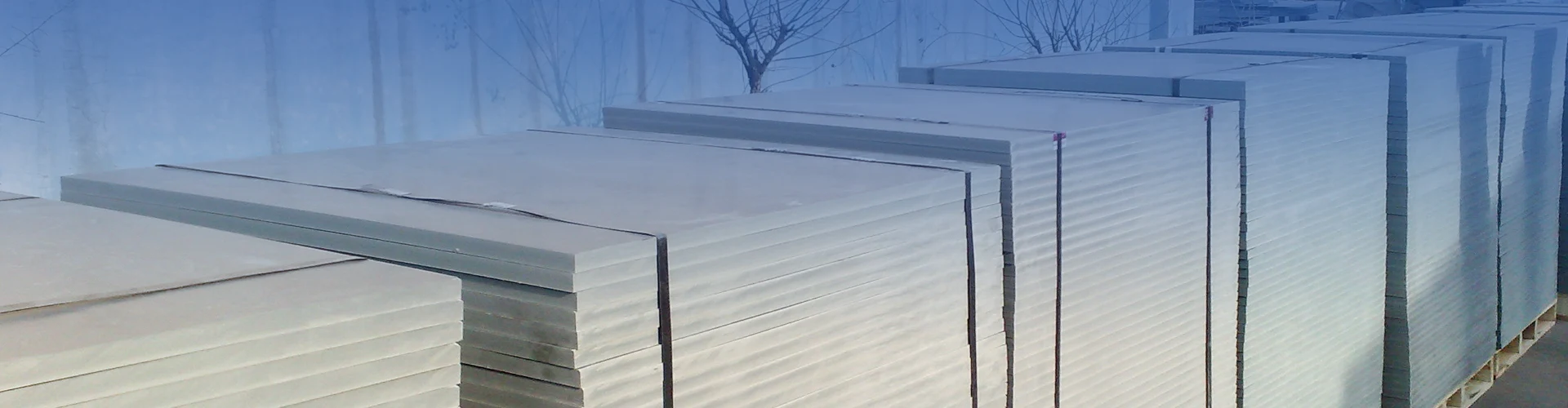
Cement Permeable Brick Machine
The Cement Permeable Brick Machine represents a specialized segment of concrete forming equipment engineered to produce high-porosity paving units that actively manage stormwater runoff while maintaining structural integrity. As urbanization intensifies and climate adaptation becomes a priority, permeable brick production has evolved from a niche application to a core capability for forward-thinking manufacturers. Our Cement Permeable Brick Machine combines high-pressure hydraulic forming with precision vibration technology to produce bricks that meet the dual performance requirements of the modern construction industry: structural strength and environmental functionality.
Forming Technology: High-Pressure Hydraulic-Vibration Synergy
The production of cement permeable bricks requires a fundamentally different approach to compaction than standard concrete masonry. Where conventional blocks require maximum density, permeable bricks must preserve interconnected void spaces while achieving adequate structural strength. Our Cement Permeable Brick Machine employs high-pressure strong vibration molding technology that resolves this apparent contradiction :
• High-pressure hydraulic system: The machine applies main pressures ranging from 600 to 800 tons, ensuring that each permeable brick achieves the compressive strength and density required for durable paving applications . This pressure level is significantly higher than standard block machines, enabling the use of lower water-cement ratios that enhance product durability.
• High-frequency vibration system: The vibration mechanism operates at 3,800–4,500 rpm, with an excitation force of up to 32kN, ensuring rapid compaction of concrete raw materials in each cycle . The high-frequency action enables material particles to achieve optimal arrangement without crushing the aggregate structure.
• Production cycle efficiency: The coordinated hydraulic-vibration system completes the forming process in 15–23 seconds per cycle, balancing productivity with quality assurance . This rapid cycle time enables daily outputs of 8,000–20,000 blocks depending on product specifications .
This technology combination produces Cement Permeable Bricks with compressive strengths exceeding 15MPa and permeability coefficients exceeding 20mm/s—meeting the stringent requirements of international permeable paving standards .
Material Formulation & Environmental Compatibility
The Cement Permeable Brick Machine is designed for material flexibility, supporting a wide range of formulations that incorporate sustainable materials:
• Primary raw materials: The machine processes crushed stone, sand, cement, fly ash, cinder, slag, gravel, and other industrial wastes . This broad compatibility enables manufacturers to optimize formulations based on local material availability and cost.
• Industrial byproduct utilization: The machine supports fly ash and slag mixing ratios of up to 40%, enabling sustainable production that reduces landfilling and supports green building certification .
• Recycled aggregate compatibility: Crushed recycled concrete and masonry waste can be incorporated into permeable brick formulations, enabling closed-loop material cycles.
• Colored surface capability: The machine supports the integration of pigments and colored surface layers. An optional face mix device can be added to produce top-color paving stones with aesthetic appeal .
This material flexibility enables manufacturers to achieve lower production costs, qualify for environmental incentives, and meet the growing demand for sustainable construction products.
Multi-Product Versatility
A key advantage of modern Cement Permeable Brick Machines is their ability to produce multiple product types through simple mold changes. The QT6-15 automatic permeable paver making machine, for example, can produce permeable pavers, hollow blocks, solid blocks, paving stones, and curb stones by changing the mold only . Supported product categories include:
| Product Type | Typical Applications | Mold Configuration |
| Permeable Pavers | Walkways, driveways, parking areas, plazas | Single-layer or two-layer molds |
| Hollow Blocks | Load-bearing walls, partitions | Cavity-forming cores |
| Solid Bricks | Masonry, facade construction | Single-cavity, full-face molds |
| Interlocking Pavers | Walkways, driveways, landscaping | Tongue-and-groove designs |
| Color-Face Pavers | Architectural paving, high-end landscaping | Face mix integration |
This multi-product capability enables manufacturers to diversify their product portfolio and respond to changing market demands without additional capital investment.
Automation & Quality Control
Modern Cement Permeable Brick Machines integrate comprehensive automation that ensures consistent quality across production runs:
• PLC control system: The machine is equipped with industrial-grade PLC control circuits that achieve full-process automation from raw material batching and transportation to finished product molding . This ensures that every permeable brick meets strict quality standards.
• Intelligent monitoring: Real-time display of operational parameters and fault codes enables rapid troubleshooting and reduces downtime. Remote diagnostic systems can further minimize service interruptions .
• Production reporting: The control system generates production logs and quality reports, providing traceability and documentation for quality certification processes.
This automation reduces labor requirements, minimizes operator-dependent variation, and ensures consistent product quality across production shifts.
Cement Permeable Brick Machines Compared
The following comparison evaluates our Cement Permeable Brick Machine against alternative production approaches:
| Parameter | Our Cement Permeable Brick Machine | Standard Block Machine | Manual Press System | Imported Premium System |
|---|---|---|---|---|
| Forming Pressure (tons) | 600–800 | 200–400 | 50–150 (operator dependent) | 600–1,000 |
| Vibration Frequency (rpm) | 3,800–4,500 (adjustable) | 2,800–4,200 | N/A (manual compaction) | 4,000–5,000 |
| Permeability Coefficient (mm/s) | >20 | N/A (standard blocks) | Limited control | >25 |
| Cycle Time (permeable pavers) | 15–23 seconds | 20–30 seconds | 40–60 seconds | 12–18 seconds |
| Material Flexibility | Standard + recycled + industrial waste | Standard aggregates only | Limited | Standard + selected waste |
| Color Face Capability | Integrated/optional | Manual layering required | Limited capability | Integrated |
| Initial Investment (USD) | $85,000–$150,000 | $60,000–$100,000 | $15,000–$30,000 | $250,000–$500,000 |
| Annual Production (perm. pavers, 8hr shift) | 3,000–6,000 m² | 2,000–3,500 m² | 500–1,200 m² | 5,000–8,000 m² |
| 5-Year Total Cost of Ownership | $185,000–$245,000 | $200,000–$270,000 | $210,000–$340,000 (labor) | $450,000–$650,000 |
Value Proposition: Our Cement Permeable Brick Machine delivers premium performance at a mid-range investment, offering the production flexibility and material versatility needed to compete in the growing permeable paving market.
Applications & Market Opportunity
The global emphasis on sustainable urban drainage systems and low-impact development has created substantial demand for Cement Permeable Brick products:
• Sponge city construction: Permeable paving is a core component of sponge city programs, with the permeability of Cement Permeable Bricks exceeding 20mm/s, far exceeding industry requirements .
• Urban infrastructure: Sidewalks, plazas, and pedestrian zones using permeable pavers are increasingly specified in municipal green infrastructure programs.
• Residential development: Driveways, patios, and walkways using permeable bricks offer homeowners aesthetic appeal combined with stormwater compliance.
• Environmental restoration: Permeable products are used in erosion control, slope stabilization, and riparian restoration projects.
Manufacturers using our Cement Permeable Brick Machine gain access to these growing markets with the production flexibility to serve multiple customer segments.
Frequently Asked Questions
Q1: What is the difference between a Cement Permeable Brick Machine and a standard block machine?
A Cement Permeable Brick Machine is specifically optimized for high-porosity products. Key differentiators include higher forming pressure (600–800 tons versus 200–400 tons), adjustable high-frequency vibration specifically tuned for permeable mixes, and compatibility with specialized aggregate gradations and admixtures.
Q2: What is the typical permeability rate achievable with this machine?
The machine produces bricks with permeability coefficients exceeding 20mm/s, meeting or exceeding ASTM C1701, BS 7533, and other international standards for permeable paving .
Q3: Can the machine produce colored Cement Permeable Bricks?
Yes. The machine supports the integration of pigments and colored surface layers. An optional face mix device can be added to produce top-color paving stones with enhanced aesthetic appeal .
Cement Permeable Brick Machine for Sustainable Production
The Cement Permeable Brick Machine is a strategic investment in the growing sustainable construction market. Our equipment delivers:
• Specialized Capability: High-pressure hydraulic-vibration technology engineered specifically for permeable product forming.
• Material Versatility: Processes standard aggregates, recycled materials, and industrial byproducts.
• Production Flexibility: Multi-product capability with rapid mold changeover.
• Market Opportunity: Access to the expanding sustainable infrastructure market with high-quality, compliant products.
Related Products


Hot Products

Industrial Grade Brick Machine Pallet
Find a huge selection of Industrial Grade Brick Machine Pallet from China at QGM/Zenith. Provide professional after-sales service and the right price, looking forward to cooperation. Industrial Grade Brick machine Pallet is an indispensable tool in masonry construction, mainly used to protect bricks and improve construction quality.
Bamboo Brick Machine Pallet
QGM/Zenith as a professional high quality Bamboo Brick Machine Pallet manufacturer, you can rest assured to buy Bamboo Brick Machine Pallet from our factory and we will offer you the after-sale service and timely delivery. Bamboo brick machine pallets are mainly used in the production process of various brick machines, especially in the use of unfired brick machines and clay brick machines.
Recycled Material Brick Board
QGM/Zenith is a professional Recycled Material Brick Boardmanufacturer and supplier in China. Recycled Material Brick Board is an auxiliary equipment used to hold up the brick embryo in the production process of the brick machine. If you interested in products, please contact with us. We follow the quality of rest assured that the price of conscience, dedicated service.
Precast Concrete Brick Machine Pallet
QGM/Zenith is one of prominent manufacturer, producer, and exporter of Precast Concrete Brick Machine Pallet in China. The pallet is usually made of high-hardness materials, such as fiberglass brick machine board, wood glue brick machine board, bamboo glue brick machine board, etc.
Block Making Machine Pallet
As one of professional manufacturer, QGM/Zenith would like to provide you high quality Block Making Machine Pallet. And we will offer you the best after-sale service and timely delivery. Block Making Machine Pallet is usually made of wood or other durable materials, and is designed with durability and stability in mind.
Block Making Machinery Pallet
As one of professional high quality Block Making Machinery Pallet manufacturer, you can rest assured to buy Block Making Machinery Pallet from QGM/Zenith and we will offer you the best after-sale service and timely delivery. Block Making Machinery Pallet is usually made of steel and wood, with a rectangular shape, usually composed of four steel pipes and four wooden boards.
- Related Blog
- Reviews