- English
- Español
- Português
- русский
- Français
- 日本語
- Deutsch
- tiếng Việt
- Italiano
- Nederlands
- ภาษาไทย
- Polski
- 한국어
- Svenska
- magyar
- Malay
- বাংলা ভাষার
- Dansk
- Suomi
- हिन्दी
- Pilipino
- Türkçe
- Gaeilge
- العربية
- Indonesia
- Norsk
- تمل
- český
- ελληνικά
- український
- Javanese
- فارسی
- தமிழ்
- తెలుగు
- नेपाली
- Burmese
- български
- ລາວ
- Latine
- Қазақша
- Euskal
- Azərbaycan
- Slovenský jazyk
- Македонски
- Lietuvos
- Eesti Keel
- Română
- Slovenski
- मराठी
- Srpski језик
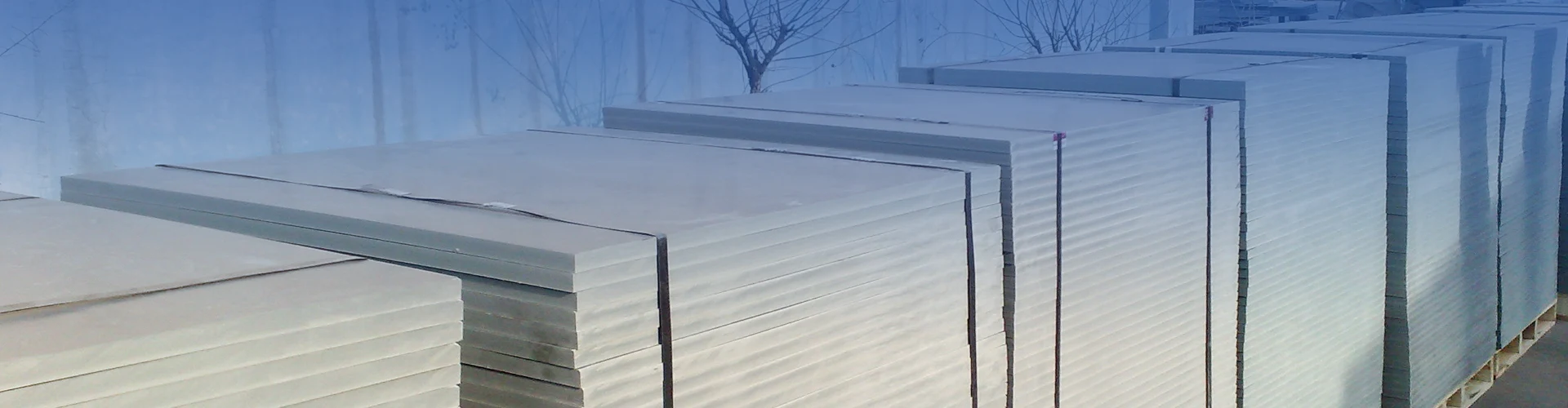
Concrete products brick machine
The Concrete Products Brick Machine is a versatile, high-performance forming system engineered for manufacturers producing a diverse range of concrete masonry products. Whether your portfolio includes curb stones, paving blocks, retaining wall units, or specialty architectural elements, this machine delivers consistent quality, operational efficiency, and long-term value across the entire product spectrum. It is designed for producers who need a single reliable platform capable of handling multiple product types without compromising quality or productivity.
What distinguishes this system is its holistic approach to the forming process. Rather than optimizing for a single product or production condition, the machine is engineered to perform reliably across the range of variables encountered in real-world production – mix variations, product geometry differences, and changing order requirements. This versatility is achieved through a combination of robust mechanical design, precision pallet engineering, and flexible control systems that adapt to the specific requirements of each production run.
Thickness Options
The choice of pallet thickness should reflect the specific requirements of your production environment. For applications with a 600kg per pallet load capacity, the following options are available:
| Steel Pallet (L×W) | Product | Load Condition | Raw Material | Thickness (mm) |
| 1400 × 1000 mm | Curb Stone | Up to 600kg | KS SS400 / DIN St 44.2 | 15 / 16 / 18 |
| 1400 × 1000 mm | Curb Stone | Up to 600kg | KS SS490 / DIN St 50.2 / DIN St 52.3 | 15 / 16 / 18 |
Pallet Material Performance
The material choice for pallets affects forming quality, operating costs, maintenance requirements, and environmental footprint. The following comparison provides a comprehensive view of steel pallet performance relative to wood and plastic alternatives:
| Parameter | Steel Pallet Performance |
| Durability | Proven resistance to impact, vibration fatigue, and environmental factors; designed for high-cycle industrial applications |
| Waste | Fully recyclable at end of life – supports circular economy and reduces landfill impact |
| End-of-life value | Scrap metal recovery provides documented financial return – a unique advantage over alternatives |
| Environmental impact | Inert material – no chemical additives, no emissions, no moisture-related degradation |
| Product strength | Excellent > Wood / Plastic – rigid support maximizes compaction and product density |
| Mold block strength | Excellent > Wood / Plastic – dimensional stability under sustained compression loads |
| Finished product appearance | Superior surface quality > Wood / Plastic – precision surface reduces texture defects |
| Elastic modulus | 200 GPa (rigid support) > Wood / Plastic – predictable deflection under load |
| Vibration transmission rate | High (enhances compaction efficiency) > Wood / Plastic – direct energy transfer to the mix |
Product Versatility
The Concrete Products Brick Machine is designed to accommodate the diverse product portfolio required by modern concrete manufacturers. This versatility is achieved through a combination of design features and operational flexibility:
• Multi-Product Capability: The machine is configured to produce a range of concrete products beyond standard curb stones. These include interlocking paving blocks, retaining wall units, hollow core blocks, solid masonry units, and custom architectural elements. The forming parameters can be adjusted to suit the specific requirements of each product type.
• Mix Design Compatibility: The machine accommodates a broad spectrum of mix formulations – from conventional cement-sand-aggregate mixes to specialized formulations incorporating supplementary cementitious materials, additives, and pigments. The efficient vibration transmission ensures consistent compaction across different mix consistencies.
• Rapid Changeover Capability: The standardized pallet system and adjustable forming parameters allow for quick transitions between product types. This is particularly valuable for manufacturers who produce multiple product lines or who need to respond quickly to changing order requirements.
• Scalability for Growth: The machine's robust construction and flexible control system make it suitable for both small-scale operations and large-scale industrial production. This scalability ensures that the machine can grow with your business, adapting to increased production volumes and expanded product portfolios.
Financial Analysis
When evaluating capital equipment, it is essential to consider the full financial picture – not just the initial purchase price but also the operating costs, maintenance requirements, and asset recovery over the equipment's lifecycle. The Concrete Products Brick Machine offers a compelling financial value proposition:
• Reduced Material Waste: The precision forming system and consistent pallet quality result in lower rejection rates, typically below 1.5%. This reduces the cost of wasted material and the labor cost associated with reprocessing or disposing of rejected products.
• Extended Asset Life: The steel pallets and robust machine construction extend the useful life of the system, reducing the frequency of capital replacement and the associated costs. For facilities with long planning horizons, this is a significant financial advantage.
• End-of-Life Recovery: The scrap metal value of steel pallets provides a documented financial return at end of life. This recovery value typically ranges from 20-30% of the original pallet cost, effectively reducing the net cost of the pallet system over its service life.
• Lower Operating Costs: The reduced maintenance requirements and extended service intervals associated with the machine result in lower operating costs over its lifetime. This is particularly valuable for facilities with tight operating budgets or high labor costs.
Comparative Positioning – Industry Context
The concrete products equipment market includes a wide range of solutions, each with different capabilities and value propositions. The following comparison provides a structured overview of how the Concrete Products Brick Machine compares to typical alternatives:
| Evaluation Dimension | Concrete Products Brick Machine | Full-Automatic Premium Systems | Semi-Automatic & Manual Equipment |
| Product Range Capability | Broad – curb stones, blocks, pavers, retaining units | Moderate – often optimized for single product type | Limited – manual changeover required for different products |
| Pallet Dimensional Tolerance | ±0.5 mm | ±1.5-2.0 mm | ±3.0-5.0 mm |
| Stress Relief Process | Standard – both axes | Often omitted | Never performed |
| Pallet Inspection Method | 100% automated verification | Random sampling (10-20%) | Visual inspection |
| Material Grades Available | 5 standard grades | 1-2 grades | Single grade only |
| Edge Processing Standard | Robotic + brushing/pressing | Robotic only | Manual deburring |
| Expected Pallet Service Life | 3-5 years | 1.5-2.5 years | 8-14 months |
| Typical Rejection Rate | < 1.5% | 3-5% | 6-10% |
| Maintenance Interval | Extended – reduced component wear | Standard – regular service required | Frequent – manual adjustments needed |
| End-of-Life Recovery Value | 20-30% of pallet cost | 5-10% (mixed steel grades) | 0-5% (low-grade material) |
| Changeover Time Between Products | Rapid – parameter adjustment only | Moderate – some reconfiguration required | Extended – manual changes and setup |
Operational Considerations
The successful operation of any concrete forming machine depends on factors beyond the equipment itself. The Concrete Products Brick Machine is designed to be compatible with the real-world conditions of production facilities:
• Facility Requirements: The machine has a compact footprint and can be integrated into most production facilities with standard overhead clearance and utility connections. Specific installation requirements are documented and can be reviewed during the planning phase.
• Power and Utility Requirements: The machine operates on standard three-phase power and requires compressed air for certain functions. Detailed utility specifications are available for facility planning purposes.
• Maintenance Infrastructure: The machine's straightforward design allows for in-house maintenance by qualified technicians. Spare parts availability and technical support ensure that maintenance interventions are efficient and effective.
• Operator Skill Requirements: The control system is designed for ease of use, with clear interfaces and logical operation. Most operators become proficient with the basic functions within a short period, with advanced capabilities available for those with additional training.
Frequently Asked Questions
Q1: What types of concrete products can this machine produce?
A: The Concrete Products Brick Machine is designed to produce a wide range of concrete products including curb stones, paving blocks, retaining wall units, hollow core blocks, solid masonry units, and custom architectural elements. Product-specific parameters can be adjusted through the control system to achieve optimal forming conditions for each product type.
Q2: How does the machine handle different mix designs?
A: The machine accommodates a broad spectrum of mix designs – from standard cement-sand-aggregate mixes to specialized formulations with additives, pigments, and supplementary cementitious materials. The vibration parameters can be adjusted to achieve optimal compaction for the specific mix formulation being used.
Q3: What is the typical learning curve for operators?
A: Most operators with experience in concrete forming equipment can become proficient with the machine's basic functions within 2-3 shifts. Comprehensive training is provided as part of the installation process, with ongoing support available for advanced features and optimization techniques.
Related Products


Hot Products

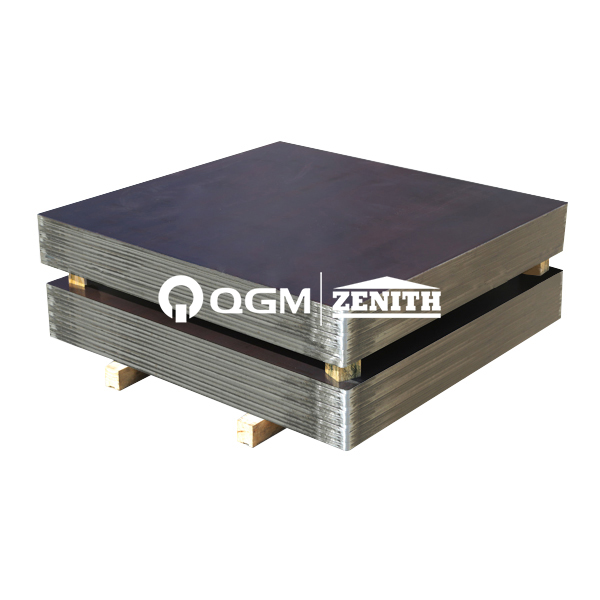
Cement Brick Machine Pallet
QGM/Zenith warmly welcome you to buy Cement Brick Machine Pallet from our factory. Our products are CE certified and currently have a large amount of factory inventory. We will provide you with good service and factory prices.
Solid Wood Brick Machine Pallet
With years of experience in production Solid Wood Brick Machine Pallet, QGM/Zenith can supply a wide range of Solid Wood Brick Machine Pallet. High quality product can meet many applications, if you need, please get our online timely service about product. In addition to the product list below, you can also customize your own unique product according to your specific needs.
Industrial Grade Brick Board
QGM/Zenith is a professional Industrial Grade Brick Board manufacturer and supplier in China, you can rest assured to buy Industrial Grade Brick Board from our factory and we will offer you the best after-sale service and timely delivery.These pallets play a vital role in brick machine production, which can effectively reduce the wear of the board body and improve production efficiency and product quality.
Durable Concrete Block Board
QGM/Zenith warmly welcome you to buy high quality Durable Concrete Block Board from our factory. We will provide you with good service.Common durable concrete block pallets include light steel brick machine pallets and bamboo glue brick machine pallets.
Block Machines Pallet
You can purchase Block Machines Pallet from QGM/Zenith with confidence, as we are a proficient producer of high-quality Block Machines Pallet. We promise to provide you with the best after-sale service and prompt delivery. It is usually made of steel and wood. It has a rectangular shape and consists of four steel pipes and four wooden boards.
High-Capacity Block Machine Pallet
You are welcomed to come to our factory to buy the latest selling, low price, and high-quality High-Capacity Block Machine Pallet, QGM/Zenith looks forward to cooperating with you. It is made of high-quality thermoplastic polypropylene (PP) and can withstand high-density concrete materials and vibrations. It is also corrosion-resistant and durable, and can provide efficient production.
- Related Blog
- Reviews