- English
- Español
- Português
- русский
- Français
- 日本語
- Deutsch
- tiếng Việt
- Italiano
- Nederlands
- ภาษาไทย
- Polski
- 한국어
- Svenska
- magyar
- Malay
- বাংলা ভাষার
- Dansk
- Suomi
- हिन्दी
- Pilipino
- Türkçe
- Gaeilge
- العربية
- Indonesia
- Norsk
- تمل
- český
- ελληνικά
- український
- Javanese
- فارسی
- தமிழ்
- తెలుగు
- नेपाली
- Burmese
- български
- ລາວ
- Latine
- Қазақша
- Euskal
- Azərbaycan
- Slovenský jazyk
- Македонски
- Lietuvos
- Eesti Keel
- Română
- Slovenski
- मराठी
- Srpski језик
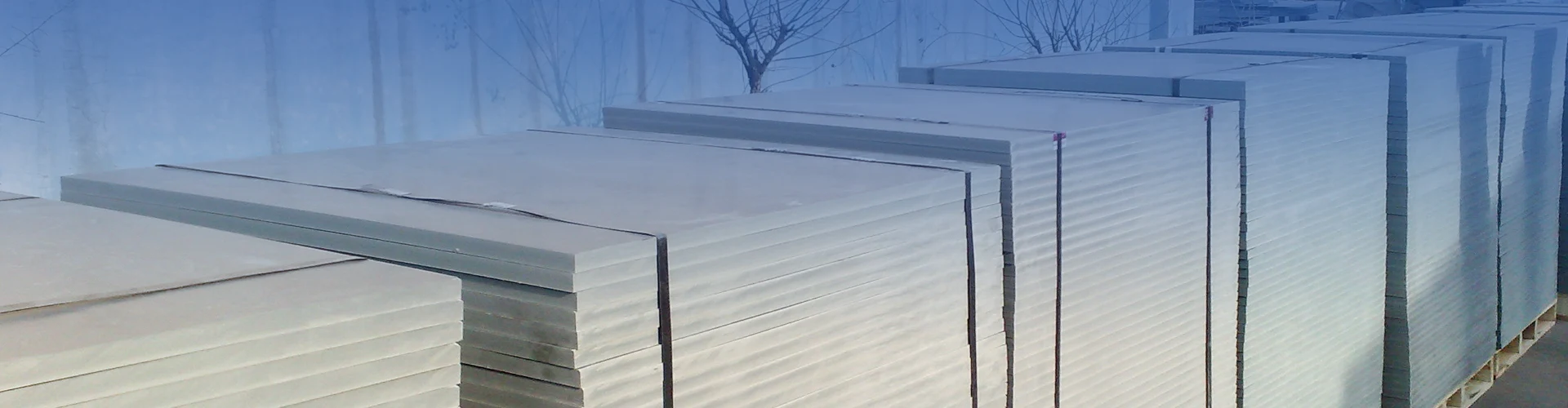
Concrete Brick Making Machine
Our Concrete Brick Making Machine integrate advanced hydraulic forming technology with high-efficiency vibration systems to deliver superior product quality and exceptional production output. Designed for the manufacture of hollow blocks, solid bricks, pavers, and curb stones, this equipment enables consistent, high-density concrete products with minimal manual intervention. Whether you are establishing a new production line or upgrading existing facilities, our machines provide the reliability and performance needed for modern construction material production.
Key Equipment Features
Our Concrete Brick Making Machine are engineered with precision components and advanced control systems to ensure optimal performance. Key technical features include:
• PLC Intelligent Control: Equipped with Siemens PLC systems and visualization touch screens, the machine enables precise control over the entire production process. The dialogue between human and machine simplifies operation while ensuring consistent product quality.
• Hydraulic & Vibration Combination: The integration of hydraulic pressure with high-frequency vibration ensures superior material compaction. The vibration table features dynamic and static table design, guaranteeing optimal amplitude for high-density, high-strength concrete products.
• Frequency Conversion Control: Advanced frequency conversion technology enables precise synchronization between the tamping head and mold, preventing product deformation while improving production efficiency by approximately 30% compared to conventional systems.
• Precision Pallet System: Our machines utilize high-strength steel or composite pallets with precise dimensional tolerances (up to ±0.5mm) to ensure flatness and durability. Pallet sizes are customizable based on production requirements, with common dimensions including 850×680mm, 860×680mm, and 1100×950mm.
Production Specifications
Our Concrete Brick Making Machine deliver impressive output capacities across a range of product types. The table below illustrates typical production capabilities:
| Product Type | Size (mm) | Pieces per Cycle | Output per Hour | Output per 8-Hour Shift |
| Hollow Block | 400×200×200 | 8–10 | 1,440–1,920 | 11,520–15,360 |
| Solid Brick | 240×115×53 | 42 | 10,080 | 80,640 |
| Paving Block | 200×100×60 | 28–36 | 5,040–8,640 | 40,320–69,120 |
| Curb Stone | Custom | Varies | Up to 14,400 | Up to 115,200 |
Characteristic Comparison
| Parameter | Automatic Hydraulic Machine | Semi-Automatic Machine | Manual Machine |
| Production Speed | 15–25 sec/cycle, high output | Moderate output | 40–60 sec/cycle, low output |
| Labor Requirement | 2–4 operators per shift | 4–6 operators per shift | 5–8 operators per shift |
| Quality Consistency | Very high (PLC-controlled) | Moderate | Variable, operator-dependent |
| Initial Investment | High | Medium | Low |
| Cost per Block | Lowest (cement savings + labor reduction) | Medium | Highest (more cement waste + breakage) |
| Maintenance Requirement | Scheduled checks on hydraulics & electrical | Moderate | Simple, low cost |
| Product Range | Extensive (interchangeable molds) | Moderate | Limited |
Competitive Advantages Over Industry Alternatives
When selecting a concrete brick making machine, manufacturers must balance upfront costs against long-term operational efficiency. The following comparison demonstrates how our automatic hydraulic machines outperform semi-automatic and manual alternatives across critical performance metrics:
| Comparison Factor | Our Automatic Hydraulic Machine | Semi-Automatic Machine | Manual Machine |
|---|---|---|---|
| Cement Usage Efficiency | Optimized (consistent pressure reduces waste) | Moderate | High waste (inconsistent compaction) |
| Breakage Rate | <1% (precision demolding) | 3–5% | 8–12% |
| Energy Consumption per 1,000 Blocks | Low–Medium (spread over high volume) | Medium | Very low (manual labor) |
| Operational Skill Requirement | Basic computer/PLC training | Medium skill | Physical labor, low technical skill |
| Product Consistency (Density/Strength) | ±2% tolerance | ±5–8% tolerance | ±15% tolerance |
| Scrap Value / End-of-Life | Machine and pallets fully recyclable | Partial recyclability | Limited |
| Total Cost of Ownership (5 years) | Lowest (cement savings + labor reduction) | Medium | High (labor + material waste) |
Real-World Application: Success in Large-Scale Production
Our Concrete Brick Making Machine have been deployed across diverse production environments worldwide. One notable case involves a medium-sized block factory in Southeast Asia that upgraded from semi-automatic to our fully automatic QT8-15 system. The results over 12 months of operation demonstrate the transformative impact of advanced equipment:
• Production capacity increase: Daily output of hollow blocks rose from 8,000 to over 15,000 units—an 87% improvement—enabling the factory to fulfill larger construction contracts without expanding floor space.
• Labor cost reduction: Operator requirements decreased from 8 workers per shift to just 3, significantly reducing payroll expenses while improving worker safety through automated pallet handling and demolding.
• Material savings: The machine's precision hydraulic system reduced cement consumption by approximately 12% per block while maintaining the same compressive strength (achieving ≥15MPa), directly improving profit margins.
• Product expansion: Using interchangeable molds, the factory diversified from producing only hollow blocks to offering pavers, curb stones, and solid bricks—opening new revenue streams with minimal additional investment.
This real-world case demonstrates that investing in our Concrete Brick Making Machine is not merely a capital expenditure but a strategic decision that directly enhances production capacity, product quality, and long-term profitability.
FAQ
Q1: What types of bricks can be produced with this machine?
A: By changing molds, our Concrete Brick Making Machine can produce a wide range of products: hollow blocks (400×200×200mm, 400×150×200mm, etc.), solid bricks (240×115×53mm), paving blocks, curb stones, grass pavers, and slope protection blocks. Custom molds are available for specialized applications.
Q2: What is the typical service life of the machine?
A: With regular maintenance and proper operation, our machines typically serve 8–15 years. Key components such as the mold frame (manufactured from 55# manganese steel) undergo heat treatment achieving hardness up to HRC 58–60, extending mold life to approximately 10,000 cycles.
Q3: What raw materials are compatible with this machine?
A: The machine processes a wide range of materials including crushed stone, sand, cement, fly ash, cinder, slag, coal gangue, and other industrial waste materials. This versatility supports both traditional and eco-friendly concrete formulations.
Q4: How many workers are needed to operate the machine?
A: Fully automatic machines typically require 2–4 operators per shift for task including mixing control, panel monitoring, pallet handling, and quality inspection. This represents a significant labor saving compared to semi-automatic (4–6 workers) or manual machines (5–8 workers).
Summary Advantages for Buyers
Choosing our Concrete Brick Making Machine provides a strategic advantage for your production facility:
• Superior Product Quality: Advanced hydraulic and vibration systems ensure consistent density, strength, and dimensional accuracy across all products, reducing defects and enhancing customer satisfaction.
• Operational Excellence: PLC automation reduces reliance on manual labor, minimizes human error, and enables continuous, high-volume production with minimal supervision.
• Lower Total Cost of Ownership: The combination of material savings (cement optimization), reduced labor requirements, and durable construction delivers exceptional long-term value compared to semi-automatic and manual alternatives.
• Future-Ready Flexibility: Interchangeable molds enable rapid product diversification, allowing manufacturers to respond quickly to changing market demands and expand their product portfolio without additional capital investment.
Related Products


Hot Products

Heavy-Duty Brick Machine Pallet
QGM/Zenith is a professional China Heavy-Duty Brick Machine Pallet manufacturer and supplier, if you are looking for the Heavy-Duty Brick Machine Pallet, It plays an important role in building logistics and has strong load-bearing capacity and wear resistance.
Solid Wood Brick Machine Pallet
With years of experience in production Solid Wood Brick Machine Pallet, QGM/Zenith can supply a wide range of Solid Wood Brick Machine Pallet. High quality product can meet many applications, if you need, please get our online timely service about product. In addition to the product list below, you can also customize your own unique product according to your specific needs.
Bamboo Brick Machine Pallet
QGM/Zenith as a professional high quality Bamboo Brick Machine Pallet manufacturer, you can rest assured to buy Bamboo Brick Machine Pallet from our factory and we will offer you the after-sale service and timely delivery. Bamboo brick machine pallets are mainly used in the production process of various brick machines, especially in the use of unfired brick machines and clay brick machines.
Block Machinery Pallet
High quality Block Machinery Pallet is offered by China manufacturer QGM/Zenith. It is usually made of steel and wood. It has a rectangular shape and consists of four steel pipes and four wooden boards. It has a stable structure and strong carrying capacity.
Block Machines Pallet
You can purchase Block Machines Pallet from QGM/Zenith with confidence, as we are a proficient producer of high-quality Block Machines Pallet. We promise to provide you with the best after-sale service and prompt delivery. It is usually made of steel and wood. It has a rectangular shape and consists of four steel pipes and four wooden boards.
High-Capacity Block Machine Pallet
You are welcomed to come to our factory to buy the latest selling, low price, and high-quality High-Capacity Block Machine Pallet, QGM/Zenith looks forward to cooperating with you. It is made of high-quality thermoplastic polypropylene (PP) and can withstand high-density concrete materials and vibrations. It is also corrosion-resistant and durable, and can provide efficient production.
- Related Blog
- Reviews