- English
- Español
- Português
- русский
- Français
- 日本語
- Deutsch
- tiếng Việt
- Italiano
- Nederlands
- ภาษาไทย
- Polski
- 한국어
- Svenska
- magyar
- Malay
- বাংলা ভাষার
- Dansk
- Suomi
- हिन्दी
- Pilipino
- Türkçe
- Gaeilge
- العربية
- Indonesia
- Norsk
- تمل
- český
- ελληνικά
- український
- Javanese
- فارسی
- தமிழ்
- తెలుగు
- नेपाली
- Burmese
- български
- ລາວ
- Latine
- Қазақша
- Euskal
- Azərbaycan
- Slovenský jazyk
- Македонски
- Lietuvos
- Eesti Keel
- Română
- Slovenski
- मराठी
- Srpski језик
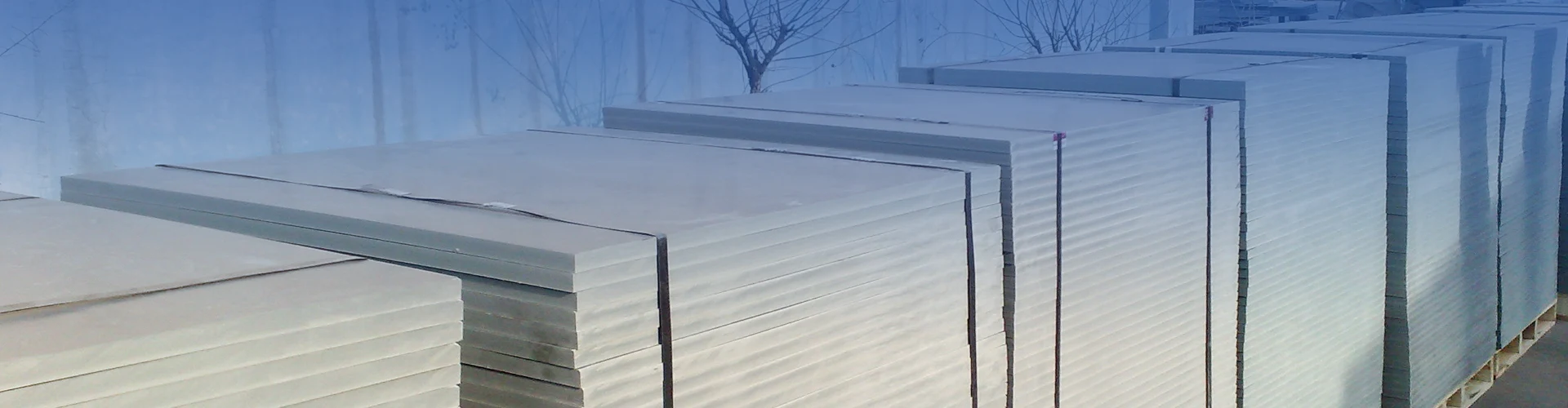
Brick Free Machine
The Brick Free Machine represents a practical, field-tested solution for non-burning brick production. Developed for manufacturers who prioritize uptime, product uniformity, and manageable operating costs, this forming system integrates a heavy-duty vibration unit with a dimensionally stable steel pallet platform. The result is a production line that consistently delivers high-quality curb stones and concrete masonry units while minimizing material waste and energy consumption.
Where many forming systems require frequent recalibration and component replacement, the Brick Free Machine is designed with simplicity and robustness in mind. Its mechanical layout reduces points of failure, while the precision-engineered pallet system ensures that every cycle – from the first to the ten-thousandth – produces parts that meet specification. This focus on reliability translates to predictable output, easier planning, and a lower total cost of ownership over the equipment's lifetime.
Core Component
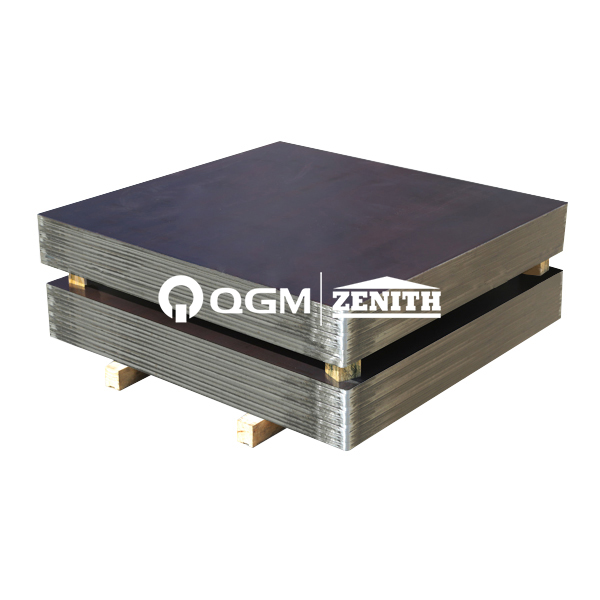
The steel pallet is the critical interface between the machine's forming energy and the concrete mix. Its dimensional stability, surface quality, and resistance to fatigue directly influence both the quality of the finished product and the efficiency of the production process. Our pallets are manufactured with a focus on the following performance characteristics:
• CNC-Certified Dimensional Control: Utilizing aerated bidirectional linear cutting technology, each pallet is produced to exact length, width, and diagonal specifications. This level of precision ensures consistent product geometry across the entire production run, eliminating the need for post-forming corrections.
• Automated Edge Profiling: Robotic systems perform smoothing and polishing operations on all four corners, followed by a steel-brushing and pressing sequence. This produces edges that are clean, uniform, and safe – reducing handling risks and minimizing wear on adjacent forming components.
• Residual Stress Management: Tensile stresses introduced during cutting are systematically relieved in both horizontal and vertical planes. This engineering step is essential for preventing pallet deformation during the vibration cycle, which is a leading cause of product cracking and surface imperfections.
• Flatness Verification Protocol: A two-stage correction process ensures that each pallet achieves the required flatness specification. This is followed by 100% automated inspection, guaranteeing that every pallet entering the production line meets the same standard of dimensional accuracy.
Thickness Selection Guide – Matching Pallet to Application
The choice of pallet thickness is not a one-size-fits-all decision. It should be based on a careful evaluation of product weight, mix characteristics, production intensity, and expected service life. For curb stone production with a maximum load of 600kg per pallet, the following thickness options are available. Each option represents a different balance of initial cost and long-term durability:
| Steel Pallet (L×W) | Product | Load Condition | Raw Material | Thickness (mm) |
| 1400 × 1000 mm | Curb Stone | Up to 600kg | KS SS400 / DIN St 44.2 | 15 / 16 / 18 |
| 1400 × 1000 mm | Curb Stone | Up to 600kg | KS SS490 / DIN St 50.2 / DIN St 52.3 | 15 / 16 / 18 |
Comparative Analysis – Steel's Advantages Over Conventional Materials
The selection of pallet material has implications that extend far beyond initial purchase price. Steel offers a combination of mechanical, economic, and environmental benefits that wood and plastic alternatives cannot match:
| Parameter | Steel Pallet Performance |
| Durability | Exceptional resistance to impact, vibration-induced fatigue, and environmental exposure; proven performance in high-cycle applications |
| Waste | 100% recyclable – supports circular economy principles and zero-waste production targets |
| End-of-life value | Scrap metal recovery provides a financial return, offsetting a portion of the original investment |
| Environmental impact | Chemically inert – no off-gassing, no moisture absorption, no susceptibility to biological degradation |
| Product strength | Excellent > Wood / Plastic – rigid support translates to higher green strength immediately after forming |
| Mold block strength | Excellent > Wood / Plastic – maintains structural integrity under sustained compaction forces |
| Finished product appearance | Superior surface quality > Wood / Plastic – clean edges, smooth faces, minimal surface defects |
| Elastic modulus | 200 GPa (rigid support) > Wood / Plastic – minimizes deflection and maximizes energy transfer efficiency |
| Vibration transmission rate | High (enhances compaction efficiency) > Wood / Plastic – optimal energy coupling to the mix |
Total Cost of Ownership
When evaluating capital equipment, the initial purchase price is only one factor in the overall economic equation. The Brick Free Machine delivers value over its entire service life through a combination of factors that reduce operating expenses and preserve asset value:
• Extended Pallet Service Intervals: The precision engineering and stress-relief processes incorporated into our steel pallets extend their useful life to 3-5 years under normal operating conditions. This compares favorably with standard pallets, which often show signs of deformation within 12-18 months, necessitating earlier replacement and increasing per-unit production costs.
• Quality Consistency Across Production Runs: Because our pallets maintain their flatness and dimensional stability over time, product quality remains consistent throughout the pallet's service life. This reduces the variability that often leads to product rejection, rework, or customer complaints – all of which add hidden costs to the production process.
• Asset Recovery at End of Life: Unlike wood or plastic pallets, which typically have zero or negative disposal value, our steel pallets retain significant scrap value. This provides a financial credit at the end of their service life, effectively reducing the net cost of ownership.
• Reduced Maintenance Burden: The precision finishing of our pallets reduces wear on the machine's vibration mechanisms and positioning systems. This translates to lower spare parts consumption, longer intervals between scheduled maintenance, and reduced technician labor costs over the equipment's lifetime.
Regulatory Compliance and ESG Alignment
The Brick Free Machine is designed to support your facility's compliance with current and anticipated environmental regulations.
• No Chemical Hazard: The steel pallet system requires no chemical treatments, preservatives, or coatings that could trigger regulatory reporting or handling requirements. This simplifies compliance with hazardous materials regulations and reduces the burden on your environmental management systems.
• Disposal Documentation: At end of life, steel pallets can be documented as recycled material, supporting your facility's sustainability reporting and ESG disclosures. The scrap value provides clear financial documentation of the recycling outcome.
• Energy Efficiency: The efficient vibration transmission through steel pallets reduces the energy required per unit of production. This supports your facility's energy management objectives and can contribute to lower Scope 2 emissions under greenhouse gas reporting frameworks.
• Waste Reduction: By extending pallet service life and ensuring product quality with fewer rejections, the system contributes to waste reduction goals. This supports compliance with waste management regulations and can reduce disposal costs.
Frequently Asked Questions
Q1: What production volumes is the Brick Free Machine best suited for?
A: The machine is designed to accommodate a wide range of production volumes – from single-shift operations producing a few hundred units per day, to multi-shift operations running continuously. The robust construction and durable steel pallets ensure consistent performance regardless of production intensity, making the system suitable for both small-scale producers and large industrial facilities.
Q2: How does the machine handle changes in mix formulation?
A: The efficient vibration transmission through the steel pallet system allows the machine to accommodate a broad spectrum of mix designs – from relatively dry mixes to those with higher moisture content. For significant changes in mix formulation, the vibration parameters can be adjusted to achieve optimal compaction. Our technical team can provide guidance on parameter tuning for your specific mix design.
Q3: What is the typical lead time for pallet replacement?
A: While our pallets are designed for extended service life, we maintain an inventory of standard-size pallets to ensure rapid replacement when needed. For custom sizes or special configurations, typical lead times range from 4-6 weeks, depending on the specific requirements and order quantity.
Q4: Can the machine be integrated with automated material handling systems?
A: Yes, the Brick Free Machine is designed with integration flexibility in mind. It can be interfaced with automated pallet feeding systems, product take-off conveyors, and downstream packaging or stacking equipment. Our engineering team can assist with integration planning and provide the necessary interface specifications.
Related Products


Hot Products

Industrial Grade Brick Machine Pallet
Find a huge selection of Industrial Grade Brick Machine Pallet from China at QGM/Zenith. Provide professional after-sales service and the right price, looking forward to cooperation. Industrial Grade Brick machine Pallet is an indispensable tool in masonry construction, mainly used to protect bricks and improve construction quality.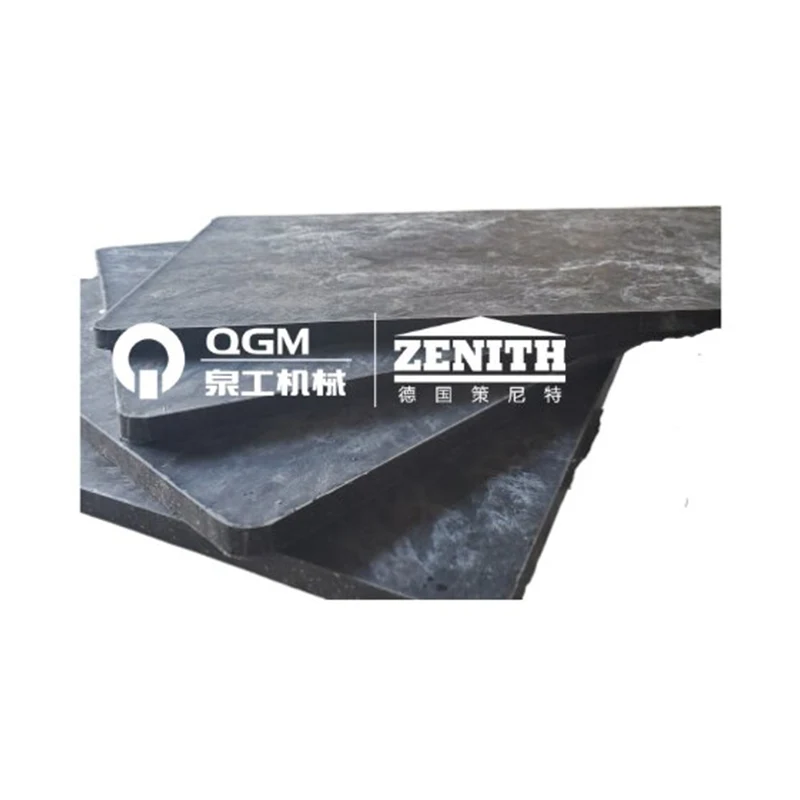
Paver Block Making Machine Pallet
High quality Paver Block Making Machine Pallet is offered by China manufacturer QGM/Zenith. Buy Paver Block Making Machine Pallet which is of high quality directly. It is usually located at the front of the manufacturing machine and is responsible for receiving, temporarily storing and evenly laying the materials on the road surface.
Automated Block Machine Board
As the professional manufacturer, QGM/Zenith would like to provide you Automated Block Machine Board. And QGM/Zenith will offer you the after-sale service and timely delivery. Automated Block Machine BoardIn the process of producing blocks, the pallet provides a stable support plane for the blocks.
Green Building Block Brick Machine Pallet
QGM/Zenith is one of professional China Green Building Block Brick Machine Pallet manufacturer and supplier, The quality and performance of the pallet directly affect the production efficiency and product quality. consult us now!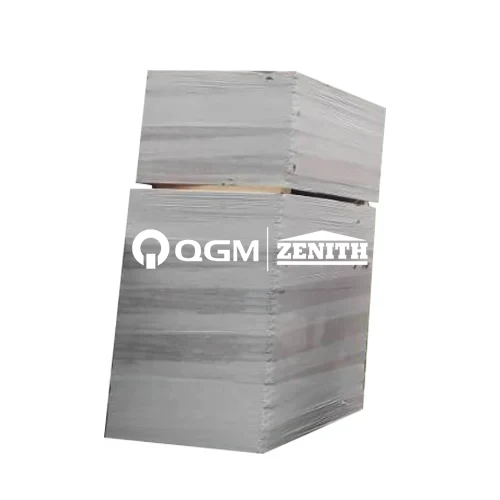
High Strength Concrete Brick Pallet
QGM/Zenith is one of China manufacturer & supplier who mainly produces High Strength Concrete Brick Pallet with many years of experience. Hope to build business relationship with you. It is usually composed of a steel frame and a reinforced steel plate. It has a high load-bearing capacity and good mechanical properties, and can effectively protect bricks from damage during transportation.
Cement Block Molding Machine Pallet
The producers of QGM/Zenith in China offer high-quality products, you are welcome to purchase straight high-quality Cement Block Molding Machine Pallet at a good price. It is mainly used to carry and fix cement blocks to ensure their stability and accuracy during the forming process.
- Related Blog
- Reviews