- English
- Español
- Português
- русский
- Français
- 日本語
- Deutsch
- tiếng Việt
- Italiano
- Nederlands
- ภาษาไทย
- Polski
- 한국어
- Svenska
- magyar
- Malay
- বাংলা ভাষার
- Dansk
- Suomi
- हिन्दी
- Pilipino
- Türkçe
- Gaeilge
- العربية
- Indonesia
- Norsk
- تمل
- český
- ελληνικά
- український
- Javanese
- فارسی
- தமிழ்
- తెలుగు
- नेपाली
- Burmese
- български
- ລາວ
- Latine
- Қазақша
- Euskal
- Azərbaycan
- Slovenský jazyk
- Македонски
- Lietuvos
- Eesti Keel
- Română
- Slovenski
- मराठी
- Srpski језик
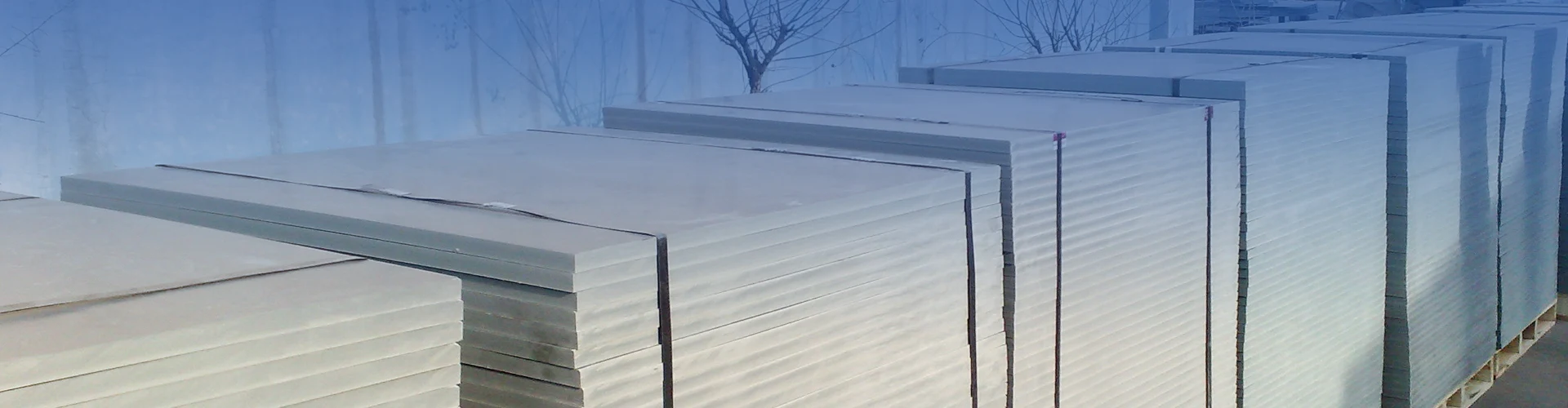
Cement Brick Machinery Mold
In the production of cement bricks, the mold is not merely a forming cavity—it is the interface where material science, mechanical engineering, and process control converge. A Cement Brick Machinery Mold is a precision-engineered component that must withstand the combined forces of high-pressure hydraulic compaction, high-frequency vibration, and the abrasive wear of cementitious materials. Unlike molds used in other forming processes, cement brick molds are designed specifically for the rheological characteristics of wet cement mixes, where precise control over material flow, compaction, and demolding directly affects product quality and production efficiency. This mold is engineered to maximize the service life of the forming equipment while delivering consistent, dimensionally accurate cement blocks.
Functional Role: The Mold as the Primary Quality Filter
The Cement Brick Machinery Mold is the interface between the machine's energy and the material's final form. Its role is straightforward but consequential: it creates the external geometry of the block, defines the internal cavity structure (if hollow), and determines the surface finish of the finished product.
In practical terms, the mold performs three functions during each production cycle:
First, material containment. During the filling phase, the mold cavity holds the concrete mixture in the desired shape while the feed car delivers material and the vibration table begins compaction. If the mold geometry is imprecise, material distribution becomes uneven, leading to inconsistent block density.
Second, energy transmission. The mold transmits compaction force from the press head and vibration energy from the table into the material. This is not passive—the mold's rigidity directly affects how much of that energy reaches the mix. A flexible or worn mold absorbs energy that should be compacting the block.
Third, demolding. After compaction, the mold must release the green block cleanly without damaging its edges or surfaces. This is where mold surface finish, draft angles, and release agent compatibility become critical.
Each of these functions affects product quality independently. A mold that performs well in containment but poorly in demolding will produce blocks with surface defects. A mold that transmits energy unevenly will produce blocks with density variation. The Cement Brick Machinery Mold is designed to perform all three functions reliably across thousands of cycles.
Material and Wear Mechanisms: Why Molds Fail
Mold failure is rarely sudden. It is almost always the result of gradual wear mechanisms that, if understood, can be anticipated and managed.
Abrasive wear. Cement mixes contain silica sand, crushed stone, and other abrasive aggregates. Every cycle, these particles slide against the mold surface, gradually removing material. The rate of wear depends on the aggregate type, particle size, and the mold material's hardness. Standard carbon steel molds in high-volume production can show measurable wear within the first 50,000 cycles.
Impact wear. During compaction, the press head impacts the material surface, transmitting force through the mix to the mold walls. This repeated impact causes surface fatigue, which can lead to cracking or spalling at the mold edges.
Chemical corrosion. Cement mixes are alkaline. The pore water in the concrete has a pH of 12–13, which can slowly degrade unprotected steel surfaces. While the mold cavity is typically washed between shifts, residual moisture trapped in corners accelerates corrosion.
The Cement Brick Machinery Mold addresses each of these wear mechanisms through specific material and treatment choices:
The mold is fabricated from high-grade alloy steels (typically chromium-molybdenum or nickel-chromium-molybdenum alloys), not because they are expensive, but because they provide the optimal combination of hardness, toughness, and corrosion resistance. These materials are then heat-treated to relieve internal stresses from machining, after which the working surfaces are hardened to extend wear life. Some applications also receive wear-resistant coatings that reduce friction and provide a secondary barrier against abrasive wear and corrosion.
The difference between a mold that lasts 300,000 cycles and one that lasts 700,000 cycles is not luck—it is the material selection and the quality of heat treatment.
Compatibility Constraints: Matching the Mold to the Machine and the Mix
Choosing the right mold involves more than selecting the correct block dimensions. The mold must be compatible with the machine's mounting system, the material feed system, and the specific cement formulation being used.
Machine interface compatibility. The mold must fit the machine's mold frame with precision. This involves the mounting hole pattern, the alignment pins, and the clamping system. Incompatibility at this level leads to misalignment, uneven wear, and ultimately, the product quality issues.
Compaction parameter compatibility. Different cement formulations require different compaction parameters. A mix with high fly ash content compacts differently from a straight Portland cement mix. The mold design—specifically its draft angles and surface finish—must be appropriate for the intended mix. For stiffer mixes, tighter tolerances may be needed; for wetter mixes, release properties become more important.
Temperature and moisture exposure. The mold operates in an environment where it is repeatedly exposed to moisture, washed down between shifts, and subjected to temperature variations. The mold material's dimensional stability under these conditions matters. Materials that expand or contract significantly with temperature changes can cause product dimension drift across shifts.
Maintenance: The Lever for Mold Life
Mold maintenance is not a separate activity—it is the lever that determines whether the mold reaches its design life or falls short. Most mold failures are preventable through proper maintenance, and most premature mold replacements are the result of maintenance practices that are either insufficient or incorrectly applied.
Cleaning. Concrete residue on the mold surface is abrasive. Every subsequent cycle, that residue acts as a grinding compound against the mold walls. The Cement Brick Machinery Mold is designed to be cleaned thoroughly between shifts. The key is not the frequency of cleaning, but the thoroughness—residue left in corners or around core pins will accelerate localized wear.
Release agent application. Consistent application of release agent, using the correct type and quantity, prevents concrete adhesion and reduces demolding friction. Over-application is as problematic as under-application—excess release agent can migrate into the concrete surface, affecting the block's appearance.
Dimensional verification. The mold cavity dimensions should be checked periodically with calibrated gauges. This is not about catching catastrophic failure—it is about detecting gradual wear before it affects product quality. When a mold is 0.1 mm out of specification, you are still producing blocks that look acceptable. When it is 0.3 mm out of specification, you are producing rejects. The difference is being able to predict replacement timing rather than reacting to rejected blocks.
Component inspection and replacement. The mold's wearable components—core pins, ejector pins, and wear plates—can be replaced individually, extending the overall mold life significantly. Replacing a core pin that is worn is far less expensive than replacing the entire mold when the core pin failure damages the cavity.
The Integration with the Pallet System
The Cement Brick Machinery Mold functions in conjunction with the pallet system that forms the bottom of the molding cavity. The pallet—a flat, rigid platform mounted on the vibration table—must maintain flatness and alignment with the mold.
The Multipurpose Block Machine Pallet addresses this with a motorized adjustment system: a motor within the pallet body drives a threaded shaft that enables precise vertical adjustment of the pallet surface. This is not a convenience feature—it is essential for maintaining the gap between the mold and the pallet, which directly affects material containment during filling and prevents leakage at the mold-pallet interface.
When the pallet height is incorrect, material can escape, or the mold can be damaged by contact with the pallet during compaction. The motorized adjustment allows operators to accommodate different mold heights and to compensate for pallet wear over time.
Common Questions
Q: What is the first sign that a mold is wearing out?
The first sign is usually not dimensional deviation—it is a change in the demolding behavior. The blocks become progressively harder to eject, or the surface finish on the blocks deteriorates. This is caused by wear on the draft angles and surface finish. If you notice increased demolding resistance, inspect the mold before it affects block dimensions.
Q: Does the same mold work for different cement formulations?
Yes, but the performance may vary. A mold optimized for a standard Portland cement mix may not release as cleanly with a high-fly-ash mix, which tends to be stickier. If you produce multiple mix types, consider whether you need different mold surface treatments for different formulations. For high-volume production of different mixes, dedicated molds may be justified.
Q: Does mold material selection really affect service life?
Yes. Test data across multiple production facilities shows that high-grade alloy steel molds with proper heat treatment consistently achieve 500,000–800,000 cycles, while standard carbon steel molds are typically retired at 200,000–300,000 cycles. The difference is not incremental—it is a factor of 2 to 3. The material cost is a small fraction of the total mold cost; the material selection is the primary determinant of service life.
Q: Can the same mold be used on different machine models?
Not directly. The mounting interface, clamping system, and alignment pin locations vary between machine models. However, molds are typically designed for specific machine model series. If you operate multiple machine models, confirm mold compatibility before ordering. Custom mounting adapters are possible but add cost and complexity.
Q: What release agent works best with the mold?
The choice of release agent depends on your specific mix formulation. For standard cement mixes, water-based release agents with a mineral oil emulsion base are common. For high-cement mixes, solvent-based agents may be required. We recommend testing release agents in production conditions to determine which provides the best release properties without affecting block surface quality.
Related Products


Hot Products
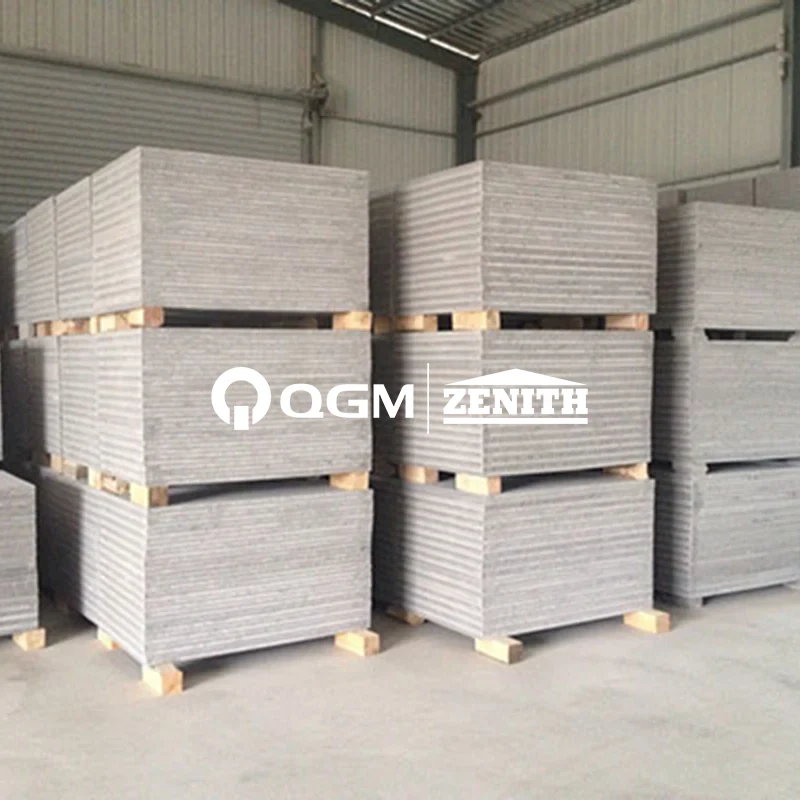
Automatic Hydraulic Brick Pallet
QGM/Zenith is China manufacturer & supplier who mainly produces Automatic Hydraulic Brick Pallet with many years of experience. Hope to build business relationship with you. It uses the pressure generated by the hydraulic cylinder to press the brick blank.
Brick Manufacturing Machine Pallet
QGM/Zenith is a professional leader China Brick Manufacturing Machine Pallet manufacturer with high quality and reasonable price. Welcome to contact us.Pallets are mainly used to place and fix bricks, ensuring the stability and neat arrangement of bricks during the production process.
Recycled Material Brick Pallet
QGM/Zenith is one of the famous China Recycled Material Brick Pallet manufacturer and supplier. Our factory specializes in manufacturing of Recycled Material Brick Pallet.This pallet is suitable for brick machine pallets, mainly used for cement brick machine pallets, with high durability and load-bearing capacity.
Durable Concrete Block Board
QGM/Zenith warmly welcome you to buy high quality Durable Concrete Block Board from our factory. We will provide you with good service.Common durable concrete block pallets include light steel brick machine pallets and bamboo glue brick machine pallets.
Green Building Block Board
QGM/Zenith is a proficient manufacturer and supplier of Green Building Block Board in China. If you're searching for the Green Building Block Board at an affordable price, get in touch with us right away! The Green Building Block Machine Pallet can be used in a variety of building block machine production lines, such as concrete block machines, cement block machines and brick machines.
Precast Concrete Brick Machine Pallet
QGM/Zenith is one of prominent manufacturer, producer, and exporter of Precast Concrete Brick Machine Pallet in China. The pallet is usually made of high-hardness materials, such as fiberglass brick machine board, wood glue brick machine board, bamboo glue brick machine board, etc.
- Related Blog
- Reviews