- English
- Español
- Português
- русский
- Français
- 日本語
- Deutsch
- tiếng Việt
- Italiano
- Nederlands
- ภาษาไทย
- Polski
- 한국어
- Svenska
- magyar
- Malay
- বাংলা ভাষার
- Dansk
- Suomi
- हिन्दी
- Pilipino
- Türkçe
- Gaeilge
- العربية
- Indonesia
- Norsk
- تمل
- český
- ελληνικά
- український
- Javanese
- فارسی
- தமிழ்
- తెలుగు
- नेपाली
- Burmese
- български
- ລາວ
- Latine
- Қазақша
- Euskal
- Azərbaycan
- Slovenský jazyk
- Македонски
- Lietuvos
- Eesti Keel
- Română
- Slovenski
- मराठी
- Srpski језик
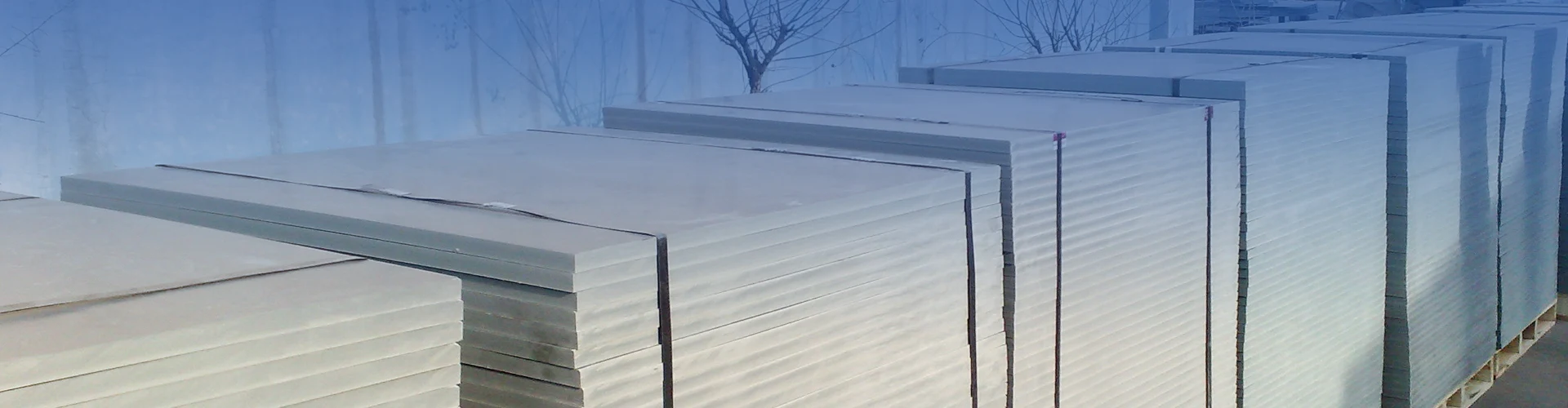
AAC block production line
An AAC Block Production Line is an integrated manufacturing system that transforms siliceous raw materials into Autoclaved Aerated Concrete (AAC) products—a lightweight, high-insulation building material with a cellular structure. Unlike conventional block production, AAC manufacturing involves a chemical aeration reaction followed by autoclave curing at elevated temperature and pressure. This production method yields blocks with 70–85% porosity, densities of 300–900 kg/m³, and thermal conductivity values of 0.10–0.20 W/(m·K). Our AAC Block Production Line is engineered as a complete, coordinated system covering raw material handling, batching, mixing, pouring, cutting, autoclaving, and packaging—each stage integrated to maintain process continuity and product quality.
Production Line Flow & Process Integration
The AAC production process is a sequence of precisely timed stages, each dependent on the previous for successful product formation. The integrated line ensures material flow and process continuity across the entire facility:
• Raw material preparation area: Siliceous materials—fly ash, sand, or slag—are crushed, screened, and milled to the required fineness (typically 200 mesh). Calcareous materials (cement and lime) are stored in silos and metered into the batch. The milling stage uses wet or dry ball mills with dust collection systems to maintain a clean working environment.
• Batching and mixing station: Materials are precisely weighed according to the formulation (fly ash/sand 55–65%, cement 10–20%, lime 18–30%, gypsum 2–5%). A high-shear mixer combines the materials with water, and steam is injected to raise the slurry temperature to 40–50°C. Aluminum powder paste—the gas-forming agent—is added with 30–40 seconds of mixing to initiate the aeration reaction.
• Pouring and pre-curing zone: The aerated slurry is poured into molds mounted on mold cars. The filled molds are transferred to a pre-curing chamber where the material rests for 2–2.5 hours. During this period, hydrogen gas released by the aluminum-alkali reaction creates the cellular structure, expanding the material to its final volume. The pre-curing chamber maintains controlled temperature and humidity to ensure consistent expansion.
• Cutting and green block handling: Once the material reaches cutting strength, the side plates are removed and the cake is positioned for cutting. A tilting crane rotates the cake from horizontal to vertical, after which a horizontal cutting machine trims the top and bottom surfaces. The cake then passes through vertical cutting machines that slice it into blocks of specified dimensions. The cutting line uses wire cutting technology that produces smooth surfaces without disturbing the cell structure.
• Autoclave curing area: Cut blocks are loaded onto steam carts and transferred into autoclave vessels. The autoclave cycle—vacuum, pressure rise, pressure hold at 1.2 MPa (180–200°C), and pressure reduction—requires approximately 8 hours. This high-temperature, high-pressure curing completes the hydrothermal reaction between silica and lime, forming tobermorite crystals that provide the material's final strength and durability.
• Finished product handling: After autoclaving, the blocks are unloaded, inspected, and packaged for shipment. Product cranes transport finished blocks to storage areas or directly to packaging equipment.
The complete production cycle from raw material batching to finished product takes approximately 12 hours. The integrated line design ensures that material flow is continuous and that bottlenecks are minimized through coordinated equipment sizing.
Why a Complete Production Line Matters?
AAC block production is not a standalone process—it requires coordinated equipment at every stage. The decision to invest in a complete production line rather than piecemeal equipment procurement has significant implications for operational success:
Process continuity: AAC production relies on precise timing. The aerated slurry must be poured before the aeration reaction advances too far; the cake must be cut before it becomes too hard; the autoclave must be loaded immediately after cutting. A complete line with coordinated equipment ensures that these timing requirements are met without delays.
Quality consistency: Each process stage affects the final product. Variations in batching accuracy, mixing time, pouring temperature, cutting precision, and autoclave cycle parameters all influence the block's density, strength, and dimensional accuracy. An integrated line with centralized control maintains consistency across all stages.
Efficiency and waste reduction: Material waste is minimized when raw materials are handled and processed through a coordinated system. Off-specification product is reduced through automated monitoring and control. Energy consumption is optimized through heat recovery and efficient equipment selection.
A complete line typically produces annual capacities ranging from 50,000 to 300,000 cubic meters, with specific capacity determined by the autoclave configuration and plant area.
Capacity Configurations & Plant Layout Options
AAC production lines are available in multiple capacity tiers to match market demand and investment capacity. The following table presents typical configurations across the capacity range:
| Annual Capacity (m³/year) | Power (KW) | Daily Capacity (m³/day) | Autoclave Count | Plant Area (m²) |
| 50,000 | 400 | 166 | 2 | 2,000 |
| 100,000 | 500 | 333 | 4 | 2,000 |
| 150,000 | 630 | 500 | 6 | 2,500 |
| 200,000 | 720 | 666 | 8 | 3,000 |
| 300,000 | 1,186 | 1,000 | 6 (D2.85×32.5) | 3,500 |
Plant layout design considers material flow, equipment access for maintenance, and expansion provisions. Common practice arranges equipment in a linear flow from raw material entry to finished product exit, with the autoclave area centrally located to minimize steam cart travel distances.
Autoclave System: The Critical Component
The autoclave is the most critical and expensive component of the AAC production line. These pressure vessels are engineered to withstand sustained operation at 1.2 MPa pressure and 180–200°C temperature. Key design and specification considerations include:
• Construction materials: The autoclave cylinder is constructed from steel plate with a cover formed from pressed 16MnR steel board. Flanges are forged and machined from 16Mn steel. All welded components undergo heat treatment to relieve stress and are subject to strict non-destructive testing (NDT) to ensure structural integrity.
• Manufacturing standards: Autoclaves are manufactured in accordance with rigorous quality control procedures and undergo individual testing before delivery. Documentation includes material test reports and certification of compliance with relevant pressure vessel standards.
• Safety systems: Autoclaves are equipped with pressure relief valves, emergency shutdown systems, and interlock mechanisms that prevent opening while under pressure. The operating system includes programmable controls for the vacuum, pressure rise, pressure hold, and pressure reduction stages.
• Energy efficiency: Steam consumption is minimized through insulation and heat recovery. The choice of larger autoclave vessels for higher capacity lines can also improve energy efficiency through improved heat transfer characteristics.
The number of autoclaves in a production line determines the daily output capacity, as each autoclave requires approximately 8 hours for a complete curing cycle.
Comparative Analysis: AAC vs. Conventional Block Production
AAC production is fundamentally different from conventional block manufacturing. The following comparison highlights the key differences:
| Characteristic | AAC Block Production Line | Conventional Block Machine |
|---|---|---|
| Product Density | 300–900 kg/m³ | 1,800–2,400 kg/m³ |
| Thermal Conductivity | 0.10–0.20 W/(m·K) | 0.80–1.20 W/(m·K) |
| Fire Resistance (90mm wall) | 245 minutes | ~60–90 minutes |
| Production Method | Chemical aeration + autoclave curing | Mechanical compaction + ambient/steam curing |
| Maximum Block Size | 600 × 250 × 300 mm | 400 × 200 × 200 mm (typical) |
| Construction Benefits |
Steel savings: 27% Cement savings: 20% |
Baseline |
| Investment Scale | Higher—complete facility required | Lower—standalone machine |
| Typical Capacity | 50,000–300,000 m³/year | 10,000–100,000 m³/year |
The AAC production line produces a fundamentally different product category, positioning manufacturers in the growing market for energy-efficient, lightweight building materials.
Decision Guide for Production Line Investment
Investment in an AAC Block Production Line requires consideration of several factors beyond equipment cost:
• Raw material availability: Access to siliceous materials (fly ash, sand, or slag) at suitable quality and quantity is essential. Fly ash from coal-fired power plants is a preferred raw material where available.
• Market demand assessment: AAC products command premium pricing but require market education and acceptance. Demand is typically strongest in regions with energy efficiency building codes or growing construction activity.
• Utility infrastructure: Steam generation requires a reliable fuel supply (coal, natural gas, or biomass). Power requirements range from 400 to 1,200 KW depending on production capacity.
• Project timeline: Complete AAC production line projects from order to commissioning typically require 8–12 months, with equipment manufacturing, civil works, installation, and testing phases.
Our technical team provides comprehensive project planning support, including layout design, capacity matching, and utility infrastructure planning.
Frequently Asked Questions
Q1: What is the typical raw material composition for AAC block production?
The standard AAC formulation consists of siliceous material (fly ash, sand, or slag) at 55–65%, cement at 10–20%, lime at 18–30%, gypsum at 2–5%, and aluminum powder paste as the gas-forming agent. Water is added to achieve the required slurry consistency.
Q2: How long is the complete production cycle?
The complete production cycle from raw material batching to finished product is approximately 12 hours. The autoclave stage alone requires about 8 hours, including vacuum, pressure rise, pressure hold at 1.2 MPa (180–200°C), and pressure reduction.
Q3: What are the standard AAC block dimensions produced by the line?
The standard block length is 600mm, with widths available in 75, 100, 125, 150, 175, 200, and 250mm, and heights of 200, 240, 250, and 300mm. Custom dimensions can also be produced to meet specific project requirements.
Q4: How does the autoclave curing process affect product properties?
The autoclave curing completes the hydrothermal reaction between silica and lime to form tobermorite crystals, which provide the material's final strength and durability. The controlled temperature and pressure environment ensures consistent crystallization and product uniformity.
Q5: What certifications should an AAC production line supplier hold?
Reputable AAC Block Production Line suppliers hold ISO9001:2008 quality management certification, CE certification for European market compliance, and additional certifications such as BV and SGS for quality assurance.
Related Products





Hot Products

Industrial Grade Brick Machine Pallet
Find a huge selection of Industrial Grade Brick Machine Pallet from China at QGM/Zenith. Provide professional after-sales service and the right price, looking forward to cooperation. Industrial Grade Brick machine Pallet is an indispensable tool in masonry construction, mainly used to protect bricks and improve construction quality.
Solid Wood Brick Machine Pallet
With years of experience in production Solid Wood Brick Machine Pallet, QGM/Zenith can supply a wide range of Solid Wood Brick Machine Pallet. High quality product can meet many applications, if you need, please get our online timely service about product. In addition to the product list below, you can also customize your own unique product according to your specific needs.
Multipurpose Block Machine Board
Welcome to buy Multipurpose Block Machine Board from our factory at any time. We will provide you with factory discount prices for our products. QGM/Zenith is Multipurpose Block Machine Board manufacturer and supplier in China. Multipurpose Block Machine Board is an auxiliary equipment used to hold up brick embryos during the production process of brick machines, and is widely used in concrete block production lines.
Sustainable Building Brick Machine Pallets
Find a huge selection of Sustainable Building Brick Machine Pallets from China at QGM/Zenith. They are usually made of wood or plastic and have the characteristics of strong carrying capacity, ventilation and air permeability, and easy cleaning. Its main uses include protecting products, improving production efficiency and reducing labor costs.
Block Forming Machine Pallet
QGM/Zenith is one of leading China Block Forming Machine Pallet manufacturer, supplier and exporters. Block Forming Machine Pallet is an important part of block forming machines, used to carry and transport blocks. The design and function of the pallet directly affect the efficiency and product quality of the forming machine.
Block Machines Pallet
You can purchase Block Machines Pallet from QGM/Zenith with confidence, as we are a proficient producer of high-quality Block Machines Pallet. We promise to provide you with the best after-sale service and prompt delivery. It is usually made of steel and wood. It has a rectangular shape and consists of four steel pipes and four wooden boards.
- Related Blog
- Reviews